

OHI-S Biology-Driven Aligner Orthodontics Periodontal and Implant-Based Interdisciplinary Therapy 4 lessons 2h 40min
25 $
Format : Videos + PDF
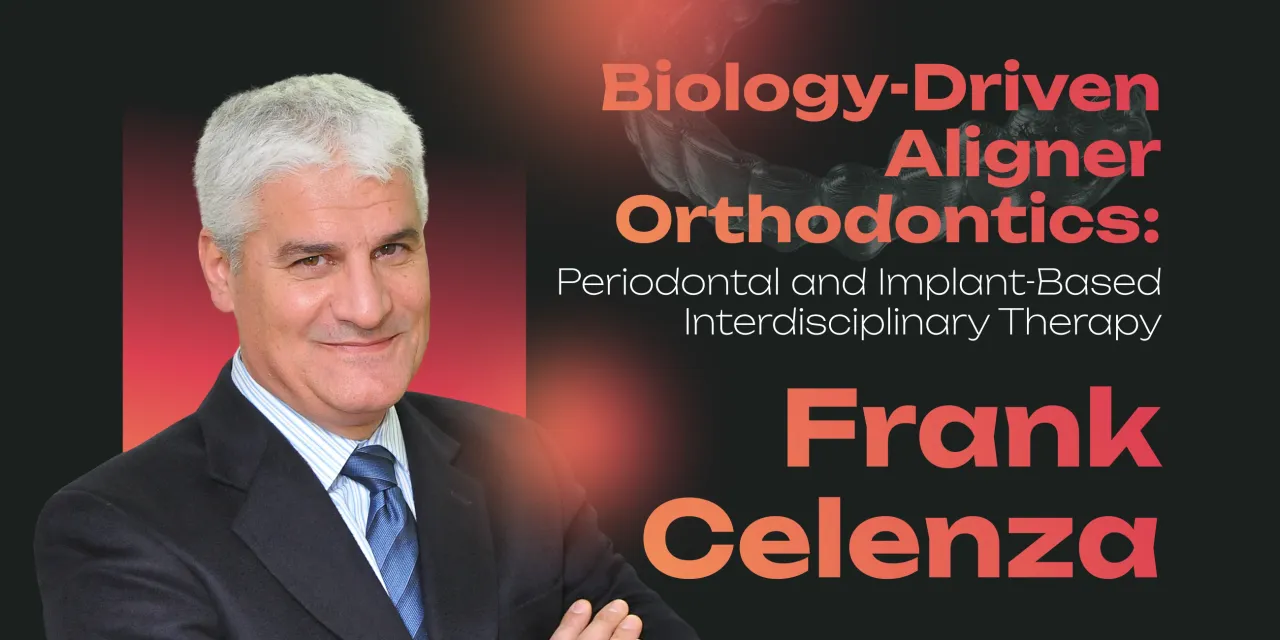
Modern orthodontics cannot be separated from periodontal biology and implant-driven rehabilitation. This course by Dr. Frank Celenza presents a structured yet clinically dynamic framework that redefines orthodontic therapy through the lens of periodontal health, tissue response, and interdisciplinary integration, acting as a unified biologic system.
Learning Objectives
Understand fundamental biological differences between orthodontic and periodontal patients and their clinical implications.
Master principles of interdisciplinary diagnosis and treatment planning in complex cases.
Identify periodontal and peri-implant considerations essential for safe and effective orthodontic therapy.
Evaluate therapeutic orthodontic movements and their impact on periodontal tissues.
Apply evidence-based sequencing strategies in orthodontic–periodontal treatment.
Implement clinical protocols for effective communication and coordination between specialties.
Target Audience
Dental professionals and specialists seeking to integrate periodontal health, tissue response, and implant-driven planning into comprehensive orthodontic care. Best for Orthodontists, Periodontists, Implantologists, and Restorative Dentists.
Topics
Lesson 1. Biological Differences Between Periodontal and Orthodontic Patients
Impact of baseline inflammation on orthodontic tooth movement
Differences in bone quality, density, and remodeling potential
Variations in gingival biotype and soft tissue response
Impact on interdisciplinary periodontal–orthodontic decision-making
Implications for periodontal therapy and orthodontic mechanics
Lesson 2. Periodontal Considerations in Orthodontic Therapy
Biological differences between periodontal and orthodontic patients
Impact of periodontal status on orthodontic outcomes
Role of inflammation in tooth movement and tissue response
Monitoring and maintaining periodontal stability during active therapy
Indications for soft and hard tissue grafting in orthodontic patients
Timing and sequencing relative to orthodontic mechanics
Principles of retention design in orthodontic–periodontal cases
Selection of appropriate retention protocols
Supracrestal fiberotomy and its clinical indications
Strategies to enhance post-treatment stability
Lesson 3. Periodontal Effects of Aligner Therapy: Therapeutic Tooth Movements and Tissue Response
Interaction between orthodontic forces and periodontal tissues
Morphological changes in supporting structures during movement
Forced eruption and its regenerative potential
Tooth uprighting and defect-related tooth positioning
Movement strategies in the presence of periodontal defects
Influence of aligner-driven movements on papillary architecture
Soft tissue considerations during space closure and alignment
Predictable periodontal advantages of controlled tooth movement
Biological and mechanical limitations of aligner therapy
Integration of orthodontic and periodontal treatment planning
Timing of movements in complex restorative–periodontal cases
Lesson 4. Aligner-Orthodontic Interactions with Implants: Sequencing, Anchorage, and Site Development
Role of aligner therapy in interdisciplinary implant treatment
Biological and mechanical interaction between implants and tooth movement
Site development through controlled tooth movement
Spatial management for optimal implant positioning
Strategies for soft and hard tissue optimization
Implant placement prior to orthodontic therapy
Use of implants as absolute anchorage units
Non-dental anchorage concepts and biomechanics
Role of imaging in treatment sequencing and safety
Assessment of bone, space, and implant position during therapy
Interdisciplinary treatment sequencing: Decision-making frameworks for treatment order
Interdisciplinary treatment sequencing: Optimizing outcomes through coordinated planning
Be the first to review “OHI-S Biology-Driven Aligner Orthodontics Periodontal and Implant-Based Interdisciplinary Therapy 4 lessons 2h 40min”
You must be logged in to post a review.
Related products

Reviews
There are no reviews yet.