

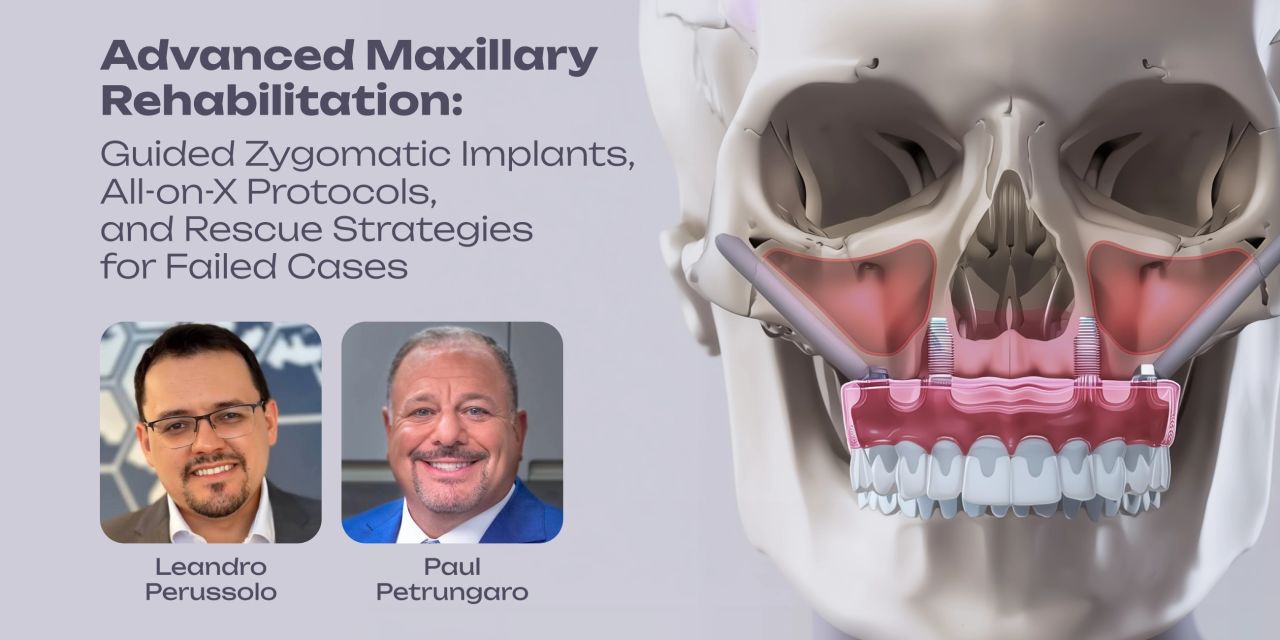
OHI-S Advanced Maxillary Rehabilitation Guided Zygomatic Implants, All-on-X Protocols, and Rescue Strategies for Failed Cases 3 lessons 3h 21min
35 $
Format : Videos + PDF
The “Advanced Maxillary Rehabilitation: Guided Zygomatic Implants, All-on-X Protocols, and Rescue Strategies for Failed Cases” course is a comprehensive 3-hour and 21-minute online program comprising three advanced lessons. Designed to tackle the greatest challenges in implant dentistry—such as severely atrophic maxillae, long-term edentulism, and failing full-arch rehabilitations—this course offers a complete framework for complex reconstructions. Participants will learn to combine guided zygomatic and pterygoid implant surgery with modern All-on-X treatment concepts, utilizing digital workflows and advanced rescue strategies to achieve predictable functional and aesthetic outcomes.
Learning Objectives
Implement digital planning protocols utilizing CBCT and 3D workflows for complex implant rehabilitation.
Understand the indications, planning, and surgical principles of guided zygomatic and pterygoid implant placement.
Formulate treatment strategies for severely resorbed maxillae and long-term edentulous patients.
Apply prosthetically driven All-on-X concepts and integrate zygomatic implants into complex cases.
Manage failing implants, peri-implant disease, and failed full-arch rehabilitations.
Utilize advanced reconstruction options, including tilted implants, zygomatic implants, and zirconia implant solutions.
Execute precise surgical and prosthetic protocols for achieving predictable functional and aesthetic outcomes.
Target Audience
This course is specifically intended for highly experienced dental professionals and surgeons seeking to master complex, prosthetically driven digital workflows, guided zygomatic procedures, and salvage strategies for severely compromised full-arch implant cases.
Best for Implantologists, Oral and Maxillofacial Surgeons, Prosthodontists, and Periodontists.
Topics
Lesson 1. Guided Zygomatic and Pterygoid Implant Surgery: From Digital Planning to Clinical Execution
What is guided surgery?
Indications and advantages of guided surgery
Imaging techniques in implant dentistry and how to obtain the correct CBCT scan
Understanding the concept of 3D implant positioning and anatomical criteria
Design principles of the zygomatic surgical guide
Guided zygomatic and pterygoid implant surgery systems
Step-by-step video demonstration of guided zygomatic implant placement on a model
Individualized design of surgical guides according to specific clinical cases
Live demonstration of the surgical procedure
Analysis of clinical cases and evaluation of prosthetic rehabilitation after implant placement
Lesson 2. Advanced Rescue of the Atrophic Maxilla: Comprehensive Solutions for Patients with Long-Term Edentulism, Failing Implants, and Full-Arch Complications
Challenges and limitations of implant rehabilitation in the severely atrophic maxilla
Aetiology of All-on-4® and full-arch implant failures: surgical, prosthetic, biomechanical, and biological factors
Clinical and radiographic assessment of bone quality, sinus anatomy, and treatment risk factors
Diagnosis and management of failing and failed full-arch rehabilitations, including salvage and reconstruction strategies
Advanced treatment concepts for severe maxillary atrophy: tilted implants, zygomatic implants, and zirconia implant solutions
Biologically driven protocols for managing peri-implant disease and optimizing soft tissue outcomes
Prevention and maintenance strategies to ensure long-term stability of complex implant rehabilitations
Lesson 3. Treatment Planning for the Atrophic Maxillae in ALL-ON-X Protocols
Diagnosis and treatment planning of severe maxillary atrophy in All-on-X full-arch rehabilitation
Integration of CBCT-based digital planning for surgical accuracy and interdisciplinary communication
Prosthetically driven treatment concepts for predictable All-on-X outcomes
Indications and planning protocols for incorporating zygomatic implants into complex maxillary cases
Management of failing full-arch rehabilitations, peri-implantitis, and peri-mucositis cases
Revision strategies for compromised All-on-X cases and reconstruction options
Surgical and prosthetic protocols for zygomatic implant rehabilitation, including anatomical considerations of single and double zygoma approaches
Be the first to review “OHI-S Advanced Maxillary Rehabilitation Guided Zygomatic Implants, All-on-X Protocols, and Rescue Strategies for Failed Cases 3 lessons 3h 21min”
You must be logged in to post a review.
Related products

Reviews
There are no reviews yet.