

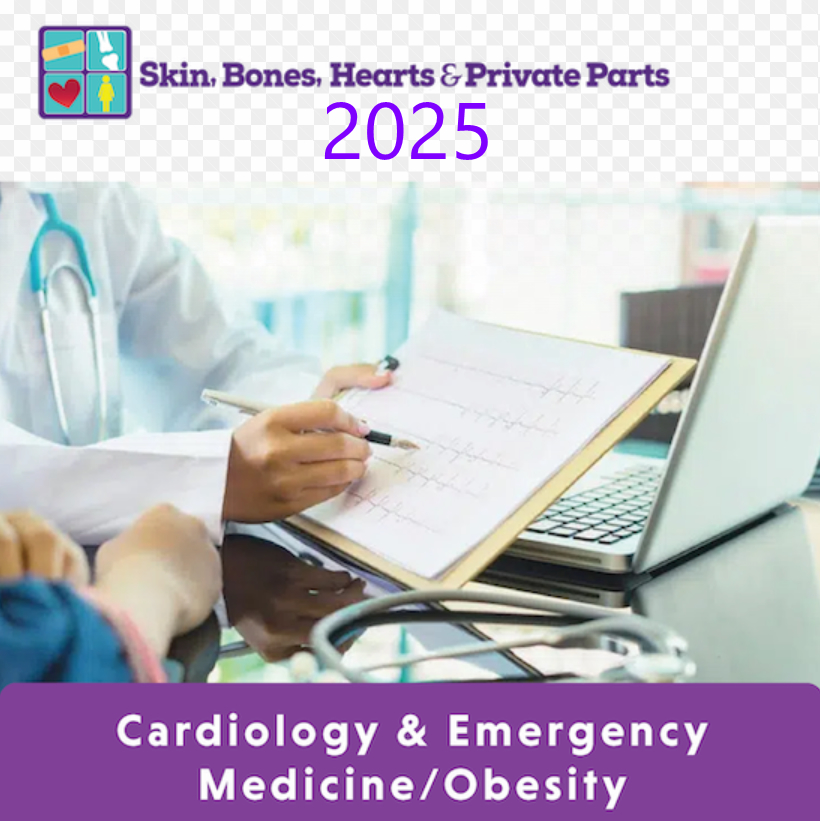
Skin, Bones, Hearts & Private Parts Cardiology & Emergency Medicine Obesity 2025
50 $
Format : videos + file sub vtt + pdf, size: GB
SkinBones – Cardiology & Emergency Medicine 2025 is an 11.5-hour continuing medical education activity available in an on-demand format. These popular Cardiology courses offer insight into cardiology, including obesity, hypertension, AFib, heart failure, and reading an EKG, among other topics. Top-rated speakers Viet Le, DMSc, PA-C, FACC, FAHA, HF-Cert, and Angela Golden, DNP, FNP-C, FAANP, FOMA, deliver a comprehensive overview of cardiology topics, from managing obesity to preventing peripheral artery disease. Engaging case studies are utilized throughout the courses to illustrate key points that clinicians can apply directly in their daily practice.
Learning Objectives
After completing this activity, the participant should be better able to:
Apply new and emerging therapy options for several different body systems and treatment modalities.
Discuss a variety of topics in a concentrated effort that maximizes clinician’s time and provider needs.
Review strategies to help busy clinicians utilize their time with patients more effectively.
Use new clinical guidelines to effectively treat patients.
Target Audience
This activity is intended for physicians, physician assistants, and nurse practitioners caring for patients in a primary and specialty care setting.
Best for Cardiologists, Emergency Medicine Physicians, Primary Care Physicians, Obesity Medicine Specialists, and Endocrinologists.
Topics
“Arrhythmia’s Gonna Get You” – Atrial Fibrillation: This course reviews the most common arrhythmia, Atrial Fibrillation and discusses diagnosis and the acute/chronic management through lifestyle and implications of pharmacologic treatment.
“Under Pressure” – Hypertension: This course reviews updated guidelines and the importance of early diagnosis and intensive treatment of Hypertension as well as diagnosis and chronic management through lifestyle and pharmacologic treatment.
“Head Above Water” – Heart Failure: This course reviews updated Heart Failure guidelines by discussing chronic management through lifestyle and the importance of pharmacologic treatment.
“Heart Attack” – Coronary Artery Disease: This course reviews the continuum of coronary artery disease from acute coronary syndrome to chronic management. Chronic management through lifestyle and the importance of pharmacologic treatment will also be discussed.
“I Can’t Walk 500 Miles” – Peripheral Artery Disease: Our speaker discusses peripheral arterial disease and the importance of screening and early intensive management to reduce the risk of amputations and other cardiovascular disease events through lifestyle and pharmacologic treatment.
Treating Obesity Can Treat the Heart and Much More: 200+ Obesity Complications: In this course, the speaker utilizes case studies and reviews the explanation of how obesity is at the root of 236 obesity-associated disorders. Pathophysiology of the disease of obesity and its consequences, with an explanation of treatment that targets obesity and the complications, is also to be discussed.
Cardiometabolic Treatment for Obesity: This course delivers an overview of the intersection of obesity, T2DM, and hypertension pathophysiology and sets the stage for understanding how traditional and novel anti-obesity therapies impact these diseases and the cardiac implications.
Managing Obesity in Primary Care: Yes, It Can Be Done: Most primary care providers ask, “How can I add another disease to be treated to my already very busy schedule, especially one that is impacting so many of my patients?” This course includes a case study to demonstrate how to integrate the treatment of obesity into primary care using evidence-based guideline treatment.
Treating Obesity Inside and Outside the Labels: Today’s reality for pharmacology treatment of obesity on-label provides limited choices, including those limited by cost. Experienced clinicians treating obesity recognize the value of on-label prescribing but also look to off-label use of medications for obesity treatment. This course briefly reviews current FDA-approved medicines for the long-term treatment of obesity. The course then focuses on long-term use of FDA-approved short-term medications and medications known to support weight loss but that do not have FDA approval for that purpose. Case studies will be utilized to demonstrate these situations.
Treatment of Complicated Patients with Obesity: Obesity is the most common chronic disease in the United States and is at the root of over 236 complications, including 14 obesity-related cancers. This course presents case studies and a review of treatment plans for patients with multiple chronic diseases.
Be the first to review “Skin, Bones, Hearts & Private Parts Cardiology & Emergency Medicine Obesity 2025”
You must be logged in to post a review.
Related products





Reviews
There are no reviews yet.