

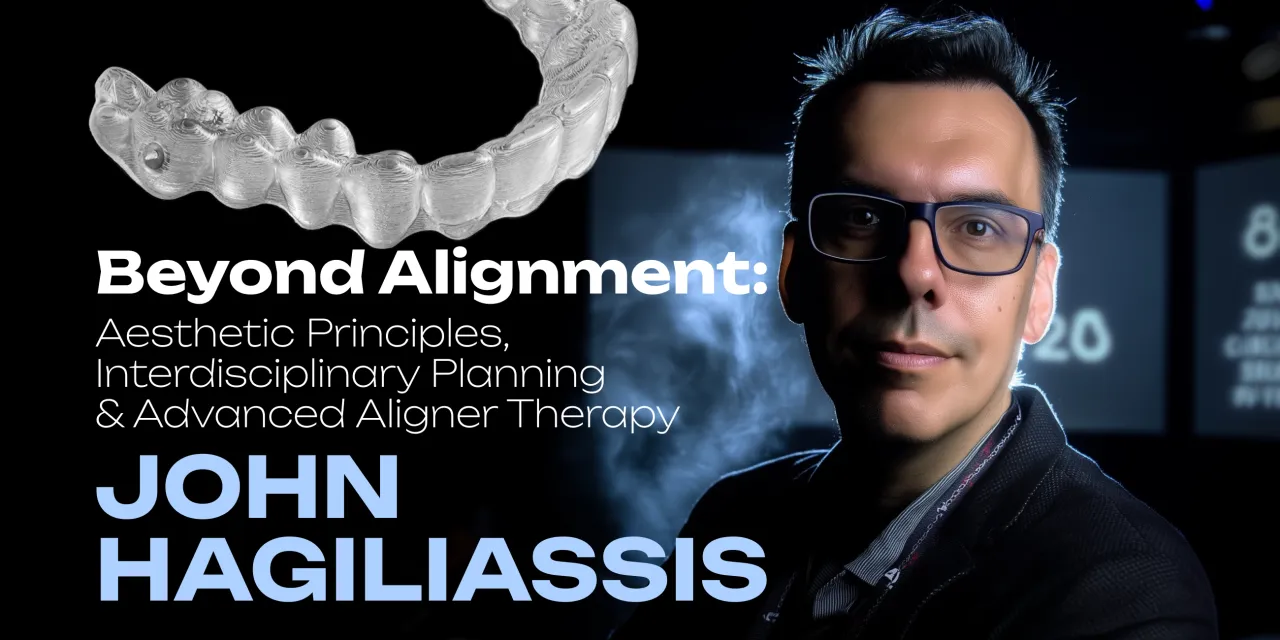
OHI-S Beyond Alignment Aesthetic Principles, Interdisciplinary Planning & Advanced Aligner Therapy 4 lessons 1h 42min
30 $
Format : Videos + PDF
Clear aligner therapy has evolved far beyond simple tooth alignment. Predictable results require a deep understanding of aesthetic principles, comprehensive diagnosis, and strategic treatment planning that considers the patient’s final functional and restorative goals. This course provides a complete clinical roadmap for integrating aligners into modern orthodontic and interdisciplinary treatment. Participants will learn how to analyze smile aesthetics, evaluate complex cases, identify treatment limitations, and develop safe protocols for challenging movements.
Learning Objectives
Apply aesthetic orthodontic principles in aligner treatment planning.
Conduct interdisciplinary case assessments, including restorative, periodontal, and functional considerations.
Execute diagnosis and risk assessment protocols for complex aligner cases.
Implement strategies for managing advanced clinical situations and staging predictable tooth movements.
Utilize clinical decision-making approaches to expand the possibilities of clear aligner therapy.
Target Audience
This course is designed for dental practitioners seeking to integrate aligners into modern orthodontic and interdisciplinary treatment by developing the confidence to select, plan, and manage complex aligner cases with a structured, aesthetic-driven approach.
Best for Orthodontists, Periodontists, Prosthodontists, and Restorative Dentists.
Topics
Lesson 1. Aesthetic Orthodontic Principles and Aligner Therapy
Principles of aesthetic orthodontics in aligner therapy
Smile analysis and facial aesthetic evaluation before treatment
Understanding tooth position in relation to facial harmony and future restorations
Defining the ideal orthodontic outcome based on the patient’s aesthetic goals
Lesson 2. Diagnosis and Risk Assessment for Complex Aligner Cases
The role of clear aligners in interdisciplinary dentistry
Comprehensive patient assessment and interdisciplinary diagnosis
Identifying restorative, periodontal, and functional considerations before treatment
Recognizing risk factors that influence treatment planning and outcomes
Lesson 3. Diagnosis and Risk Assessment for Complex Aligner Cases
Identifying suitable complex cases for clear aligner therapy
Applying SAC protocols for safe case selection and treatment planning
Evaluating micro and macro tooth movement factors
Assessing psychological, physiological, and medical factors influencing treatment outcomes
Lesson 4. Managing Complex Clinical Cases with Aligners
Predictable staging of complex orthodontic tooth movements
Integrating aligners into comprehensive restorative and functional rehabilitation
Clinical strategies for achieving stable aesthetic and functional outcomes
Real-world case studies demonstrating advanced aligner applications and interdisciplinary treatment planning
Be the first to review “OHI-S Beyond Alignment Aesthetic Principles, Interdisciplinary Planning & Advanced Aligner Therapy 4 lessons 1h 42min”
You must be logged in to post a review.
Related products


Reviews
There are no reviews yet.