

-
×
 Lippincott's Concise Illustrated Anatomy: Volume 2: Thorax, Abdomen & Pelvis
1 × 4 $
Lippincott's Concise Illustrated Anatomy: Volume 2: Thorax, Abdomen & Pelvis
1 × 4 $ -
×
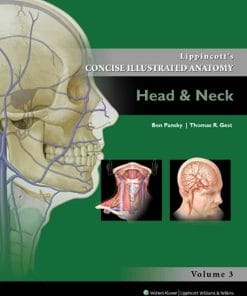 Lippincott's Concise Illustrated Anatomy: Volume 3: Head & Neck
1 × 4 $
Lippincott's Concise Illustrated Anatomy: Volume 3: Head & Neck
1 × 4 $ -
×
 Telemedicine and Electronic Medicine
1 × 4 $
Telemedicine and Electronic Medicine
1 × 4 $ -
×
 Goodman and Gilman's The Pharmacological Basis of Therapeutics, 12th Edition
1 × 4 $
Goodman and Gilman's The Pharmacological Basis of Therapeutics, 12th Edition
1 × 4 $ -
×
 Head and Neck Cancer: An Evidence-Based Team Approach
1 × 4 $
Head and Neck Cancer: An Evidence-Based Team Approach
1 × 4 $ -
×
 History of Infectious Disease Pandemics in Urban Societies
1 × 4 $
History of Infectious Disease Pandemics in Urban Societies
1 × 4 $ -
×
 Medicines, Ethics and Practice: The Professional Guide for Pharmacists
1 × 4 $
Medicines, Ethics and Practice: The Professional Guide for Pharmacists
1 × 4 $ -
×
 ITI International Team for Implantology Webinar & Video Lectures Package Part-4
1 × 50 $
ITI International Team for Implantology Webinar & Video Lectures Package Part-4
1 × 50 $ -
×
 Digital Rehabilitation
1 × 49 $
Digital Rehabilitation
1 × 49 $ -
×
 Netter's Dissection Video Modules (Complete HTML)
1 × 80 $
Netter's Dissection Video Modules (Complete HTML)
1 × 80 $


OHI-S Aligners early orthodontic treatment
60 $
Format : 5 videos + 5 audios + 5 file sub vtt, size: 5.35 GB
5 lessons (8h 58min)
A course on the use of aligners in children and adolescents!
In 6 lessons you will learn:
– features of the use of aligners in children, growing and non-growing adolescents
– ways to treat the entire dentition with aligners
– changing the position of separate teeth with aligners
– ClinCheck digital planning
– peculiarity of treatment results retention for many years.
The OHI‑S Aligners: Early Orthodontic Treatment course is best for orthodontists, pediatric dentists, and general dentists who want structured, training in using clear aligners for interceptive and early orthodontic care. It emphasizes age‑appropriate protocols, case selection, and digital workflows to guide tooth movement in growing patients.
Who Should Enroll
Orthodontists managing early malocclusions and growth‑related cases with aligners.
Pediatric dentists integrating orthodontic interceptive treatment into children’s dental care.
General dentists offering aligner therapy for young patients and wanting predictable, evidence‑based protocols.
Residents & fellows in orthodontics or pediatric dentistry seeking structured training in early aligner treatment.
Dental technicians collaborating on digital planning and appliance fabrication for pediatric aligner cases.
What You’ll Learn
Case selection: identifying which early orthodontic problems can be predictably treated with aligners.
Growth considerations: protocols adapted to developing dentition and skeletal growth.
Digital workflows: scanning, treatment planning, and staging tooth movement in children.
Interceptive strategies: managing crowding, crossbites, and functional shifts early.
Patient management: improving compliance and communication with children and parents.
Case‑based lessons: real examples of early orthodontic treatment with aligners.
+ Topics:
Lesson 1.Early intervention to make Non-extraction Orthodontics possible with Aligner Treatment
– Invisalign®: advantages of the system
– Protocol for the treatment of a growing patient
– The algorithm of the first appointment: diagnostics and documentation
– Treatment of pathology in class III: protocol
– Control of the position of the incisors using ClinCheck
– The use of functional appliances: effectiveness in growing patients
– Treatment protocol for an adult patient
– Stages of maturation of the cervical vertebrae: its significance for orthodontic treatment
– Treatment protocol without intermaxillary elastics
– Complex cases of orthodontic treatment: partial adentia
– Indications for microperforation of the jaw
– Early treatment: indications and benefits
– Expansion in the transversal plane: disadvantages of the method
– Invisalign First®: treatment protocol
– Distalization of teeth: the technique
– Scanning in young patients.
Recommended for: Orthodontists.
Lesson 2.Aligner treatment in early dentition: management of the three dimensions
– Optimal biological terms for treatment with aligners
– Causes of narrowing of the upper jaw
– Features of Invisalign First®
– Protocol for the use of aligners in children
– Justification of early orthodontic treatment
– Virtual treatment planning
– Treatment in the sagittal plane: appliances for extending the lower jaw
– Changes in the airway size after treatment.
Recommended for: Orthodontists.
Lesson 3.Diagnostic and therapeutic approach with aligners in growing subjects (Invisalign First and Teen)
– The concept and goals of intercepting orthodontics
– Early orthodontic treatment: advantages and indications
– Development of occlusion and interaction with craniofacial growth
– Protocol for the treatment of crossbite
– Deep bite: treatment protocol and tips
– Blocked occlusion: correction methods
– Clinical tips and recommendations for the treatment of aligners
– Features of the treatment of class 2
– The use of intermaxillary elastics: the rule of 3
– Assessment of the stage of maturation of the vertebrae
– Correction of the forced position of the lower jaw: a clinical cases.
Recommended for: Orthodontists.
Lesson 4.Clinically predictable ClinChecks® for advanced Precision Wing treatments
– Principles of creating an ideal individual treatment plan
– Professional ClinCheck® protocols:
– Movement of single teeth
– Sequential movement protocol
– Retroclination protocol.
– The complexities of MA ClinCheck® programming
– Properties of precision wings
– The 3 phases in ClinCheck®
– Creating ClinCheck®: errors at the technical stage
– Specifying treatment: tips.
Recommended for: Orthodontists.
Lesson 5.Digital protocol and digital tools for diagnostics, planning and treatment of children and teenagers with Invisalign
– Advantages of digital treatment planning
– Features of treatment of growing patients with aligners: plan and strategy
– iTero Element Scanner: diagnostics, treatment monitoring, analysis of treatment results
– Planning the treatment of a young patient
– Progressive treatment protocol on aligners
– Treatment with Invisalign® of cases with severe crowding and protrusion
– Invisalign First® treatment strategies and protocols for young patients
– Determination of the optimal age to start treatment: stages of maturation of the cervical vertebrae
– Secrets of effective communication with parents
– Presentation of the treatment plan: advantages of digital visualization
– The concept of DSD: planning the correction of the “gingival smile”.
Recommended for: Orthodontists.
Be the first to review “OHI-S Aligners early orthodontic treatment”
You must be logged in to post a review.
Related products
Dental Ebook And Video
Vertical Preparation Protocols: The Complete Guide in 24 Lessons from Tomorrow Tooth
38 $

Dental Ebook And Video
Rasperini Masterclass: Interproximal Attachment Gain – The Challenge Of Periodontology
89 $

Dental Ebook And Video
60 $

Dental Ebook And Video
ITI International Team for Implantology Webinar & Video Lectures Package Part-2
50 $
Reviews
There are no reviews yet.