
-
×
 National Emergency Medicine Board Review, 17th Edition (2015)
1 × 100 $
National Emergency Medicine Board Review, 17th Edition (2015)
1 × 100 $ -
×
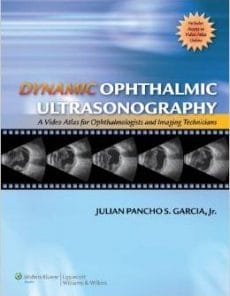 Dynamic Ophthalmic Ultrasonography: A Video Atlas for Ophthalmologists and Imaging Technicians (PDF)
1 × 4 $
Dynamic Ophthalmic Ultrasonography: A Video Atlas for Ophthalmologists and Imaging Technicians (PDF)
1 × 4 $ -
×
 Journal of Tissue Viability – Volume 31, Issue 1 2022 PDF
1 × 4 $
Journal of Tissue Viability – Volume 31, Issue 1 2022 PDF
1 × 4 $ -
×
Advanced Imaging of Sports Related Joint Injuries 2015 (CME Videos)
1 × 10 $ -
×
 Management and Administration of Laboratories 2015 (CME Videos)
1 × 5 $
Management and Administration of Laboratories 2015 (CME Videos)
1 × 5 $



Medical Statistics I – Introduction to Data Analysis and Descriptive Statistics – Stanford Online (Course)
30 $
Format : 43 MP4 + 39 PDF files
File Size : 3.13 GB
:
This course teaches you how to interpret and evaluate statistics in medical research, using real-world examples. You will learn about study designs, types of data, and basic data analysis using programming languages like R or SAS.
Medical Statistics I – Introduction to Data Analysis and Descriptive Statistics – Stanford Online (Course)
**How many millennials are contracting COVID-19 compared to Gen Z? Which ethnic group has the highest rate of childhood obesity? Are certain regions of the country more likely to develop cancer than others?**
In this course, you will learn how to read, interpret, and critically evaluate statistics through examples from medical literature and popular press, and be able to apply it to your own real-world inquiries. By learning how to identify and define data points, you will be able to avoid common statistical pitfalls while conducting medical research and interpreting health discoveries.
**Course Highlights:**
- Understand basic study designs and measurements of disease frequency
- Comprehend and describe different types of data
- Perform basic data analysis using either programming language R or SAS
Related products