

-
×
 Mosby's Comprehensive Review of Radiography: The Complete Study Guide and Career Planner Edition 6
1 × 10 $
Mosby's Comprehensive Review of Radiography: The Complete Study Guide and Career Planner Edition 6
1 × 10 $ -
×
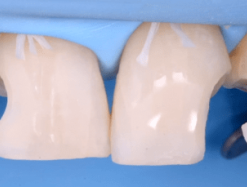 Direct and Indirect Adhesive Restorations
1 × 36 $
Direct and Indirect Adhesive Restorations
1 × 36 $ -
×
 Adhesive Dentistry Procedures
1 × 49 $
Adhesive Dentistry Procedures
1 × 49 $ -
×
 FOR Esthetic Soft Tissue – Inaki Gamborena, Patrick Rutten and Luc Rutten
1 × 30 $
FOR Esthetic Soft Tissue – Inaki Gamborena, Patrick Rutten and Luc Rutten
1 × 30 $ -
×
 Paediatric Dentistry: Principles and Practice, 2nd Edition (PDF)
1 × 4 $
Paediatric Dentistry: Principles and Practice, 2nd Edition (PDF)
1 × 4 $ -
×
 Pediatric Body MRI 2015 (CME Videos)
1 × 10 $
Pediatric Body MRI 2015 (CME Videos)
1 × 10 $ -
×
 Renal Physiology: A Clinical Approach (Integrated Physiology Series)
1 × 4 $
Renal Physiology: A Clinical Approach (Integrated Physiology Series)
1 × 4 $ -
×
The Brigham Board Review in Infectious Diseases 2014 (CME Videos)
1 × 10 $ -
×
The New York General Surgery Board Review Course 2014 (CME Videos)
1 × 10 $ -
×
 Partial Extraction Therapy Course
1 × 45 $
Partial Extraction Therapy Course
1 × 45 $
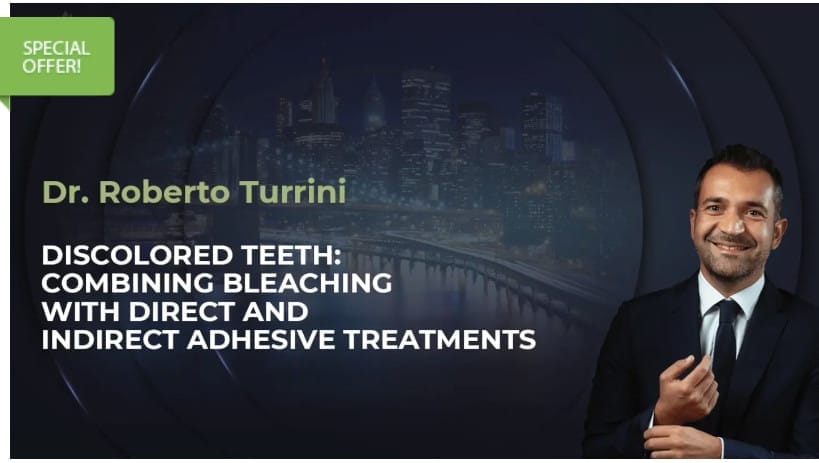
Discolored teeth: combining bleaching with direct and indirect adhesive treatments
12 $
Discolored teeth: combining bleaching with direct and indirect adhesive treatments
Duration
01:00 hours
Course Details
The choice of extremely versatile products, together with the use of appropriate techniques, facilitates the clinician in cases of discoloration of medium severity.
In contrast, in more complex situations, which require changes in shape, color and position, it is possible to use high-performance ceramic materials, in order to perform high aesthetic rehabilitations, however using minimally invasive procedures. The choice of the ideal ceramic ingot and how to communicate to the lab the real abutment color are the new challenges: the color matching, with innovative systems, is very crucial not only for the ingot choice but also in terms of cementation, especially in cases of thin restorations.
Learning outcomes:
– Understand types and modalities of dental bleaching techniques
– Decide when and how to whiten a discolored underlay
– Pinpoint modern discoloration classifications
– Decide the timing of bleaching if combined with adhesive direct/indirect procedures
– Understand when and why it is better not to use bleaching techniques.
Be the first to review “Discolored teeth: combining bleaching with direct and indirect adhesive treatments”
You must be logged in to post a review.
Related products
Dental Ebook And Video
Vertical Preparation Protocols: The Complete Guide in 24 Lessons from Tomorrow Tooth
38 $
Dental Ebook And Video
60 $
Dental Ebook And Video
Plastic-Esthetic Periodontal and Implant Surgery: The Special DVD Compendium
39 $
Dental Ebook And Video
ITI International Team for Implantology Webinar & Video Lectures Package Part-1 (99 Videos)
60 $
Reviews
There are no reviews yet.