

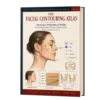


The Toxin Field Manual: Read the face. Place the dose. Fix what goes wrong, Aesthetic Injection Atlas Series, Vol. 05 (PDF)
6 $
Format Publisher PDF
File size : 121.8 MB
Publisher : Publisher
Published year : 2026
A 64-page clinical field manual for botulinum toxin. The first half maps how to read a face at rest and in motion and place the first injections safely. The second half is the part most courses skip — recognising a dropped lid, a fallen brow or a lost smile, and knowing exactly what to do next.
✓The three-dot arc — palpated by feel, confirmed at 1.5 cm and 30°
✓Dose read straight off an insulin syringe at 2.5 mL / 100 U
✓Eyelid ptosis separated from brow ptosis, then the apraclonidine rescue
✓A three-rung correction ladder governed by one rule: no new asymmetry
✓Five working reference cards and a full complication decision tree
Why this manual exists
Toxin gets hard when the steps
are learned separately.
Assessment, marking, dosing and complications are usually taught as four different subjects. In the room they are one continuous decision.
01 A line you can see, a muscle you can’t name
Some cheek lines belong to orbicularis oculi and will soften. Some belong to the zygomatic muscle and will not. If you cannot name the owner, you cannot promise the result.
02 Dots memorised from a diagram
A remembered pattern does not survive a different brow. Orbicularis oculi is a circle — three dots in a straight line means at least one is in the wrong place.
03 A flat map on a face with depth
The skin over the lateral orbit is under a millimetre. Go deeper at the lower point and you reach the zygomatic root — and a smile asymmetry you did not plan.
04 A complication with no framework
“Too much product” is not a diagnosis and points to no correction. The lid dropped because product moved, or because a balance shifted. Those are fixed differently.
One manual · One complete toxin arc
Five decisions. One continuous skill.
Assessment decides the treatment. The treatment decides the risk. Recognition and rescue close the loop.
01 Assess
Read the face still before you read it moving. Name the muscle that owns each line.
02 Mark
Three dots on an arc — found by palpation, confirmed by the licensed geometry.
03 Treat
Shallow, 30°, pointed away from the eye, with units read off the syringe.
04 Recognise
Tell an eyelid drop from a brow drop, a diffusion failure from a balance failure.
05 Rescue
The drop that lifts a lid, and the ladder you climb only as far as you must.
Be the first to review “The Toxin Field Manual: Read the face. Place the dose. Fix what goes wrong, Aesthetic Injection Atlas Series, Vol. 05 (PDF)”
You must be logged in to post a review.
Related products


Reviews
There are no reviews yet.