



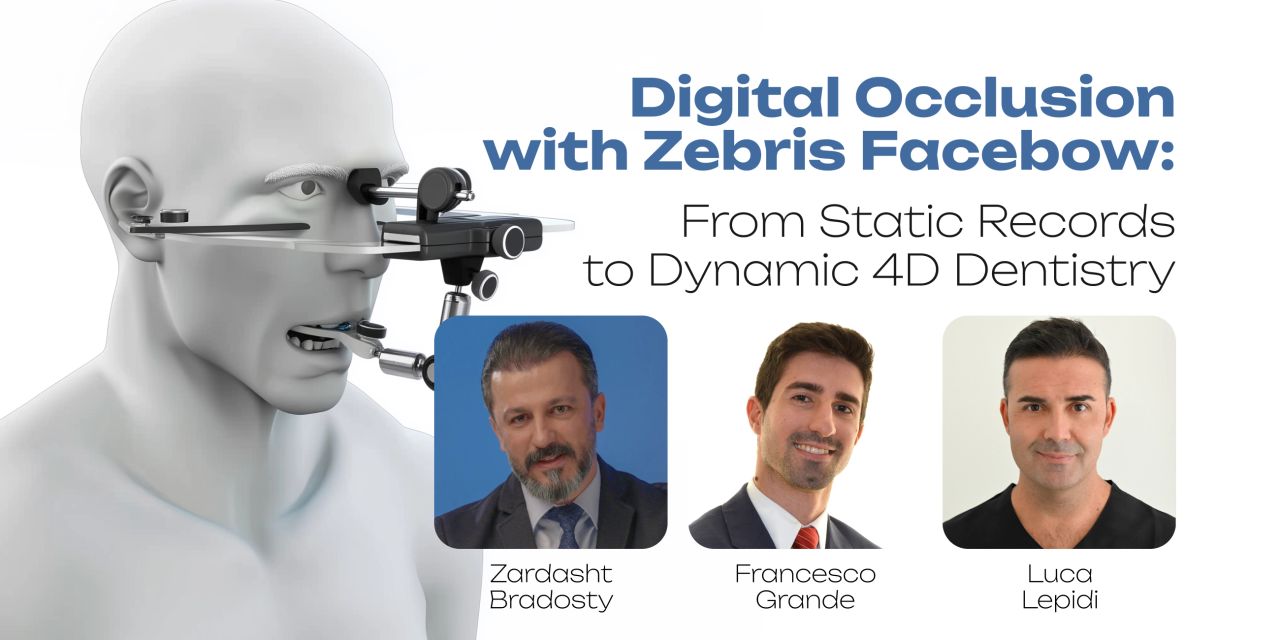
OHI-S Digital Occlusion with Zebris Facebow From Static Records to Dynamic 4D Dentistry 3 lessons 3h 26min
45 $
Format : Videos + PDF
The “Digital Occlusion with Zebris Facebow: From Static Records to Dynamic 4D Dentistry” course is a 3-hour and 26-minute online program comprising 3 lessons. It introduces the power of digital functional analysis through the integration of the Zebris Jaw Motion Analyzer and Digital Facebow workflows, enabling clinicians to capture, analyze, and transfer real mandibular dynamics into restorative design. The program demonstrates how to bridge the gap between clinical function and digital dentistry to achieve predictable, function-driven treatment outcomes.
Learning Objectives
Understand the evolution from static occlusal analysis to dynamic 4D functional dentistry.
Apply digital protocols for capturing mandibular movements, occlusal relationships, and patient-specific functional data.
Integrate Zebris Jaw Motion Analyzer and Digital Facebow records into prosthodontic workflows.
Create a 4D virtual patient for advanced diagnosis and treatment planning.
Transfer functional data into CAD/CAM systems, exocad workflows, and prosthetic design.
Apply clinical applications in full-mouth rehabilitation, crowns, fixed prosthodontics, and occlusal splint therapy.
Implement strategies to reduce occlusal adjustments, improve restoration predictability, and achieve long-term functional stability.
Target Audience
This course is designed for clinicians seeking to integrate digital functional analysis, jaw tracking, and 4D patient simulation into their restorative and prosthetic workflows.
Best for Prosthodontists, Restorative Dentists, Orthodontists, and General Dentists.
Topics
Lesson 1. From Diagnosis to Design: Integrating the Jaw Motion Analyzer in Functional Occlusion
Limitations of traditional occlusal analysis and the advantages of digital jaw motion assessment
Recording mandibular movements and analyzing occlusal contacts, mediotrusion interferences, and mandibular trajectories
Using the Jaw Motion Analyzer to validate the accuracy of digital impressions and intraoral scanning workflows
Integrating JMA recordings into the design of crowns and fixed prosthodontic restorations
Applying JMA data in the fabrication of occlusal bite splints and function-driven prosthetic appliances
Bridging digital diagnosis and restorative design to achieve predictable functional and prosthetic outcomes
Lesson 2. Occlusal Considerations in Prosthodontics: Integrating Zebris Digital Facebow Workflows
Collecting clinical data using digital protocols for prosthodontic treatment planning
Recording and transferring maxillomandibular relationships with the Zebris Digital Facebow
Creating a 4D virtual patient through the acquisition and digitalization of functional clinical data
Integrating digital facebow records into prosthetic rehabilitation planning and CAD/CAM workflows
Managing occlusion in fixed prosthodontics using function-driven digital workflows
Improving the accuracy, predictability, and clinical outcomes of prosthetic rehabilitation through digital occlusal analysis
Lesson 3. Jaw Tracking in Digital Prosthodontics: From Static Models to 4D Patients
Digital jaw tracking technologies and their role in transforming static virtual models into dynamic 4D patient simulations
Complete clinical protocol with Zebris for accurate mandibular motion recording and functional analysis
Transfer of Zebris data into exocad and analog articulators for function-oriented prosthetic design
Clinical applications of Zebris in full-mouth rehabilitation and advanced occlusal treatment planning
Zebris workflows in splint therapy and personalized occlusal appliance fabrication
Common errors in Zebris protocols and strategies for achieving reliable clinical results
Function-driven digital prosthodontics: improving workflow efficiency, reducing occlusal adjustments, and enhancing restoration accuracy
Be the first to review “OHI-S Digital Occlusion with Zebris Facebow From Static Records to Dynamic 4D Dentistry 3 lessons 3h 26min”
You must be logged in to post a review.
Related products





Reviews
There are no reviews yet.