
-
×
 Black's Medical Dictionary, 43rd Edition (PDF)
1 × 6 $
Black's Medical Dictionary, 43rd Edition (PDF)
1 × 6 $ -
×
 Atlas de Técnicas Avançadas em Cirurgia
1 × 5 $
Atlas de Técnicas Avançadas em Cirurgia
1 × 5 $ -
×
 Anatomy of Neuropsychiatry: The New Anatomy of the Basal Forebrain and Its Implications for Neuropsychiatric Illness 1st Edition
1 × 10 $
Anatomy of Neuropsychiatry: The New Anatomy of the Basal Forebrain and Its Implications for Neuropsychiatric Illness 1st Edition
1 × 10 $ -
×
 Diagnostic Electron Microscopy: A Practical Guide to Interpretation and Technique 1st Edition
1 × 10 $
Diagnostic Electron Microscopy: A Practical Guide to Interpretation and Technique 1st Edition
1 × 10 $ -
×
 Textbook of Endocrine Physiology 6th
1 × 6 $
Textbook of Endocrine Physiology 6th
1 × 6 $
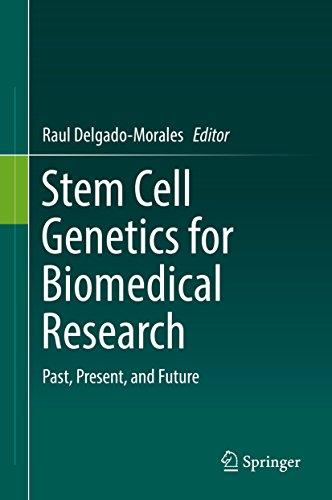
Stem Cell Genetics for Biomedical Research: Past, Present, and Future 1st ed. 2018 Edition
15 $
by
Stem Cell Genetics for Biomedical Research: Past, Present, and Future 1st ed. 2018 Edition
by
This book looks at where stem cell technology is presently and how it is instrumental in advancing the field of disease modeling and cell transplantation. By focusing on major human disorders such as Alzheimer’s disease, cancer, and heart disorders, the book summarizes the major findings in the field of human stem cells and dissect the current limitations on our understanding of stem cells biology. The chapters focus on the genetics, genomics, epigenetics and physiology of stem cells models, together with technological advances on molecular biology such as CRISPR/Cas9 or epigenetic editing, that will be instrumental in the future of human disease modeling and treatment.
In base of the limitations of current disease models and in front of the unmet necessity of finding therapeutical interventions for human disorders, the availability of stem cell technology has opened new doors for several fields. The unlimited self-renewal capacity and more extensive differentiation potential of stem cells offers a theoretically inexhaustible and replenishable source of any cell subtype. Since Professor Shinya Yamanaka described it, 10 years ago in his seminal paper, that somatic cells could be reprogrammed to inducible stem cells (iPSC) just by expressing four transcription factors, the field of has exploded, especially its applications in biomedical research.
Product Details
|
Related products
10 $
Basic Medical Book
Diagnostic Electron Microscopy: A Practical Guide to Interpretation and Technique 1st Edition
10 $