



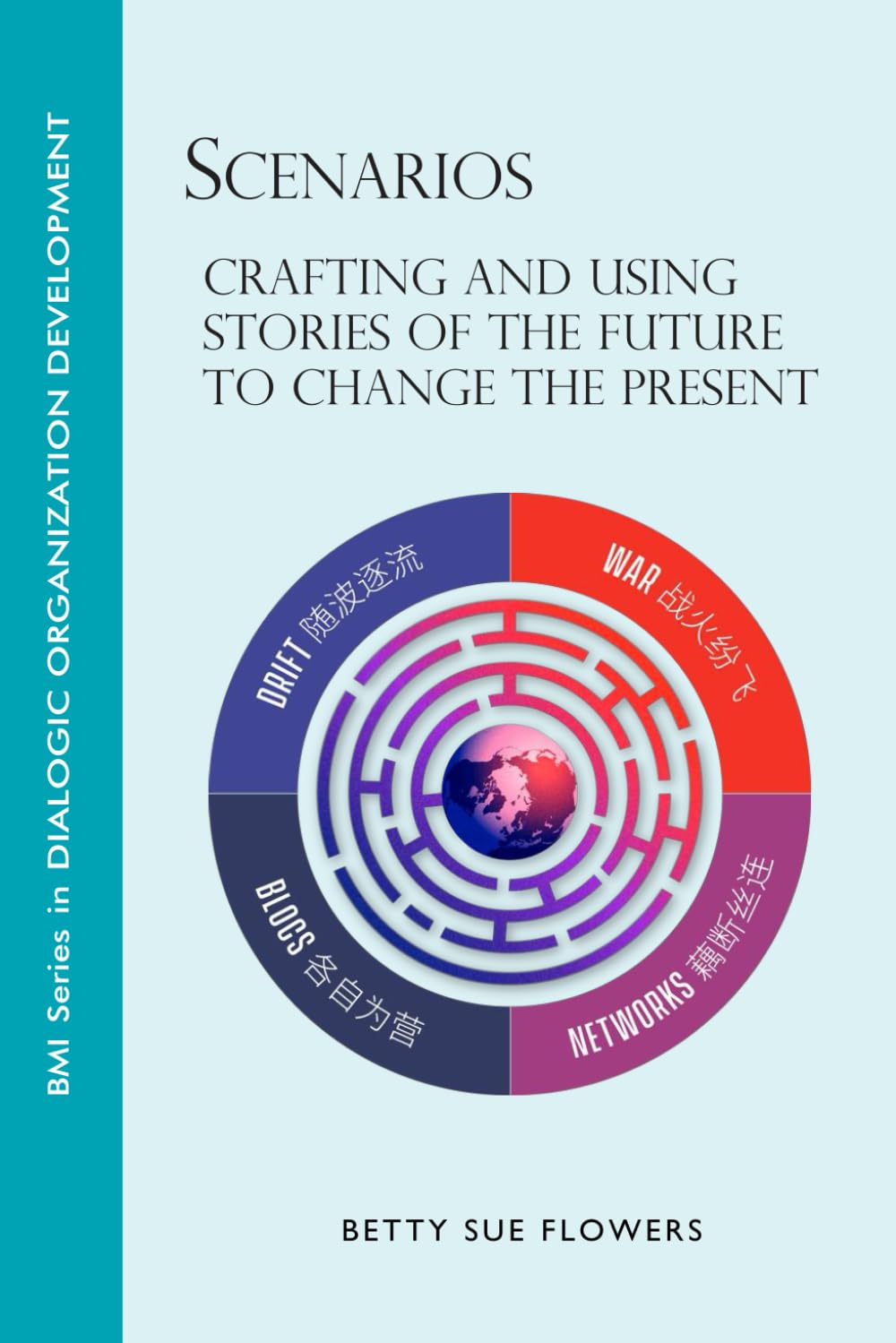
Scenarios: Crafting and Using Stories of the Future to Change the Present (EPUB)
4 $
Format: EPUB
Publisher: Other Publisher
File Size : 1.3
by Betty Sue Flowers, Adam Kahane
Leaders need well-developed foresight because all big decisions are influenced by their story of the future, whether they are aware of it or not. The “official story of the future” is a more or less coherent, more or less conscious, more or less shared narrative about what will happen in 3 months, 6 months, a year, or five years. But as Betty Sue Flowers points out, here’s the weird part: The future is a fiction. It doesn’t exist. Yet you can’t make rational strategic decisions without one.
To manage this, organizations analyze ever-growing volumes of information with increasingly sophisticated analytical techniques and produce forecasts that attempt to predict the future. However, data alone is not enough, and projections are always based on assumptions, a common one being that things will keep trending as they are now.
When an important decision needs to be made, especially when the people involved in making that decision have opposing ideas about what should happen, it can be challenging to hold a generative dialogue rather than staging a fight. In this context, almost any discussion can immediately devolve into an argument. Scenarios can be very useful in creating a space for dialogue in which people can listen to each other and even help tell the story of a possible future that is not the one they most wish to create.
Flowers emphasizes that scenarios are not intended to be predictions. Instead, they act as a stage setting for generative dialogues and much better decisions to be made. By creating a set of different, plausible stories of the future, they are best used to:
Create a container for frank, thoughtful, safe, imaginative conversations about how the organization might adapt if trends change.
Disrupt assumptions sometimes unconsciously held in current stories.
Stimulate more complex and informed stories of the future.
Increase foresight and the organization’s ability to adapt, and
set the ground for generative dialogues that improve the organization in the present.
This book begins with the business case for scenarios, depicts various managerial mindsets one runs into, and explains the client-consultant agreements needed to utilize scenarios for dialogic organization development. You will find clear directions for how to co-create 2-4 equally plausible stories of the future, and use them to stimulate heightened levels of psychological safety and generative capacity in any group that has to make big decisions. There are models for identifying which alternative futures to create scenarios for, advice on constructing and engaging a cross-section of stakeholders, and how to work with them to produce enough fleshed-out logic to begin writing each scenario. She notes things to do and avoid as the group works toward completed scenarios, ready for use. She emphasizes that while there are better and worse quality scenario documents, what’s important is the quality of dialogue they generate. The book is full of seasoned advice on both the content of scenarios and the processes used to produce and use them, to make high-quality dialogues more likely.
You won’t find scenarios in OD textbooks, but they deserve a place. As Flowers describes it, scenarios can stimulate the three enablers of transformational change, narrative, emergence and generative images, to produce conversations that make a difference. While the use of scenarios is most associated with strategic planning, the models offered here can be used for any planning requiring foresight, for example, talent management, product development, sales, to name but a few. Like Appreciative Inquiry and Future Search, Scenarios offer another path to a similar result: generative conversations and a new and better story of the future.
Be the first to review “Scenarios: Crafting and Using Stories of the Future to Change the Present (EPUB)”
You must be logged in to post a review.
Related products






Reviews
There are no reviews yet.