

-
×
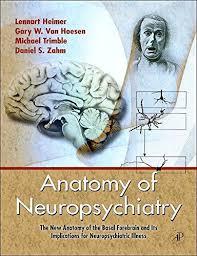 Anatomy of Neuropsychiatry: The New Anatomy of the Basal Forebrain and Its Implications for Neuropsychiatric Illness 1st Edition
1 × 10 $
Anatomy of Neuropsychiatry: The New Anatomy of the Basal Forebrain and Its Implications for Neuropsychiatric Illness 1st Edition
1 × 10 $ -
×
 Lippincott's Concise Illustrated Anatomy: Volume 3: Head & Neck
1 × 4 $
Lippincott's Concise Illustrated Anatomy: Volume 3: Head & Neck
1 × 4 $ -
×
 Renal Physiology: A Clinical Approach (Integrated Physiology Series)
1 × 4 $
Renal Physiology: A Clinical Approach (Integrated Physiology Series)
1 × 4 $ -
×
 Small Animal Soft Tissue Surgery
1 × 4 $
Small Animal Soft Tissue Surgery
1 × 4 $ -
×
 Spencer's Pathology of the Lung 6th, 2 Part Set
1 × 4 $
Spencer's Pathology of the Lung 6th, 2 Part Set
1 × 4 $ -
×
 Dynamic Ophthalmic Ultrasonography: A Video Atlas for Ophthalmologists and Imaging Technicians (PDF)
1 × 4 $
Dynamic Ophthalmic Ultrasonography: A Video Atlas for Ophthalmologists and Imaging Technicians (PDF)
1 × 4 $ -
×
 Supporting Sucking Skills In Breastfeeding Infants 2nd
1 × 4 $
Supporting Sucking Skills In Breastfeeding Infants 2nd
1 × 4 $ -
×
 Translational Ayurveda
1 × 10 $
Translational Ayurveda
1 × 10 $ -
×
 Get Fit, Stay Fit, 7th Edition
1 × 5 $
Get Fit, Stay Fit, 7th Edition
1 × 5 $ -
×
 Developability of Biotherapeutics: Computational Approaches
1 × 5 $
Developability of Biotherapeutics: Computational Approaches
1 × 5 $ -
×
 Black's Medical Dictionary, 43rd Edition (PDF)
1 × 6 $
Black's Medical Dictionary, 43rd Edition (PDF)
1 × 6 $ -
×
 Integrative Therapies for Depression: Redefining Models for Assessment, Treatment and Prevention
1 × 5 $
Integrative Therapies for Depression: Redefining Models for Assessment, Treatment and Prevention
1 × 5 $ -
×
Pediatric Radiology (The Society for Pediatric Radiology) 2014 (CME Videos)
1 × 10 $ -
×
 The Johns Hopkins Internal Medicine Board Review: Certification and Recertification, 5th Edition (PDF)
1 × 18 $
The Johns Hopkins Internal Medicine Board Review: Certification and Recertification, 5th Edition (PDF)
1 × 18 $ -
×
 Atlas of Early Zebrafish Brain Development: A Tool for Molecular Neurogenetics
1 × 5 $
Atlas of Early Zebrafish Brain Development: A Tool for Molecular Neurogenetics
1 × 5 $

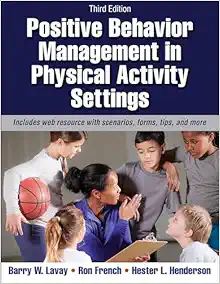
Positive Behavior Management in Physical Activity Settings, 3rd Edition (PDF)
15 $
Format: Publisher PDF
File Size : 8.7 MB
By Barry W. Lavay, Ron French, Hester L. Henderson
It’s never been more challenging to manage behavior and motivate students in a physical activity setting.
There are more at-risk children and students with disabilities to manage. Physical activity professionals also face the unique challenge of providing instruction to large groups with limited resources and distractions galore. If not handled correctly, these challenges can quickly add up to chaos, ineffective instruction, and frustrated, burnt-out physical activity professionals.
That’s where the third edition of Positive Behavior Management in Physical Activity Settings, Third Edition comes in. This resource will help you not only overcome those and other discipline challenges, but also use tried-and-true, positive techniques to develop appropriate and responsible behaviors and good character among all learners.
This new edition incorporates principles, methods, and instructional practices from psychology, special education, pedagogy, recreation, athletics, and coaching. It shows teachers, coaches, and recreation leaders how to apply the principles that have proven effective in schools, youth sport programs, and recreation sites.
Positive Behavior Management in Physical Activity Settings offers this new material:
• A new chapter on bullying, providing up-to-date information to help you recognize and manage such behavior within your group
• A new chapter on children with special needs, including autism spectrum disorder, attention deficit disorder, learning disabilities, intellectual disabilities, traumatic brain injury, and behavioral/emotional disabilities
• A new chapter on behavior management ethics and professionalism, to help those who are preparing to be physical activity professionals at the pre-service and in-service levels
• New sections on motivating children who are overweight or obese, using the latest research to help you to encourage them to participate
Also new to this edition are an instructor guide and a web resource. The instructor guide offers different sample syllabi, showing various ways to teach the course; sample assignments; answers to chapter review questions; suggested further readings; and useful websites and apps. The web resource supplies behavior management scenarios, sample forms (checklists, rubrics, certificates, worksheets) from the chapters, instructions for designing an Applied Behavior Analysis graph and a trifold display, useful websites and apps, and a glossary by chapter.
This text provides you with evidence-based strategies in managing special needs populations, including designing a positive behavioral support (PBS) model and a behavioral intervention plan (BIP), as well as information on response to intervention (RTI).
The authors have added a fourth section to this new edition. Part I details the challenges that professionals face in developing a positive learning environment, and shows readers how to be proactive in doing so. Part II outlines the interventions that physical activity professionals have successfully used in a variety of settings. This part includes chapters that discuss behavioral, humanistic, and biophysical approaches. The final chapter in this section addresses how to evaluate the behavior intervention.
Part III explores behavior management with various populations, and offers the new chapters on bullying and on special needs children. In part IV, the authors discuss ethical and professional behavior of physical activity professionals relative to the application of behavior management techniques used with children and youth with a focus on professionalism. The final chapter will synthesize the information presented in this text and assist the reader to take the appropriate steps needed to develop a working, teaching, and behavior management portfolio.
GUIDANCE TO MOTIVATE CHILDREN
Positive Behavior Management in Physical Activity offers current and future K-12 physical educators, coaches, recreation specialists, and adapted physical education specialists guidance in motivating young people. You will learn how to manage behavior and create a physical activity environment that is conducive to performance and learning—and that is designed to empower children rather than control their behavior.
Product Details
Publisher : Human Kinetics; Third edition (December 4, 2015)
Language : English
Paperback : 296 pages
ISBN-10 : 145046579X
ISBN-13 : 978-1450465793
Reading age : 18 years and up
Be the first to review “Positive Behavior Management in Physical Activity Settings, 3rd Edition (PDF)”
You must be logged in to post a review.
Related products







Reviews
There are no reviews yet.