

-
×
 Genetic Association Studies: Background, Conduct, Analysis, Interpretation
1 × 10 $
Genetic Association Studies: Background, Conduct, Analysis, Interpretation
1 × 10 $ -
×
 Neurosurgical Operative Atlas: Spine and Peripheral Nerves, 3rd Edition (Original PDF & VIDEOS)
1 × 10 $
Neurosurgical Operative Atlas: Spine and Peripheral Nerves, 3rd Edition (Original PDF & VIDEOS)
1 × 10 $ -
×
 101+ Careers in Public Health, 2nd Edition
1 × 5 $
101+ Careers in Public Health, 2nd Edition
1 × 5 $ -
×
UCSF Neuro and Musculoskeletal Imaging 2014 (CME Videos)
1 × 10 $ -
×
 First Aid Step 1 Express Videos 2015 (USMLE-Rx)
1 × 5 $
First Aid Step 1 Express Videos 2015 (USMLE-Rx)
1 × 5 $ -
×
 Genetics: From Genes to Genomes, 7th Edition (PDF)
1 × 15 $
Genetics: From Genes to Genomes, 7th Edition (PDF)
1 × 15 $ -
×
 Neurological Emergencies in Clinical Practice (EPUB)
1 × 5 $
Neurological Emergencies in Clinical Practice (EPUB)
1 × 5 $ -
×
 National Diagnostic Imaging Symposium 2015 (CME Videos)
1 × 10 $
National Diagnostic Imaging Symposium 2015 (CME Videos)
1 × 10 $ -
×
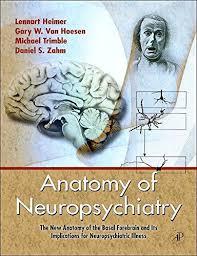 Anatomy of Neuropsychiatry: The New Anatomy of the Basal Forebrain and Its Implications for Neuropsychiatric Illness 1st Edition
1 × 10 $
Anatomy of Neuropsychiatry: The New Anatomy of the Basal Forebrain and Its Implications for Neuropsychiatric Illness 1st Edition
1 × 10 $


Plastic Reason: An Anthropology of Brain Science in Embryogenetic Terms
15 $
by Tobias Rees (Author)
Plastic Reason: An Anthropology of Brain Science in Embryogenetic Terms
by Tobias Rees (Author)
- Throughout the twentieth century, neuronal researchers knew the adult human brain to be a thoroughly fixed and immutable cellular structure, devoid of any developmental potential.
Plastic Reason
- is a study of the efforts of a few Parisian neurobiologists to overturn this rigid conception of the central nervous system by showing that basic embryogenetic processes—most spectacularly the emergence of new cellular tissue in the form of new neurons, axons, dendrites, and synapses—continue in the mature brain. Furthermore, these researchers sought to demonstrate that the new tissues are still unspecific and hence literally plastic, and that this cellular plasticity is constitutive of the possibility of the human.
Plastic Reason
- , grounded in years of fieldwork and historical research, is an anthropologist’s account of what has arguably been one of the most sweeping events in the history of brain research—the highly contested effort to consider the adult brain in embryogenetic terms. A careful analysis of the disproving of an established truth, it reveals the turmoil that such a disruption brings about and the emergence of new possibilities of thinking and knowing.
|
Related products


Basic Medical Book
Surgical Anatomy of the Ocular Adnexa: A Clinical Approach (Ophthalmology Monographs)
6 $


5 $

Basic Medical Book
Diagnostic Electron Microscopy: A Practical Guide to Interpretation and Technique 1st Edition
10 $