

-
×
 ITI International Team for Implantology Webinar & Video Lectures Package Part-3
1 × 50 $
ITI International Team for Implantology Webinar & Video Lectures Package Part-3
1 × 50 $ -
×
 Adhesive Dentistry Procedures
1 × 49 $
Adhesive Dentistry Procedures
1 × 49 $ -
×
 Lippincott's Concise Illustrated Anatomy: Volume 3: Head & Neck
1 × 4 $
Lippincott's Concise Illustrated Anatomy: Volume 3: Head & Neck
1 × 4 $ -
×
 ITI International Team for Implantology Webinar & Video Lectures Package Part-4
1 × 50 $
ITI International Team for Implantology Webinar & Video Lectures Package Part-4
1 × 50 $ -
×
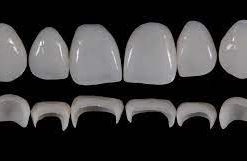 Prosthetic Rehabilitation on Natural Teeth: Predictable, Esthetic and Systematic Steps
1 × 38 $
Prosthetic Rehabilitation on Natural Teeth: Predictable, Esthetic and Systematic Steps
1 × 38 $

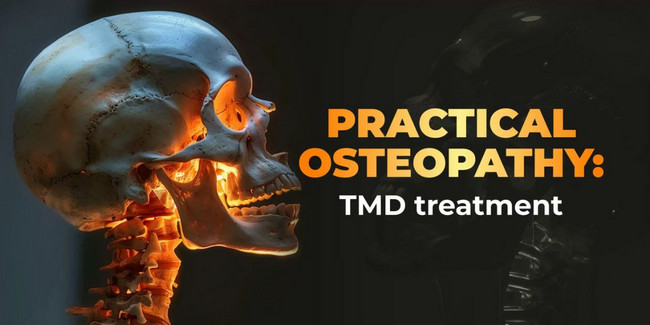
OHI-S Practical osteopathy effective TMD treatment
30 $
Format : 7 videos + 7 audios + 7 file sub vtt, size: 3.41 GB
6 lessons + 1 free (5h 45min)
The purpose of the new course is to teach dentists the protocols of osteopathic manipulative techniques for the treatment of TMDs.
The course lecturers are specialists with extensive experience in the treatment of TMJ dysfunctions:
– Nick Rainey — American board certified orthopaedic specialist
– Tzvika Greenbaum — Certified сervical and temporomandibular therapist.
During the course you will learn:
– Diagnostic protocols and techniques of TMDs
– Osteopathic manipulation for TMD
– Exercise for TMD and headaches management
– Еvidence-based strategies for musculoskeletal management of patients with TMDs during orthodontic treatment.
The OHI‑S Practical Osteopathy: Effective TMD Treatment course is best for orthodontists, prosthodontists, general dentists, and allied professionals who want structured, CE‑accredited training in osteopathic techniques for managing temporomandibular disorders (TMD). It emphasizes functional rehabilitation, musculoskeletal balance, and evidence‑based protocols that complement dental and orthodontic care.
Who Should Enroll
Orthodontists managing patients with TMD linked to occlusion, jaw function, or orthodontic mechanics.
Prosthodontists & restorative dentists treating patients with occlusal dysfunction and pain requiring functional rehabilitation.
General dentists encountering TMD in routine practice and seeking non‑invasive management strategies.
Osteopaths & physiotherapists collaborating with dental teams to provide musculoskeletal support for TMD patients.
Residents, fellows, and trainees in orthodontics, prosthodontics, or musculoskeletal therapy seeking structured training.
What You’ll Learn
Osteopathic principles: musculoskeletal balance and manual therapy approaches for TMD.
Diagnosis protocols: clinical examination of occlusion, musculature, and joint function.
Treatment techniques: practical osteopathic maneuvers to relieve pain and restore function.
Interdisciplinary integration: combining osteopathy with orthodontic and dental protocols for comprehensive care.
Case‑based lessons: real patient examples demonstrating effective osteopathic management of TMD.
+ Topics:
Lesson 1.Understanding TMD: An Overview of TMJ Anatomy and Diagnosis
– Relevant anatomy including the muscles of mastication, mandibular nerve (V3), trigeminocervical nucleus, articular disc, temporomandibular, and cervical spine
– Disc displacement classification
– Disc disorder progression to patient presentations
– The quality of the prevalence data of TMJ disorders
– Diagnosis of orofacial pain
– Prognosis of TMD.
Recommended for: Functional dentists, General dentists.
Lesson 2.Diagnostic Protocols of orofacial pain and TMDs
– The diagnostic techniques of TMDs according to the current diagnostic criteria
– Diagnosis of TMDs according to:
– The international diagnostic criteria
– American academy of orofacial pain.
– Subjective and objective diagnostic criteria of TMDs
– The physical assessment of patients with orofacial pain
– Subgrouping patients with TMDs:
– Orofacial pain
– Disc disorders and degenerative joint disease.
– Analysis of clinical cases.
Recommended for: Functional dentists, Orthodontists, General dentists.
Lesson 3.Posture, Malocclusion and TMDs: Structural Integrity and Function
– The scientific association between TMDs, bite, posture, and the cervical spine
– Clinical connection between neck pain and TMDs
– The supported association between TMDs and cervical spine disorders
– The neck and jaw functional, postural, and muscular connection
– Protocols of cranio-cervical flexion test
– Protocols of flexion-rotation test (FRT)
– The relationship between posture, function, and pain within the craniocervical mandibular (CCM) complex
– Analysis of clinical cases.
Recommended for: Functional dentists, Orthodontists, General dentists.
Lesson 4.Relevant managment of TMDs. Clinical and Evidence-based Approach
– Еvidence-based strategies for musculoskeletal management of patients with TMDs during orthodontic treatment
– Protocols for management of common joint and muscular disorders during orthodontic treatment using manual the exercise therapies
– Step-by-step of protocols and management techniques of patients who are suffering from severe TMDs pain
– Clinical protocols of managing discogenic patients and degenerative cases
– Analysis of clinical cases.
Recommended for: Functional dentists, Orthodontists, General dentists.
Lesson 5.Osteopathic manipulation for TMD. Step-by-step protocols
– The mechanics of upper cervical ligament testing
– The mechanics of cranial nerve testing
– When should the cranial nerve testing and upper cervical ligament testing be performed?
– The mechanics of manipulative techniques for the upper cervical spine and the TMJ
– The cervical flexion-rotation test
– Atlanto-Axial (AA) manipulation
– Atlanto-occipital manipulation
– Medial pterygoid manipulation
– The research for manipulative techniques for those with TMJ pain and disorders.
Recommended for: Functional dentists, General dentists.
Lesson 6.Exercise for TMD and Headaches Management
– The TMD exercise guide
– TMJ movement evaluation with:
– the C-curve exercise. Repeated lateral deviation
– the S-curve exercise. Resisted lateral deviation.
– The Mannheimer exercise for TMD management;
– The scientific research on exercises for TMJ disorders and headaches
– Step-by-step protocols of various exercises for management of TMJ disorders
– Step-by-step protocols of various exercises for management different type of headache disorders
– The relationship of cardiovascular exercise to headache and TMJ pain.
Recommended for: Functional dentists, General dentists.
Lesson 7.Posture and its Relationship with Temporomandibular Disorders (TMD) and Headaches
– The multiple aspects of posture that can be evaluated for a patient
– The research link between posture, TMJ disorders and headaches
– Forward head posture (FHP) and occlusion
– The relation between posture and headaches. Migraine and posture
– Forward head posture (FHP) and tension type headache (TTH)
– Forward head posture (FHP) and neck pain
– The ability of practitioners to improve posture
– Application of researches on posture to educate patients;
– Intervention protocols that can be used to improve posture.
Recommended for: Functional dentists, General dentists.
Be the first to review “OHI-S Practical osteopathy effective TMD treatment”
You must be logged in to post a review.
Related products
Dental Ebook And Video
FOR Esthetic Soft Tissue – Inaki Gamborena, Patrick Rutten and Luc Rutten
30 $
Dental Ebook And Video
Plastic-Esthetic Periodontal and Implant Surgery: The Special DVD Compendium
39 $
Dental Ebook And Video
ITI International Team for Implantology Webinar & Video Lectures Package Part-3
50 $
Dental Ebook And Video
Vertical Preparation Protocols: The Complete Guide in 24 Lessons from Tomorrow Tooth
38 $
Dental Ebook And Video
60 $
Dental Ebook And Video
ITI International Team for Implantology Webinar & Video Lectures Package Part-2
50 $
Reviews
There are no reviews yet.