

-
×
 Occlusion Simplified and Managing Vertical Dimension (7 Parts)
1 × 45 $
Occlusion Simplified and Managing Vertical Dimension (7 Parts)
1 × 45 $ -
×
 Plastic-Esthetic Periodontal and Implant Surgery: The Special DVD Compendium
1 × 39 $
Plastic-Esthetic Periodontal and Implant Surgery: The Special DVD Compendium
1 × 39 $ -
×
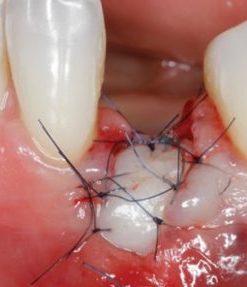 Soft Tissue Management around Natural Teeth and Dental Implants: Fundamentals, Evidence Based and Surgical Innovations
1 × 38 $
Soft Tissue Management around Natural Teeth and Dental Implants: Fundamentals, Evidence Based and Surgical Innovations
1 × 38 $ -
×
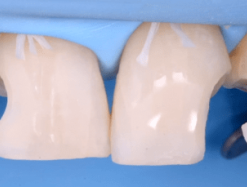 Direct and Indirect Adhesive Restorations
1 × 36 $
Direct and Indirect Adhesive Restorations
1 × 36 $ -
×
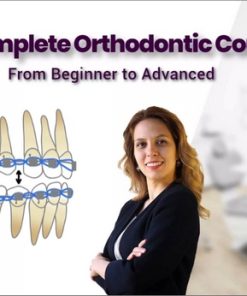 Complete Orthodontic Course: From Beginner to Advanced
1 × 85 $
Complete Orthodontic Course: From Beginner to Advanced
1 × 85 $ -
×
 Digital Rehabilitation
1 × 49 $
Digital Rehabilitation
1 × 49 $ -
×
 Esthetic Rehabilitation: Esthetic and Functional Integration of the Prosthetic Rehabilitation (CME VIDEOS)
1 × 60 $
Esthetic Rehabilitation: Esthetic and Functional Integration of the Prosthetic Rehabilitation (CME VIDEOS)
1 × 60 $ -
×
 Ridge Augmentation – Luca De Stavola
1 × 59 $
Ridge Augmentation – Luca De Stavola
1 × 59 $ -
×
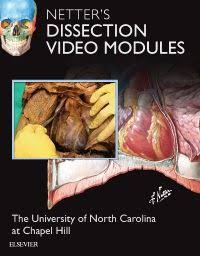 Netter's Dissection Video Modules (Complete HTML)
1 × 80 $
Netter's Dissection Video Modules (Complete HTML)
1 × 80 $ -
×
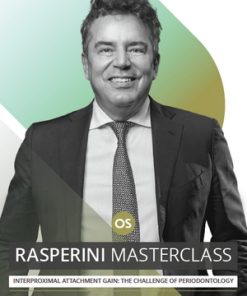 Rasperini Masterclass: Interproximal Attachment Gain – The Challenge Of Periodontology
1 × 89 $
Rasperini Masterclass: Interproximal Attachment Gain – The Challenge Of Periodontology
1 × 89 $ -
×
 ITI International Team for Implantology Webinar & Video Lectures Package Part-3
1 × 50 $
ITI International Team for Implantology Webinar & Video Lectures Package Part-3
1 × 50 $ -
×
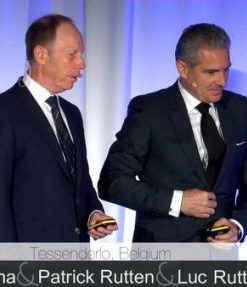 FOR Esthetic Soft Tissue – Inaki Gamborena, Patrick Rutten and Luc Rutten
1 × 30 $
FOR Esthetic Soft Tissue – Inaki Gamborena, Patrick Rutten and Luc Rutten
1 × 30 $
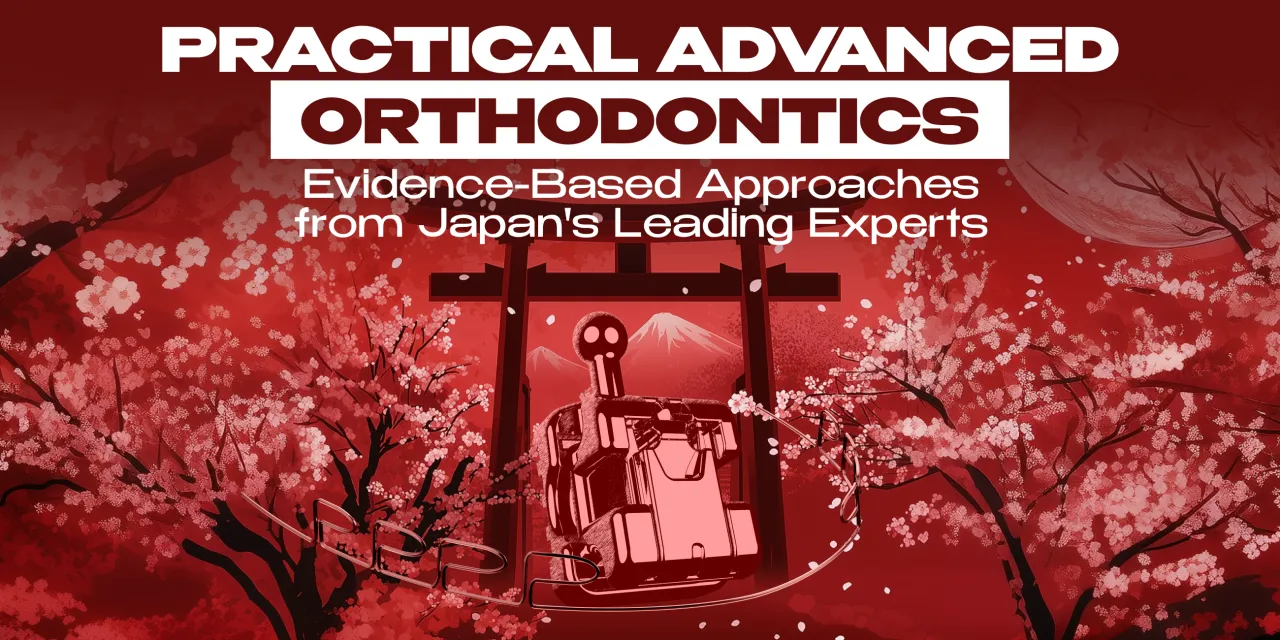
OHI-S Practical Advanced Orthodontics. Evidence-Based Approaches from Japan’s Leading Experts
65 $
Format : 8 videos + 8 audios + 8 file sub vtt, size: 5.05 GB
8 lessons (4h 47min)
Sadao Sato, Satoshi Aoki, Masamitsu Takahashi, and Takao Minamidate – meet the leading experts of the Japanese school of orthodontics, where your toughest clinical questions receive clear, evidence-based answers!
Together with these legendary lecturers, you will explore:
– Evidence-based protocols for managing complex open-bite cases with Dr. Sadao Sato
– Protocols for non-extraction and non-surgical orthodontic treatment
– Orthodontic treatment approaches for malocclusion and TMJ dysfunctions
– Diagnosis-driven orthodontic treatment with a focus on jaw function
– Protocols for treating Class 2 malocclusions with aligner therapy
– Biomechanics and aligner protocols involving first premolar extractions
– The use of TADs for vertical control
– Treatment protocols using TADs for Class 2 and Class 3 cases.
The OHI‑S Practical Advanced Orthodontics: Evidence‑Based Approaches from Japan’s Leading Experts course is best for orthodontists, general dentists, and dental residents who want structured, CE‑accredited training in advanced orthodontic protocols guided by internationally recognized Japanese expertise. It emphasizes evidence‑based treatment planning, biomechanics, and innovative approaches for predictable functional and aesthetic outcomes.
Who Should Enroll
Orthodontists seeking to refine their skills with advanced, evidence‑based Japanese treatment protocols.
General dentists integrating orthodontics into comprehensive care and wanting exposure to advanced techniques.
Residents & fellows in orthodontics gaining structured training from leading Japanese experts.
Prosthodontists & restorative dentists collaborating on interdisciplinary cases involving orthodontic alignment.
Dental technicians supporting orthodontic workflows with precision and digital integration.
What You’ll Learn
Japanese orthodontic philosophy: precision, efficiency, and minimally invasive approaches.
Evidence‑based protocols: biomechanics, anchorage control, and treatment planning for complex cases.
Innovative techniques: digital workflows, skeletal anchorage, and interdisciplinary orthodontics.
Functional integration: occlusion, airway, and musculoskeletal considerations in orthodontic treatment.
Case‑based lessons: real patient examples demonstrating predictable functional and aesthetic results.
+ Topics:
Lesson 1.Orthodontic Treatment According to the Developmental Mechanism of Malocclusion
– Defining craniomandibular orthodontics
– Principles of craniomandibular orthodontics
– Etiology of malocclusion
– Maxillofacial growth and changes in occlusal vertical dimension and occlusal plane
– Adaptation of the mandible to changes in occlusal vertical dimension and occlusal plane.
Recommended for: Orthodontists, General dentists.
Lesson 2.Key points of Non-extraction and Non-surgical Orthodontic Treatment: Evidance-based Approach
– Non-extraction and non-surgical treatment protocols for open bite published by Sadao Sato
– The effect of posterior discrepancy in open bite cases
– The concept of posterior discrepancy
– Treatment mechanics for Class 1 open bite cases
– Why are premolar extractions and surgical procedures necessary?
– Relationship between occlusal plane inclination and mandibular adaptive changes
– Effectiveness of orthodontic treatment in managing malocclusion with TMD
– Analysis of clinical cases.
Recommended for: Orthodontists, General dentists.
Lesson 3.Orthodontic Teatment Based on Diagnosis and Examination with Consideration of Jaw Function
– Examination and diagnostic methods considering functional elements
– Symptoms of temporomandibular joint disorders and jaw function tests
– The importance of premolars and considerations for extractions
– Setting the therapeutic mandibular position, and understanding occlusal planes and vertical dimension
– Combination of orthodontic treatment and prosthetic treatment
– Analysis of clinical cases.
Recommended for: Orthodontists, General dentists.
Lesson 4.Retreatment of Compromised Cases Including Cases with Extraction
– Treatment policy for retreatment
– Clinical guidelines for managing a retreatment case
– The importance of premolars and considerations for extractions
– Protocols for controlling mandibular position and the occlusal plane
– Protocols for determining the occlusal vertical dimension
– Purpose of pre-prosthetic orthodontics
– Strategic leveling
– Orthodontic treatment using MEAW
– Analysis of clinical cases.
Recommended for: Orthodontists, General dentists.
Lesson 5.Class 2 Treatment Protocols with Aligners
– Class 2 treatment approach in the maxilla
– Class 2 treatment approach in the mandible
– Extraction and non-extraction treatment protocols for “Full-Cusp” Class 2 cases
– Cephalogram analysis of extraction and non-extraction Class 2 cases
– Aligner biomechanics in Class 2 cases.
Recommended for: Orthodontists, General dentists.
Lesson 6.Extraction Method of Treating Class 2
– Defining the chief complaint of patients
– Management of the curve of Spee
– Step-by-step treatment protocols for Class 2 cases with extractions using aligners
– Sequential staging of class 2: ordering sequential distalization
– Protocols of Class 2 treatment in growing patients
– Mandibular advancement with aligners
– Clinical and biomechanical tips for Class 2
– Clinical cases brainstorming
– Most common mistakes.
Recommended for: Orthodontists, General dentists.
Lesson 7.Application of TADs for Vertical Control
– Vertical control of anterior teeth. Improvement or prevention of gummy smile
– Vertical control of the molar region
– Difference between intrusion by rotation of occlusal plane applying biomechanics and absolute intrusion
– Effect of the vertical position of TADs on the inclination of the occlusal plane
– Analysis of clinical cases.
Recommended for: Orthodontists, General dentists.
Lesson 8.Advanced Biomechanics and TADs Application in Complex Orthodontic Cases
– Relationship between lever arm length and anterior tooth axis control
– Vertical control of the entire maxillary dentition in Class 2 cases
– Biomechanics of full-arch distalization using TADs
– Treatment protocols for bimaxillary protrusion using TADs
– Treatment of open bite using TADs
– Treatment protocols for Class 3 using buccal shelf microimplants.
Recommended for: Orthodontists, General dentists.
Be the first to review “OHI-S Practical Advanced Orthodontics. Evidence-Based Approaches from Japan’s Leading Experts”
You must be logged in to post a review.
Related products
Dental Ebook And Video
Prosthetic Rehabilitation on Natural Teeth: Predictable, Esthetic and Systematic Steps
38 $
Dental Ebook And Video
Rasperini Masterclass: Interproximal Attachment Gain – The Challenge Of Periodontology
89 $
Dental Ebook And Video
Extraction Socket – Preservation/Grafting; Immediate vs Delayed Implants; Pontic Site Development
38 $
Reviews
There are no reviews yet.