

 Extraction Socket – Preservation/Grafting; Immediate vs Delayed Implants; Pontic Site Development
  Digital Rehabilitation
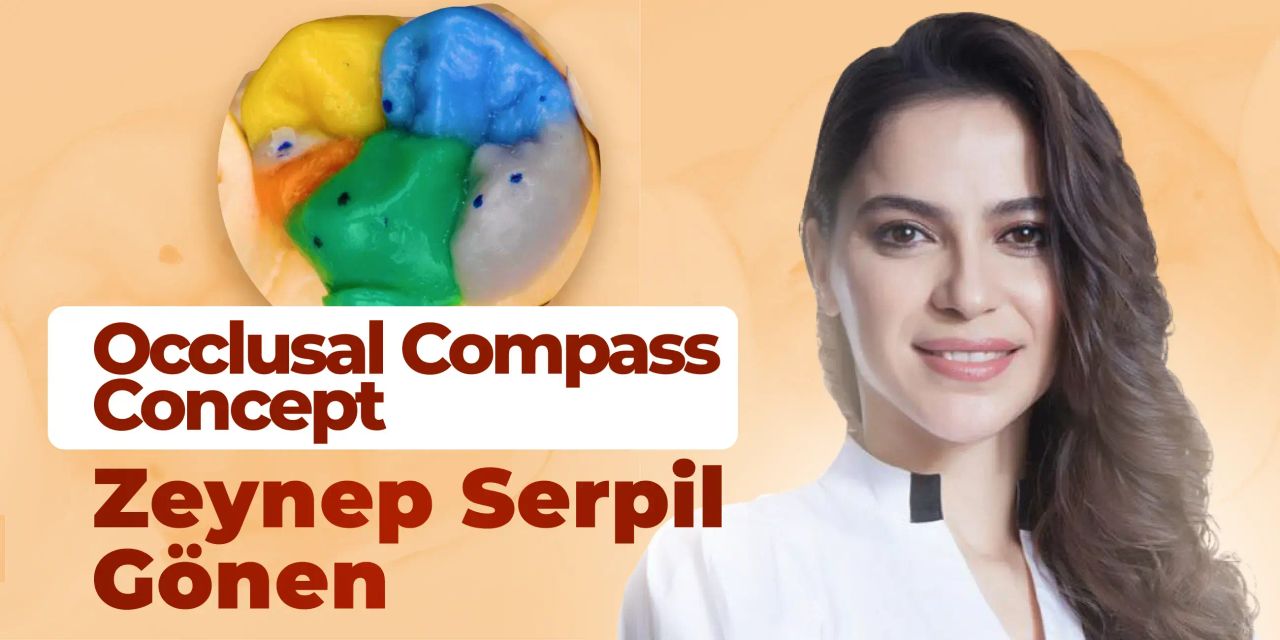
OHI-S Occlusal Compass Concept Laboratory Protocols for Functional Rehabilitation
30 $
Format : 4 videos + 4 audios + 4 file sub vtt, size: 985,38 MB
3 lessons + 1 free (2h 50min)
Achieve occlusal guidance and balance with the occlusal compass concept in functional rehabilitative cases!
During the course, you will learn about:
– Protocols for the assessment of functional wear facets
– Occlusal compass-guided wax-up
– Clinical application of the Natural Wax Technique (NAT) in static and dynamic occlusion
– Articulator-centric registration and anterior teeth in occlusal stability.
From a stable static occlusion to a guided and balanced dynamic occlusion free of interferences, this course is your chance to take your wax-up to the next level with the occlusal compass concept!
The OHI‑S Occlusal Compass Concept: Laboratory Protocols for Functional Rehabilitation course is best for prosthodontists, restorative dentists, orthodontists, and dental technicians who want structured, CE‑accredited training in occlusal analysis and laboratory protocols to achieve predictable functional rehabilitation. It emphasizes the “Occlusal Compass” as a diagnostic and design tool for guiding restorations and prosthetics.
Who Should Enroll
Prosthodontists managing complex occlusal rehabilitation and full‑mouth reconstructions.
General & restorative dentists treating patients with occlusal dysfunction, wear, or temporomandibular disorders (TMD).
Orthodontists integrating occlusal compass principles into treatment planning for functional stability.
Dental technicians & lab professionals fabricating restorations that respect occlusal anatomy and functional pathways.
Residents, fellows, and trainees in prosthodontics, restorative dentistry, or orthodontics seeking structured occlusion training.
What You’ll Learn
Occlusal Compass Concept: a systematic approach to analyzing mandibular movements and occlusal pathways.
Laboratory protocols: wax‑ups, articulator use, and digital workflows aligned with occlusal compass principles.
Functional rehabilitation: restoring occlusion in patients with wear, parafunction, or complex cases.
Interdisciplinary integration: collaboration between dentist and technician for predictable functional outcomes.
Case‑based lessons: clinical examples showing how occlusal compass analysis guides restorative design.
+ Topics:
Lesson 1.Natural Wax Technique (NAT): Achieving Stable Static Occlusion
– Centric-static occlusal concept
– History and concept of the Natural Wax Technique (NAT)
– The fundamentals of the dental occlusal compass approach
– Dental occlusal compass concept approach, including:
– Color-coded segments
– Functional main directions.
– Utilization of the occlusal compass concept approach in:
– Protrusion (PT) movement
– Lateral excursion (LT) movement
– Mediotrusion (MT) movement
– Lateroprotusion (LPT) movement
– Medioprotrusion (MPT) movement
– Retrusive movement
– Immediate side shift (ISS).
– Application of the Natural Wax Technique (NAT) and functional wax-up
– Step-by-step protocols for the Natural Wax Technique (NAT).
Lesson 2.Natural Wax Technique (NAT) Dynamic Occlusion: Function and Guidance
– Defining the Natural Wax Technique (NAT) dynamic occlusion movement
– Functional areas and cusp-fossa relation in excrusive and incrusive movement
– Dynamic occlusion concept in posteriors: natural and functional wear process
– The condylar path way when working with the occlusal compass concept approach
– Analysis of tooth morphological anatomy.
Recommended for: Functional dentists, Dental technicians.
Lesson 3.Anterior Teeth Rehabilitation: Guidance and Balance in Harmony
– Tasks and relationships of anterior teeth in static and dynamic occlusion
– Relationship of anterior tooth morphology with function and aesthetics
– Function-related relations of the aesthetic and beauty phenomena
– Static and dynamic occlusion when restoring anterior teeth morphology
– Considerations for anterior tooth design in prosthodontic and restorative dentistry
– The significance of anterior teeth in occlusal stability and overall oral health
– Natural Wax Technique (NAT) for the rehabilitation of anterior teeth.
Recommended for: Functional dentists, Dental technicians.
Lesson 4.Articulator Centric Registration and Clinical Application of the Occlusal Compass Concept
– Step-by-step occlusal adjustments with different articulator settings
– Step-by-step facebow registration and bite transfer
– Finding, marking, and evaluating wear facets on the mounted dental cast
– Physiological freeway space on the balancing side
– Tips and tricks on working with the occlusal compass concept for full arch rehabilitation.
Recommended for: Functional dentists, Dental technicians.
Be the first to review “OHI-S Occlusal Compass Concept Laboratory Protocols for Functional Rehabilitation”
You must be logged in to post a review.
Related products

Dental Ebook And Video
ITI International Team for Implantology Webinar & Video Lectures Package Part-4
50 $
Dental Ebook And Video
60 $
Dental Ebook And Video
Vertical Preparation Protocols: The Complete Guide in 24 Lessons from Tomorrow Tooth
38 $
Dental Ebook And Video
FOR Esthetic Soft Tissue – Inaki Gamborena, Patrick Rutten and Luc Rutten
30 $
Dental Ebook And Video
Plastic-Esthetic Periodontal and Implant Surgery: The Special DVD Compendium
39 $
Reviews
There are no reviews yet.