

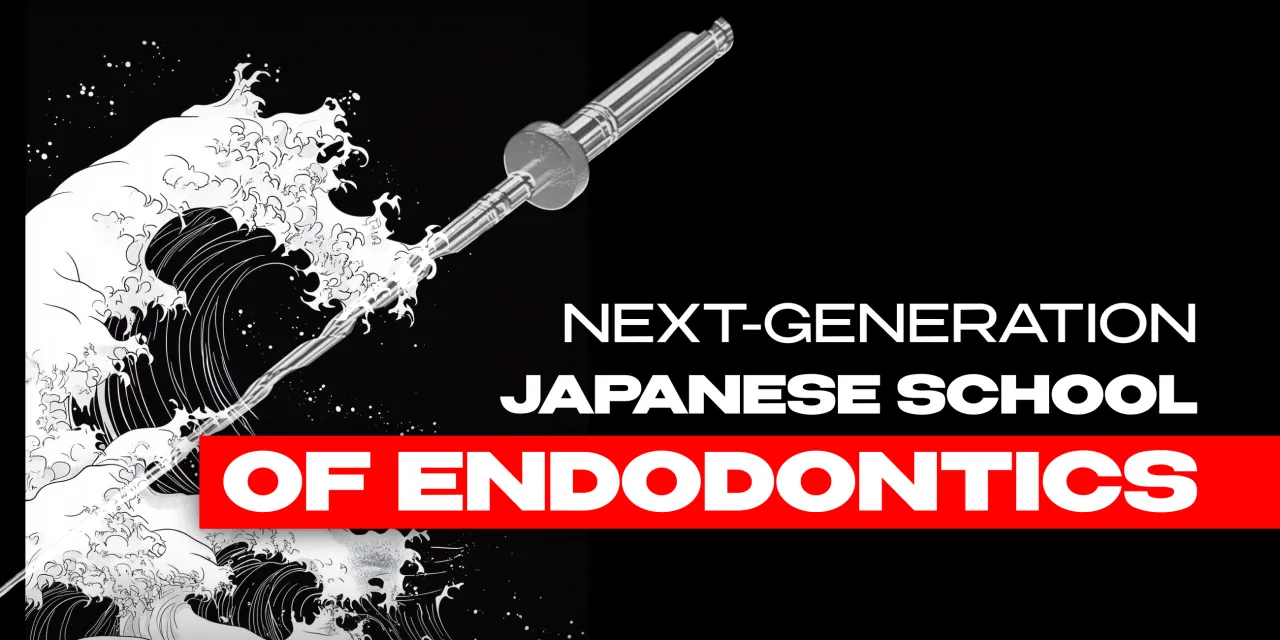
OHI-S Next-Generation Japanese School of Endodontics. Treatment Guided by the Latest Technologies and Approaches
60 $
Format : 8 videos + 8 audios + 8 file sub vtt, size: 5.18 GB
8 lessons (5h 41min)
A complete immersion into the world of advanced endodontics, guided by the top experts of the Japanese endodontic school!
Join Yoshi Terauchi, Katsushi Okazaki, and Hidetaka Ishizaki to gain insights into the latest advancements in endodontics, shaped by the precision, innovation, and minimally invasive philosophy that define Japanese dentistry.
Throughout the training, you will explore essential topics, including:
— Non-surgical root canal retreatment: Yoshi Terauchi’s evidence-based protocols;
— Visualization tools and treatment simulation in advanced endodontics;
— Management of perforations and C-shaped canals;
— Innovations endodontic therapy using 3D technology, AR, AI and XR.
The OHI‑S Next‑Generation Japanese School of Endodontics: Treatment Guided by the Latest Technologies and Approaches course is best for endodontists, general dentists, and dental students who want structured, CE‑accredited training in cutting‑edge endodontic protocols developed by leading Japanese experts. It emphasizes modern technologies, minimally invasive approaches, and evidence‑based workflows for predictable outcomes.
Who Should Enroll
Endodontists refining their expertise with the latest Japanese endodontic innovations and technologies.
General dentists performing root canal treatments who want to improve efficiency, precision, and patient comfort.
Dental students & residents learning advanced endodontic concepts guided by internationally recognized Japanese protocols.
Prosthodontists & restorative dentists who occasionally perform endodontic procedures and want to stay updated.
Dental technicians & team members supporting clinicians in modern endodontic workflows.
What You’ll Learn
Japanese endodontic philosophy: precision, minimally invasive treatment, and patient‑centered care.
Latest technologies: NiTi rotary systems, adaptive motion motors, digital imaging, and CBCT integration.
Minimally invasive approaches: preserving tooth structure while ensuring complete canal disinfection.
Functional rehabilitation: linking endodontic success with long‑term restorative stability.
Case‑based lessons: real patient examples demonstrating predictable outcomes guided by advanced Japanese protocols.
+ Topics:
Lesson 1.Broken File Removal and Ledge Management in Endodontics
— Causes of endodontic instrument breakage
— Causes of ledge formation of root canals
— Mechanism of ledge formation
— Factors affecting the success in broken file removal
— Diagnosis and treatment planning for broken file removal
— Concepts of broken file removal (BFR)
— Analysis of clinical cases.
Lesson 2.Non-surgical root canal retreatment: Yoshi Terauchi’s protocols
— Non-surgical retreatment of root canals: complex clinical cases
— Author’s protocols for non-surgical retreatment of root canals
— Author’s protocols for treating root canals with a ledge
— Key techniques to bypass ledges.
Lesson 3.Augmented Reality (AR) Technology in Endodontics: Current Status and Potential
– Overview and features of AR technology in clinical endodontics
– Visual augmentation capabilities with AR and application of 3D guides in endodontics
– Applications of AR and AI in surgical assistance, diagnostic support, and dental education
– Analysis of current research trends
– Analysis of periapical periodontitis and its sequelae using AR models
– The flow of conventional X-ray analysis and its limitations
– A new case analysis approach utilizing the visual augmentation capabilities of AR technology
– The potential for improved precision through simulations using AR models and 3D-printed models.
Recommended for: Pediatric dentists, Endodontists, Restorative dentist, General dentists.
Lesson 4.Visualization and Treatment Simulation in Advanced Endodontics
– Complex anatomy of C-shaped canals and root canals
– Evolution from physical guides to AR guides in endodontic treatment with 3D guides
– The flow and limitations of conventional endodontic treatment using physical guides
– A new approach utilizing the visual augmentation capabilities of AR technology
– The potential for expanded indications and improved treatment precision with AR guides
– Visualization and operation within an AR environment
– Step-by-step treatment protocols of C-shaped canals.
Recommended for: Pediatric dentists, Endodontists, Restorative dentist, General dentists.
Lesson 5.Development of Next-Generation Endodontic Treatment
– Data Sharing System Combining XR Technology and CBCT
– Data sharing via IoMT (Internet of Medical Things)
– Endodontic treatment using preoperative case analysis methods based on patient-specific data and 3D models
– The impact of XR technology on patient care and clinical education
– Rapid and effective responses to complex cases using IoMT and AI support tools.
Recommended for: Pediatric dentists, Endodontists, Restorative dentist, General dentists.
Lesson 6.Perforation in Endodontics: Diagnosis, Imaging, and Decision-Making
– The most important aspects of perforation repair
– Management of lateral perforations
– CBCT analysis and diagnosis of perforations
– Diagnostic protocols using an endodontic locator
– Classification and treatment planning of the perforation
– Treatment options for perforations
– Analysis of clinical cases.
Recommended for: Pediatric dentists, Endodontists, Restorative dentist, General dentists.
Lesson 7.Treatment and Strategy of Perforation
– Step-by-step video demonstration of the treatment protocols and analysis of clinical cases:
– Identification of perforation types and their clinical implications
– Selection of appropriate repair materials and tools
– Treatment planning based on perforation location and severity
– Techniques for achieving optimal sealing and healing outcomes
– Management of complications and follow-up protocols.
Recommended for: Pediatric dentists, Endodontists, Restorative dentist, General dentists.
Lesson 8.Retreatment and Perforation Management: Clinical Protocols and Case-Based Insights
– Treatment planning for retreatment cases
– Retreatment steps to follow to avoid complications such as perforations
– Protocols for perforation repair in retreatment cases
– Protocols for working with MTA
– Analysis of clinical cases.
Recommended for: Pediatric dentists, Endodontists, Restorative dentist, General dentists.
Be the first to review “OHI-S Next-Generation Japanese School of Endodontics. Treatment Guided by the Latest Technologies and Approaches”
You must be logged in to post a review.
Related products
Dental Ebook And Video
Prosthetic Rehabilitation on Natural Teeth: Predictable, Esthetic and Systematic Steps
38 $
Dental Ebook And Video
ITI International Team for Implantology Webinar & Video Lectures Package Part-2
50 $

Reviews
There are no reviews yet.