

 National Emergency Medicine Board Review, 17th Edition (2015)
  Spencer's Pathology of the Lung 6th, 2 Part Set
  Digital Rehabilitation

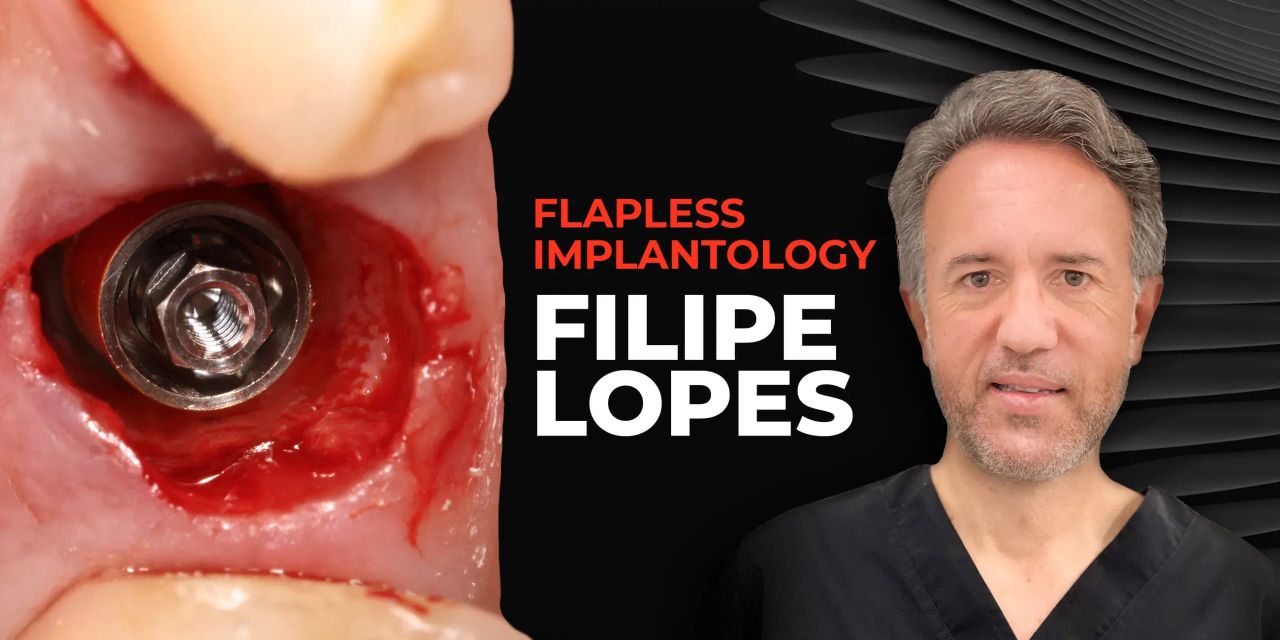
OHI-S Flapless implantology protocols for immediate implant placement and loading
50 $
Format : 5 videos + 5 audios + 5 file sub vtt, size: 1.63 GB
4 lessons + 1 free (3h 43min)
Effective and predictable protocols for immediate implantation and loading in a flapless surgery concept from Filipe Lopes!
In the online course you will learn:
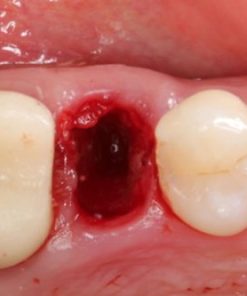
– Biology of socket healing post tooth extraction
– Techniques for managing soft tissues around teeth and implants
– Partial tooth extraction techniques
– Principles and protocols of flapless surgery.
This training will provide a deep understanding of modern technologies of flapless implantology and protocols for immediate implantation with immediate loading. Participants will receive all the necessary knowledge and skills to successfully implement these techniques in their practice.
The OHI‑S Flapless Implantology Protocols for Immediate Implant Placement and Loading course is best for implantologists, oral surgeons, prosthodontists, and restorative dentists who want structured, training in minimally invasive implant techniques. It emphasizes evidence‑based protocols for flapless surgery, immediate placement, and immediate loading to achieve predictable functional and aesthetic outcomes.
Who Should Enroll
Implantologists & oral surgeons performing surgical implant placement who want to refine flapless and immediate loading techniques.
Prosthodontists integrating implants into full‑mouth rehabilitation and aesthetic restorative plans.
Restorative dentists & general practitioners offering implant therapy and seeking minimally invasive workflows.
Residents & fellows in implantology, oral surgery, or prosthodontics learning advanced immediate placement and loading protocols.
Dental technicians collaborating on prosthetic design for immediate restorations.
What You’ll Learn
Flapless surgery protocols: indications, contraindications, and surgical steps for minimally invasive implant placement.
Immediate implant placement: criteria for extraction sockets and bone quality assessment.
Immediate loading workflows: prosthetic protocols for predictable stability and aesthetics.
Digital integration: use of CBCT, guided surgery, and CAD/CAM for precision.
Risk management: avoiding complications such as implant failure, soft tissue recession, or bone loss.
Case‑based lessons: clinical demonstrations of flapless immediate placement and loading.
+ Topics:
Lesson 1.Healing Biology of the Post-Extraction Socket
– Soft tissues behavior & bone behavior after tooth extraction
– Biologic width’s vertical dimensions: sulcus, epithelial adherence, connective tissue adherence
– Biologic width’s horizontal dimensions: marginal gingiva and connective tissue
– Post-extraction gap: tactics
– Tissue involved in tooth extraction: epithelium, connective tissue, bone
– Primary closure: disadvantages
– Alveolar socket healing: differences between flap and flapless surgery
– The mean bone thickness
– Grafting strategies
– Bone resorption prevention
– Classification of soft tissue.
Recommended for: Implantologists.
Lesson 2.The Periimplant Phenotype (PP). Introductory lesson
– Revisiting soft tissues behavior & bone behavior after tooth extraction & implant placement
– Phenotype changes: Periimplant Phenotype and Periimplant Soft tissue Phenotype
– Palatal keratinized tissue and free gingival graft
– Grafting the gap and DZT
– Original bioprofiling
– Severe collapse: clinical case
– Parameters of soft tissue around natural teeth and dental implant abutments
– Gingival thickness and bone stability around dental implants.
Recommended for: Implantologists.
Lesson 3.The Periimplant Phenotype (PP)
– Revisiting soft tissues behavior & bone behavior after tooth extraction & implant placement
– Phenotype changes: Periimplant Phenotype and Periimplant Soft tissue Phenotype
– Palatal keratinized tissue and free gingival graft
– Grafting the gap and DZT
– Original bioprofiling
– Severe collapse: clinical case
– Parameters of soft tissue around natural teeth and dental implant abutments
– Gingival thickness and bone stability around dental implants.
Recommended for: Implantologists.
Lesson 4.Tooth extraction and implant placement techniques
– Immediate implant placement: indications
– Connective tissue attachment and osseointegration to abutments
– Influence wound reaction on 3 levels:
– bone
– connective tissue
– epithelium.
– Building biologic width around dental implants at the micro-level
– One abutment one time protocol
– Implant extended concept
– Socket shield and Partial extraction therapy (PET)
– Reversing Socket Shield, Reversing Partial Extraction Therapy (Reverse PET).
Recommended for: Implantologists.
Lesson 5.The importance of immediate provisionals: flapless immediate loading
– The aesthetic area: rehabilitation 4 upper incisors in periodontal patients
– Flapless surgery
– Predictable immediate implant placement
– The single implant (chairside provisional) or lab provisional (full digital flow)
– Multiple implants’s lab provisionals (full digital flow)
– Implant extended concept on clinical case
– Soft tissue contour and bone stability
– Immediate load with final restorations
– Obtaining natural aesthetics with immediate loading in severe periodontal patients: an easy and predictable full digital protocol.
Recommended for: Implantologists.
Be the first to review “OHI-S Flapless implantology protocols for immediate implant placement and loading”
You must be logged in to post a review.
Related products
Dental Ebook And Video
ITI International Team for Implantology Webinar & Video Lectures Package Part-2
50 $
Dental Ebook And Video
ITI International Team for Implantology Webinar & Video Lectures Package Part-4
50 $
Dental Ebook And Video
Extraction Socket – Preservation/Grafting; Immediate vs Delayed Implants; Pontic Site Development
38 $
Reviews
There are no reviews yet.