

 Vertical Preparation Protocols: The Complete Guide in 24 Lessons from Tomorrow Tooth
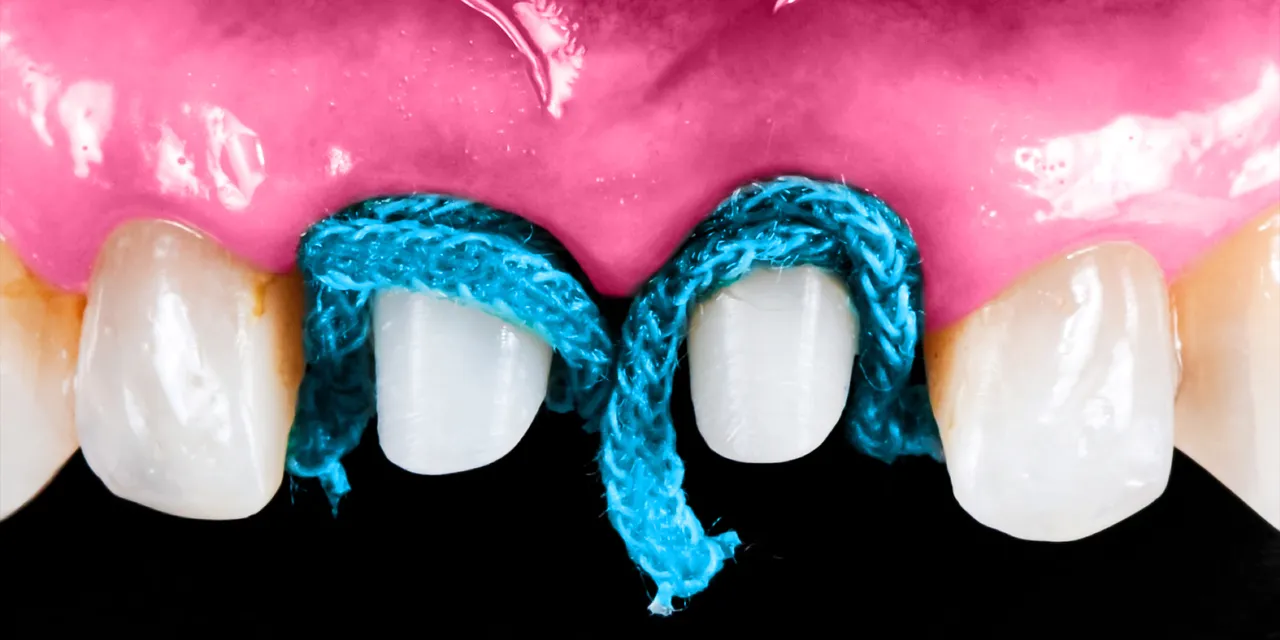
OHI-S Aesthetic Evolution
55 $
Format : 5 videos + 5 audios + 5 file sub vtt, size: 3.16 GB
5 lessons (5h 22min)
During the course, you will learn about the minimal invasive approach in dental preparation, methods of treating pathological tooth worn, and about working with soft tissues around implants in aesthetically significant areas.
The lecturers will speak about modern strategies of minimally invasive treatment, as well as about the clinical and biological aspects of the BOPT concept.
The OHI‑S Aesthetic Evolution course is best for prosthodontists, restorative dentists, orthodontists, and dental technicians who want advanced, evidence‑based training in minimally invasive aesthetic dentistry, indirect restorations, and interdisciplinary approaches. It is designed for clinicians aiming to master both functional and aesthetic outcomes in complex restorative and implant cases.
Who Should Enroll
Prosthodontists managing full‑mouth rehabilitations and complex aesthetic cases.
Restorative dentists & general practitioners performing veneers, crowns, and indirect restorations with a focus on aesthetics.
Orthodontists integrating aesthetic and functional considerations into interdisciplinary treatment planning.
Dental technicians & lab professionals fabricating restorations that harmonize with biological width, soft tissue management, and occlusal stability.
Residents, fellows, and trainees in prosthodontics, restorative dentistry, or orthodontics seeking structured training from international experts.
What You’ll Learn
Integration of prosthetic constructions on implants and natural teeth.
Incisal edge positioning: functional, aesthetic, and phonetic aspects.
Soft tissue management: creating biologically defined emergence profiles around implants.
Minimally invasive protocols: preparation for worn teeth and indirect restorations.
Bioemulation concept: adhesive dentistry principles for long‑lasting, natural restorations.
Multidisciplinary approaches: orthodontics, surgery, and restorative dentistry combined for aesthetic success.
Case‑based lessons: real patient examples demonstrating predictable functional and aesthetic results.
+ Topics:
Lesson 1. Prosthetic integration on natural teeth and implants
– Facial and functional analysis
– Incisal edge position: functional, aesthetic and phonetic aspects
– Multidisciplinary approach: orthodontics, surgery, restoration
– Creating an implants biological emergence profile: protocol
– Criteria for the success of implantological treatment
– Biological width: significance for the stability and aesthetics of the implant
– Types of implant connections and their advantages:
– External “Flap to flap”
– Internal “Flap to flap”
– Internal “Tube to tube”.
– 3 aspects of ideal osseo- and mucointegration
– Materials for abutments: titanium and zirconium.
Recommended for: Prosthodontists, Periodontists, Implantologists.
Lesson 2.Modern restorative concept on teeth supported rehabilitation. Occlusion
– The ideal treatment plan: the concept of complete oral rehabilitation
– Incisor edge position:
– Aesthetics
– Function
– Phonetics.
– Occlusion: curve of Spee, curve of Wilson
– Methodology for occlusion assessing
– Vertical demention of occlusion:
– When you should increase it?
– How to increase it?
– How much to increase?
– Principles of treatment of worn dentition.
Recommended for: Prosthodontists, Periodontists, Implantologists.
Lesson 3.Prosthetic aspect of complete rehabilitation
– The method of making a Mock-up
– Materials for restoration: selection criteria
– Monolithic approach: modern trends
– Minimally invasive preparation: biological aspects
– Chips and fractures of restoration: tactics
– Creation of a protected functional zone: methodology
– The full enamel concept
– Advantages of adhesive dentistry.
Recommended for: Prosthodontists, Periodontists, Implantologists.
Lesson 4.Treating the worn dentition with CEREC
– The concept of treatment in the CEREC system
– Digital planning: innovative tools
– Treatment of worn dentition: functional and aesthetic aspects
– Stages of treatment of worn dentition
– Basic principles of work in the CEREC system:
– Preparation of teeth: rules
– Tools for preparation
– Materials and occlusal concept.
– Adhesive fixation protocol.
Recommended for: Prosthodontists, Periodontists, Implantologists.
Lesson 5.Standards in dental photography
– What is a digital camera?
– Standardization in dental photography
– Types of equipment for dental photography
– The importance of dental photography in treatment
– Choosing a high-quality lens: criteria
– Crop-factor: value
– Control of the depth of field: the role of the aperture and distance
– Direct and indirect flashes
– Accessories for intraoral photography
– Camera settings and file format
– Exposure triangle
– Getting a high-quality photo
– Portrait photography
– Intraoral photography
– Digital planning: a combination of photography and 3D scanning
– Color detection protocol
– Ways to archive photos.
Recommended for: Prosthodontists, Periodontists, Implantologists.
Be the first to review “OHI-S Aesthetic Evolution”
You must be logged in to post a review.
Related products
Dental Ebook And Video
ITI International Team for Implantology Webinar & Video Lectures Package Part-1 (99 Videos)
60 $
Dental Ebook And Video
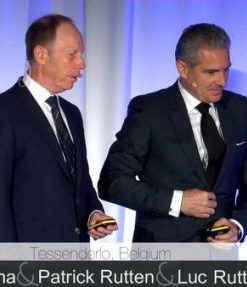
FOR Esthetic Soft Tissue – Inaki Gamborena, Patrick Rutten and Luc Rutten
30 $
Dental Ebook And Video
ITI International Team for Implantology Webinar & Video Lectures Package Part-2
50 $
Dental Ebook And Video
60 $
Reviews
There are no reviews yet.