

 Mastering Surgical Principles: Key to Constant Success
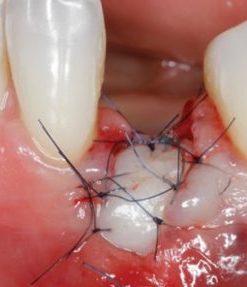
  Rasperini Masterclass: Interproximal Attachment Gain – The Challenge Of Periodontology

OHI-S Aesthetic Evolution 2
30 $
Format : 1 videos + 1 audios + 1 file sub vtt, size: 1.27 GB
1 lesson (2h 7min)
The OHI‑S Aesthetic Evolution 2 course is best for prosthodontists, restorative dentists, orthodontists, and dental technicians who want advanced, CE‑accredited training in contemporary aesthetic dentistry with a focus on interdisciplinary collaboration, minimally invasive protocols, and functional integration. It builds upon the foundations of Aesthetic Evolution and expands into more complex case management and innovative techniques.
Who Should Enroll
Prosthodontists managing full‑mouth rehabilitations and complex aesthetic cases.
Restorative dentists & general practitioners performing veneers, crowns, and indirect restorations with advanced aesthetic demands.
Orthodontists integrating functional and aesthetic considerations into interdisciplinary treatment planning.
Dental technicians & lab professionals fabricating restorations that harmonize with occlusion, soft tissue, and smile design.
Residents, fellows, and trainees in prosthodontics, restorative dentistry, or orthodontics seeking exposure to international expertise.
What You’ll Learn
Advanced interdisciplinary protocols: combining orthodontics, prosthodontics, and implantology for aesthetic success.
Minimally invasive restorative techniques: preparation and adhesive workflows for complex cases.
Soft tissue management: biologically driven emergence profiles and gingival aesthetics.
Digital integration: CAD/CAM, intraoral scanning, and digital smile design for precision.
Functional rehabilitation: ensuring occlusal stability and long‑term durability alongside aesthetics.
Case‑based lessons: real patient examples demonstrating predictable outcomes in challenging scenarios.
+ Topics:
Lesson 1.The easy and modern approach for direct composite restorations in posterior teeth
– Objectives of restorative dentistry
– Rules for the restoration of lateral teeth
– Clinical stages of restoration
– The specific characteristics of the color of the tooth
– Optical rules for reproducing the color of a natural tooth
– Principles of stratification technique
– Restoration of proximal surfaces: the subtleties of the work
– Types of matrices: advantages and disadvantages
– Simplified restoration technique using single-stage filling materials
– The design of the cavity. The basic rules of preparation
– Nuances in the preparation of occlusal and proximal cavities
– The tuber over the tuber. Method of layer-by-layer composite application
– Adhesive protocol: features and differences of chemical and physical adhesion of enamel and dentin
– Types of dentin and features of its preparation
– Adhesive differences: total etching or selective etching technique
– Problems of the total etching system
– Indications and contraindications for the use of self-etching and total etching systems
– Types of postoperative sensitivity and prevention methods
– The method of the multilayer adhesive technique
– Extreme cases of restoration of lateral teeth
– Indications for glass fiber posts in endo treated teeth
– Subtleties of restoration of lateral teeth on clinical examples with comments of the author
– The advantages of working with the microscope.
Be the first to review “OHI-S Aesthetic Evolution 2”
You must be logged in to post a review.
Related products
Dental Ebook And Video
ITI International Team for Implantology Webinar & Video Lectures Package Part-1 (99 Videos)
60 $
Dental Ebook And Video
Plastic-Esthetic Periodontal and Implant Surgery: The Special DVD Compendium
39 $
Reviews
There are no reviews yet.