

-
×
 Sexually Transmitted Infections: Diagnosis, Management, and Treatment
1 × 4 $
Sexually Transmitted Infections: Diagnosis, Management, and Treatment
1 × 4 $ -
×
 Arbeitgeber Patient – Kundenorientierung in Gesundheitsberufen
1 × 10 $
Arbeitgeber Patient – Kundenorientierung in Gesundheitsberufen
1 × 10 $ -
×
 Ocular Surface Disease: Cornea, Conjunctiva and Tear Film
1 × 4 $
Ocular Surface Disease: Cornea, Conjunctiva and Tear Film
1 × 4 $ -
×
 Transgender and Gender Nonconforming Health and Aging 1st ed. 2019 Edition
1 × 10 $
Transgender and Gender Nonconforming Health and Aging 1st ed. 2019 Edition
1 × 10 $ -
×
 Partial Knee Arthroplasty 1st ed. 2019 Edition
1 × 10 $
Partial Knee Arthroplasty 1st ed. 2019 Edition
1 × 10 $ -
×
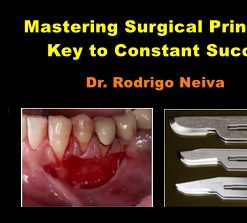 Mastering Surgical Principles: Key to Constant Success
1 × 50 $
Mastering Surgical Principles: Key to Constant Success
1 × 50 $ -
×
 Decision Making for Retreatment of Failures in Dental Medicine
1 × 45 $
Decision Making for Retreatment of Failures in Dental Medicine
1 × 45 $ -
×
 Posterior Hip Disorders: Clinical Evaluation and Management 1st ed. 2019 Edition
1 × 10 $
Posterior Hip Disorders: Clinical Evaluation and Management 1st ed. 2019 Edition
1 × 10 $ -
×
 Complete Orthodontic Course: From Beginner to Advanced
1 × 85 $
Complete Orthodontic Course: From Beginner to Advanced
1 × 85 $
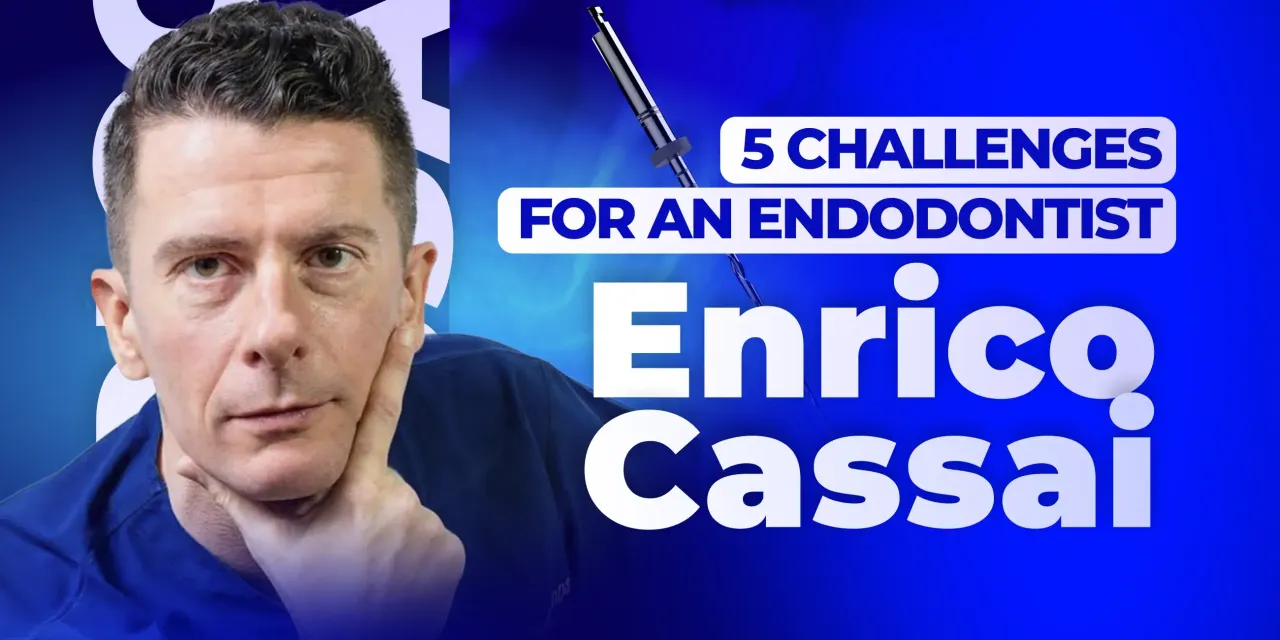
OHI-S 5 challenges for an endodontist
40 $
Format : 5 videos + 5 audios + 5 file sub vtt, size: 6.12 GB
5 lessons (10h 29min)
The course focuses on 5 issues that endodontists often face:
– Curved root canals (with double S-curvature, with a curvature of more than 90 degrees): detection, preparation, irrigation and obturation
– Calcified root canals: CBCT, modified access, removal of pulp stones
– Endodontic of tooth with indirect restoration: a decision-making strategy
– Post removal: step-by-step removal protocol depending on the post type
– Broken files: removal or bypass.
The OHI‑S 5 Challenges for an Endodontist course is best for endodontists, general dentists, and dental residents who want structured, CE‑style training in managing the most difficult clinical situations in root canal therapy. It emphasizes practical, evidence‑based solutions to the five most common and complex endodontic problems.
Who Should Enroll
Endodontists refining their expertise in advanced problem‑solving for complex cases.
General dentists performing root canal treatments who want to improve predictability and safety.
Residents & fellows in endodontics learning structured approaches to challenging scenarios.
Prosthodontists & restorative dentists who occasionally perform endodontic procedures and need decision‑making strategies.
Dental technicians & team members supporting clinicians in restorative/endodontic workflows.
What You’ll Learn (The 5 Core Challenges)
Curved root canals – detection, preparation, irrigation, and obturation in severe curvatures (>90°, double S‑curves).
Calcified root canals – CBCT use, modified access, and pulp stone removal.
Endodontics of teeth with indirect restorations – decision‑making strategies for access and preservation.
Post removal – step‑by‑step removal protocols depending on post type.
Broken files – strategies for removal or bypass of separated instruments
+ Topics:
Lesson 1.Treatment of curved canals
– The mechanism of formation of a curved canal
– Diagnosis and detection of curved canals
– X-ray diagnostics
– CBCT.
– Classification of curved canals
– Protocol for working with curved canals:
– Formation of cavity access
– Localization of the main orifice
– Localization of additional orifice
– Preliminary expansion of canal
– Final formation of canal.
– The philosophy of mechanical treatment of canals
– Risks when working with curved canals:
– Steps formation
– Blockages
– Perforations
– Broken files: torsion and cyclic fatigue.
– Principles of working with different types of curvature
– Advantages of the Irrigation needle IrriFlex®
– Canals with double S-curvature: processing protocol
– Curvature of canal in the apical part by more than 90 degrees: tactics.
Recommended for: Pediatric dentists, Endodontists, Restorers, General dentists.
Lesson 2.Treatment of calcified canals
– Calcification: definition and etiological factors
– Diagnosis of calcified canals: clinical and additional methods
– Evaluation criteria and limits of the use of X-ray images
– CBCT in the management of teeth with obliterated canals
– Multiple isolation: indications and advantages
– Principles of access cavity formation:
– Traditional access
– Modified access.
– Root canal preparation
– Treatment of obliterated root canal: demonstration of the technique
– Complications when working with obliterated canals and their prevention: perforation
– Clinical examples of perforation elimination
– Advantages of using the irrigation needle IrriFlex®
– True and false pulp stones: etiological factors
– Indications for surgical treatment
– Guided endodontic cavity access: a step-by-step protocol.
Recommended for: Pediatric dentists, Endodontists, Restorers, General dentists.
Lesson 3.Removal of coronal restoration
– Advantages of multiple isolation
– Direct restorations of the front teeth
– Difficulties in direct restoration of posterior teeth
– Features of the work of removing amalgam restorations
– Principles of working with old composite restoration
– Strategies for dental re-treatment with indirect restorations
– Re-treatment through the crown
– Re-treatment with complete removal of the crown
– Re-treatment with sawing of the crown.
– Tools for removing crowns and bridges
– The technique of removing the crown using the Metalift® and WAMkey®
– Obturation of the root canal by the MAP One system.
Recommended for: Pediatric dentists, Endodontists, Restorers, General dentists.
Lesson 4.Post removal
– The main tasks of re-treatment and its differences from the initial treatment
– Indications for post removal
– Types of posts and tactics when removing them:
– Passive posts
– Threaded posts
– Indirect casted posts
– Fiberglass posts.
– Post removal with ultrasonic instruments
– Method of removing a broken post
– SybronEndo post removal system
– Tips and recommendations for removing different types of posts.
Recommended for: Pediatric dentists, Endodontists, Restorers, General dentists.
Lesson 5.Removal or bypass of separated instruments
– Primary treatment and re-treatment: the main tasks and differences
– Causes of file failure in the root canals:
– Torsion stress
– Cyclic fatigue
– Canal geometry.
– Tools for removing broken files
– Removal or bypass: criteria for choosing a treatment method
– File Bypass protocol:
– Formation of access
– Root canal preparation
– Obturation.
– Step-by-step protocol for removing a broken file:
– Using ultrasound
– Using the extractor.
– Difficulties of removing silver pins
– File removal systems:
– Terauchi®
– Endocowboy®.
Recommended for: Pediatric dentists, Endodontists, Restorers, General dentists.
Be the first to review “OHI-S 5 challenges for an endodontist”
You must be logged in to post a review.
Related products
Dental Ebook And Video
ITI International Team for Implantology Webinar & Video Lectures Package Part-4
50 $


Dental Ebook And Video
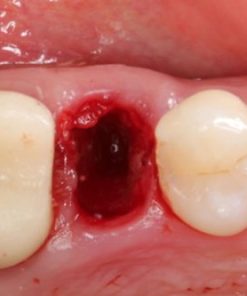
Extraction Socket – Preservation/Grafting; Immediate vs Delayed Implants; Pontic Site Development
38 $
Dental Ebook And Video
ITI International Team for Implantology Webinar & Video Lectures Package Part-3
50 $
Reviews
There are no reviews yet.