
-
×
 Human Brain Stem Vessels: Including the Pineal Gland and Information on Brain Stem Infarction 2nd ed. 1999 Edition
1 × 10 $
Human Brain Stem Vessels: Including the Pineal Gland and Information on Brain Stem Infarction 2nd ed. 1999 Edition
1 × 10 $ -
×
 Developability of Biotherapeutics: Computational Approaches
1 × 5 $
Developability of Biotherapeutics: Computational Approaches
1 × 5 $ -
×
 Black's Medical Dictionary, 43rd Edition (PDF)
1 × 6 $
Black's Medical Dictionary, 43rd Edition (PDF)
1 × 6 $ -
×
 Anatomy and Examination in Ocular Trauma
1 × 10 $
Anatomy and Examination in Ocular Trauma
1 × 10 $ -
×
 First Aid Step 1 Express Videos 2015 (USMLE-Rx)
1 × 5 $
First Aid Step 1 Express Videos 2015 (USMLE-Rx)
1 × 5 $ -
×
 Paediatric Dentistry: Principles and Practice, 2nd Edition (PDF)
1 × 4 $
Paediatric Dentistry: Principles and Practice, 2nd Edition (PDF)
1 × 4 $ -
×
 A Comprehensive Guide to Nanoparticles in Medicine (PDF)
1 × 5 $
A Comprehensive Guide to Nanoparticles in Medicine (PDF)
1 × 5 $ -
×
 Genetics: From Genes to Genomes, 7th Edition (PDF)
1 × 15 $
Genetics: From Genes to Genomes, 7th Edition (PDF)
1 × 15 $ -
×
 Non-Obstetric Surgery During Pregnancy: A Comprehensive Guide 1st ed. 2019 Edition, Kindle Edition
1 × 10 $
Non-Obstetric Surgery During Pregnancy: A Comprehensive Guide 1st ed. 2019 Edition, Kindle Edition
1 × 10 $ -
×
 Stem Cells: New Frontiers in Science & Ethics
1 × 4 $
Stem Cells: New Frontiers in Science & Ethics
1 × 4 $ -
×
 Dilemma's bij dementie
1 × 10 $
Dilemma's bij dementie
1 × 10 $ -
×
 The Pharmacist Guide to Implementing Pharmaceutical Care
1 × 10 $
The Pharmacist Guide to Implementing Pharmaceutical Care
1 × 10 $ -
×
 Absolute Obstetric Anesthesia Review: The Complete Study Guide for Certification and Recertification
1 × 10 $
Absolute Obstetric Anesthesia Review: The Complete Study Guide for Certification and Recertification
1 × 10 $ -
×
 Chronic Headache: A Comprehensive Guide to Evaluation and Management 1st ed. 2019 Edition, Kindle Edition
1 × 10 $
Chronic Headache: A Comprehensive Guide to Evaluation and Management 1st ed. 2019 Edition, Kindle Edition
1 × 10 $ -
×
 Basic Urological Management
1 × 10 $
Basic Urological Management
1 × 10 $ -
×
 Get Fit, Stay Fit, 7th Edition
1 × 5 $
Get Fit, Stay Fit, 7th Edition
1 × 5 $ -
×
 Renal Physiology: A Clinical Approach (Integrated Physiology Series)
1 × 4 $
Renal Physiology: A Clinical Approach (Integrated Physiology Series)
1 × 4 $ -
×
 Supporting Sucking Skills In Breastfeeding Infants 2nd
1 × 4 $
Supporting Sucking Skills In Breastfeeding Infants 2nd
1 × 4 $ -
×
 Atlas de Técnicas Avançadas em Cirurgia
1 × 5 $
Atlas de Técnicas Avançadas em Cirurgia
1 × 5 $ -
×
 Diagnostic Electron Microscopy: A Practical Guide to Interpretation and Technique 1st Edition
1 × 10 $
Diagnostic Electron Microscopy: A Practical Guide to Interpretation and Technique 1st Edition
1 × 10 $ -
×
 Pocket Guide Schmerztherapie: Soforthilfe bei den häufigsten Schmerzzuständen
1 × 10 $
Pocket Guide Schmerztherapie: Soforthilfe bei den häufigsten Schmerzzuständen
1 × 10 $ -
×
 Adolescents with Chronic Kidney Disease
1 × 10 $
Adolescents with Chronic Kidney Disease
1 × 10 $ -
×
 Dental Materials – Volume 38, Issue 12 2022 PDF
1 × 4 $
Dental Materials – Volume 38, Issue 12 2022 PDF
1 × 4 $ -
×
 The Chemistry of Contrast Agents in Medical Magnetic Resonance Imaging 2nd
1 × 5 $
The Chemistry of Contrast Agents in Medical Magnetic Resonance Imaging 2nd
1 × 5 $ -
×
 Atlas of Early Zebrafish Brain Development: A Tool for Molecular Neurogenetics
1 × 5 $
Atlas of Early Zebrafish Brain Development: A Tool for Molecular Neurogenetics
1 × 5 $


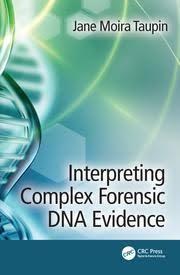
Interpreting Complex Forensic DNA Evidence 1st Edition
12 $
by
Interpreting Complex Forensic DNA Evidence 1st Edition
Interpreting Complex Forensic DNA Evidence is a handy guide to recent advances―and emerging issues―in interpreting complex DNA evidence and profiles for use in criminal investigations. In certain cases, DNA cannot be connected to a specific biological material such as blood, semen or saliva. How or when the DNA was deposited may be an issue. The possibility of generating DNA profiles from touched objects, where there may not be a visible deposit, has expanded the scope and number of exhibits submitted for DNA analysis.
With such advances, and increasing improvements in technological capabilities in testing samples, this means it is possible to detect ever smaller amounts of DNA. There are also many efforts underway to seek was to interpret DNA profiles that are sub-optimal―either relative to the amount required by the testing kit and, potentially, the quality of the obtained sample. Laboratories often use enhancements in order to obtain a readable DNA profile.
The broad-reaching implications of improving DNA sensitivity have led to this next, emerging generation of more complex profiles. Examples partial profiles that do not faithfully reflect the proposed donor, or mixtures of partial DNA from multiple people. A complexity threshold has been proposed to limit interpretation of poor-quality data. Research is now addressing the interpretation of transfer of trace amounts of DNA. Complex issues are arising in trial that need to be reconciled as such complexity has added challenges to the interpretation of evidence and its introduction or dismissal in certain cases in the courts.
Key Features:
- Addresses DNA transfer, from person-to-person as well as to objects
- Outlines each stage required to produce a DNA profile from an exhibit―including collection, handling, storage, and analysis
- Discusses ethics, subjectivity, and bias―including cognitive dissonance―as they relate specifically to complex DNA evidence
- Highlights current techniques and the latest advances in DNA analysis, including advances in familial DNA searches
Interpreting Complex Forensic DNA Evidence provides tools to assist the criminal investigator, forensic expert, and legal professional when posed with a DNA result in a forensic report or testimony. The result―and any associated statistic―may not reveal any ambiguity, complexity, or the assumptions involved in deriving it. Questions from resolved criminal cases are posed, and the relevant forensic literature, provided for the reader to assess a DNA result and any associated statistic. Case studies throughout illustrate concepts and emphasize the need for conclusions in the forensic report that are supported by the data.
Product Details
|
Related products

10 $
Basic Medical Book
Surgical Anatomy of the Ocular Adnexa: A Clinical Approach (Ophthalmology Monographs)
6 $
5 $