

-
×
 Vertical Preparation Protocols: The Complete Guide in 24 Lessons from Tomorrow Tooth
1 × 38 $
Vertical Preparation Protocols: The Complete Guide in 24 Lessons from Tomorrow Tooth
1 × 38 $ -
×
 Medicines, Ethics and Practice: The Professional Guide for Pharmacists
1 × 4 $
Medicines, Ethics and Practice: The Professional Guide for Pharmacists
1 × 4 $ -
×
 Orthopaedic Surgery Board Review 2015 (CME Videos)
1 × 10 $
Orthopaedic Surgery Board Review 2015 (CME Videos)
1 × 10 $ -
×
 Atlas of Early Zebrafish Brain Development: A Tool for Molecular Neurogenetics
1 × 5 $
Atlas of Early Zebrafish Brain Development: A Tool for Molecular Neurogenetics
1 × 5 $ -
×
 Atlas de Técnicas Avançadas em Cirurgia
1 × 5 $
Atlas de Técnicas Avançadas em Cirurgia
1 × 5 $ -
×
 Ocular Surface Disease: Cornea, Conjunctiva and Tear Film
1 × 4 $
Ocular Surface Disease: Cornea, Conjunctiva and Tear Film
1 × 4 $ -
×
 FOR Esthetic Soft Tissue – Inaki Gamborena, Patrick Rutten and Luc Rutten
1 × 30 $
FOR Esthetic Soft Tissue – Inaki Gamborena, Patrick Rutten and Luc Rutten
1 × 30 $ -
×
 Safety Concerns for Herbal Drugs
1 × 4 $
Safety Concerns for Herbal Drugs
1 × 4 $ -
×
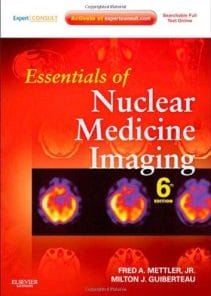 Essentials of Nuclear Medicine Imaging 6th
1 × 4 $
Essentials of Nuclear Medicine Imaging 6th
1 × 4 $ -
×
 ITI International Team for Implantology Webinar & Video Lectures Package Part-3
1 × 50 $
ITI International Team for Implantology Webinar & Video Lectures Package Part-3
1 × 50 $ -
×
 Digital Rehabilitation
1 × 49 $
Digital Rehabilitation
1 × 49 $ -
×
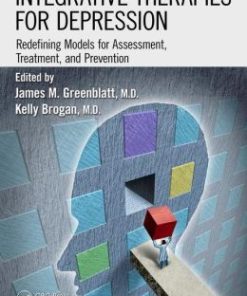 Integrative Therapies for Depression: Redefining Models for Assessment, Treatment and Prevention
1 × 5 $
Integrative Therapies for Depression: Redefining Models for Assessment, Treatment and Prevention
1 × 5 $ -
×
 Post-Extraction Implants (Video course)
1 × 49 $
Post-Extraction Implants (Video course)
1 × 49 $ -
×
 Core Concepts in Pharmacology (5th Edition)
1 × 10 $
Core Concepts in Pharmacology (5th Edition)
1 × 10 $ -
×
 Goodman and Gilman's The Pharmacological Basis of Therapeutics, 12th Edition
1 × 4 $
Goodman and Gilman's The Pharmacological Basis of Therapeutics, 12th Edition
1 × 4 $ -
×
 Surgical Concepts to Handle Esthetic Failures in Implant Patients
1 × 28 $
Surgical Concepts to Handle Esthetic Failures in Implant Patients
1 × 28 $

Intelligent Medicine: Volume 1 (Issue 1 to Issue 3) 2021 PDF
5 $
Intelligent Medicine: Volume 1 (Issue 1 to Issue 3)
“Intelligent Medicine” is an open-access, peer-reviewed journal sponsored and owned by the Chinese Medical Association. It focuses on the intersection of medical practice and technology, particularly in the areas of internet technology, artificial intelligence (AI), data science, medical information, and intelligent devices. Here’s an overview of the journal and the types of articles it accepts:
- Scope: “Intelligent Medicine” covers research and applications at the crossroads of medicine and technology, including clinical medicine, biomedicine, and public health. It emphasizes the use of internet technology, AI, data science, medical information, and intelligent devices in these fields.
- Article Types:
- Research Article: These articles should be original, innovative, and significant, including both medical and algorithmic research. Real-world medical research and clinical assessments of usefulness and reliability are encouraged. They typically have a full text of about 6,000 words and include a structured abstract with sections for Background, Methods, Results, and Conclusion.
- Editorial: Written by the Editor-in-Chief, Associate Editors, editorial board members, or invited experts, editorials cover a broad range of topics, from science to policy.
- Review: These are extensive reviews of recent progress in specific scientific areas, including historical reviews, recent international advances, and perspectives for future development. They typically have a full text of 5,000 to 6,000 words and require a descriptive abstract.
- Perspective & Comments: These articles present personal opinions, hypotheses, or discussions of controversial issues. They are typically 1,500 to 2,000 words long and include a 250-word abstract with a limited number of references.
- Research Highlight: Succinct summaries and comments on recent research achievements, with a focus on contributions by Chinese scientists.
- Guideline & Standard: Official recommendations from professional organizations related to clinical practice, healthcare delivery, and data management in intelligent medicine. Guidelines meeting specific standards are preferred.
- Ethical, Legal, and Social Implications: Articles exploring ethical issues in intelligent medicine, including abstract, keywords, and references.
- Case Report: Short articles, limited to 1,000 words, presenting specific cases without abstract or keywords. Declaration of patient consent is required if patient information is included.
- Historical Moment: Articles describing specific aspects, lives, and stories in the history of scientific contributions and applications.
- Letter: Letters to editors, preferably related to previously published articles in the journal, limited to 500 words without abstract or keywords. Declaration of patient consent is required if patient information is included.
“Intelligent Medicine” provides a platform for researchers, practitioners, and experts to share their insights and findings at the intersection of medicine and technology, with a particular focus on how these advancements can improve healthcare practices and outcomes.
Volume 1, Issue 1: Pages 1-48 (May 2021)
Volume 1, Issue 2: Pages 49-94 (August 2021)
Volume 1, Issue 3: Pages 95-144 (September 2021)
| VOLUME (Issue 1-3) | Issue 1, Issue 2, Issue 3 |
|---|
Be the first to review “Intelligent Medicine: Volume 1 (Issue 1 to Issue 3) 2021 PDF”
You must be logged in to post a review.
Related products



Basic Medical Book
Diagnostic Electron Microscopy: A Practical Guide to Interpretation and Technique 1st Edition
10 $


Reviews
There are no reviews yet.