

-
×
 Neurovascular Surgery: Surgical Approaches for Neurovascular Diseases
1 × 10 $
Neurovascular Surgery: Surgical Approaches for Neurovascular Diseases
1 × 10 $ -
×
 101+ Careers in Public Health, 2nd Edition
1 × 5 $
101+ Careers in Public Health, 2nd Edition
1 × 5 $ -
×
 Adolescents with Chronic Kidney Disease
1 × 10 $
Adolescents with Chronic Kidney Disease
1 × 10 $ -
×
 Surgical Anatomy of the Ocular Adnexa: A Clinical Approach (Ophthalmology Monographs)
1 × 6 $
Surgical Anatomy of the Ocular Adnexa: A Clinical Approach (Ophthalmology Monographs)
1 × 6 $ -
×
 Clinical Research: From Proposal to Implementation
1 × 5 $
Clinical Research: From Proposal to Implementation
1 × 5 $ -
×
 Human Brain Stem Vessels: Including the Pineal Gland and Information on Brain Stem Infarction 2nd ed. 1999 Edition
1 × 10 $
Human Brain Stem Vessels: Including the Pineal Gland and Information on Brain Stem Infarction 2nd ed. 1999 Edition
1 × 10 $ -
×
 Chronic Headache: A Comprehensive Guide to Evaluation and Management 1st ed. 2019 Edition, Kindle Edition
1 × 10 $
Chronic Headache: A Comprehensive Guide to Evaluation and Management 1st ed. 2019 Edition, Kindle Edition
1 × 10 $ -
×
 Developability of Biotherapeutics: Computational Approaches
1 × 5 $
Developability of Biotherapeutics: Computational Approaches
1 × 5 $ -
×
 Posterior Hip Disorders: Clinical Evaluation and Management 1st ed. 2019 Edition
1 × 10 $
Posterior Hip Disorders: Clinical Evaluation and Management 1st ed. 2019 Edition
1 × 10 $ -
×
 Insall & Scott Cirurgia do Joelho
1 × 5 $
Insall & Scott Cirurgia do Joelho
1 × 5 $

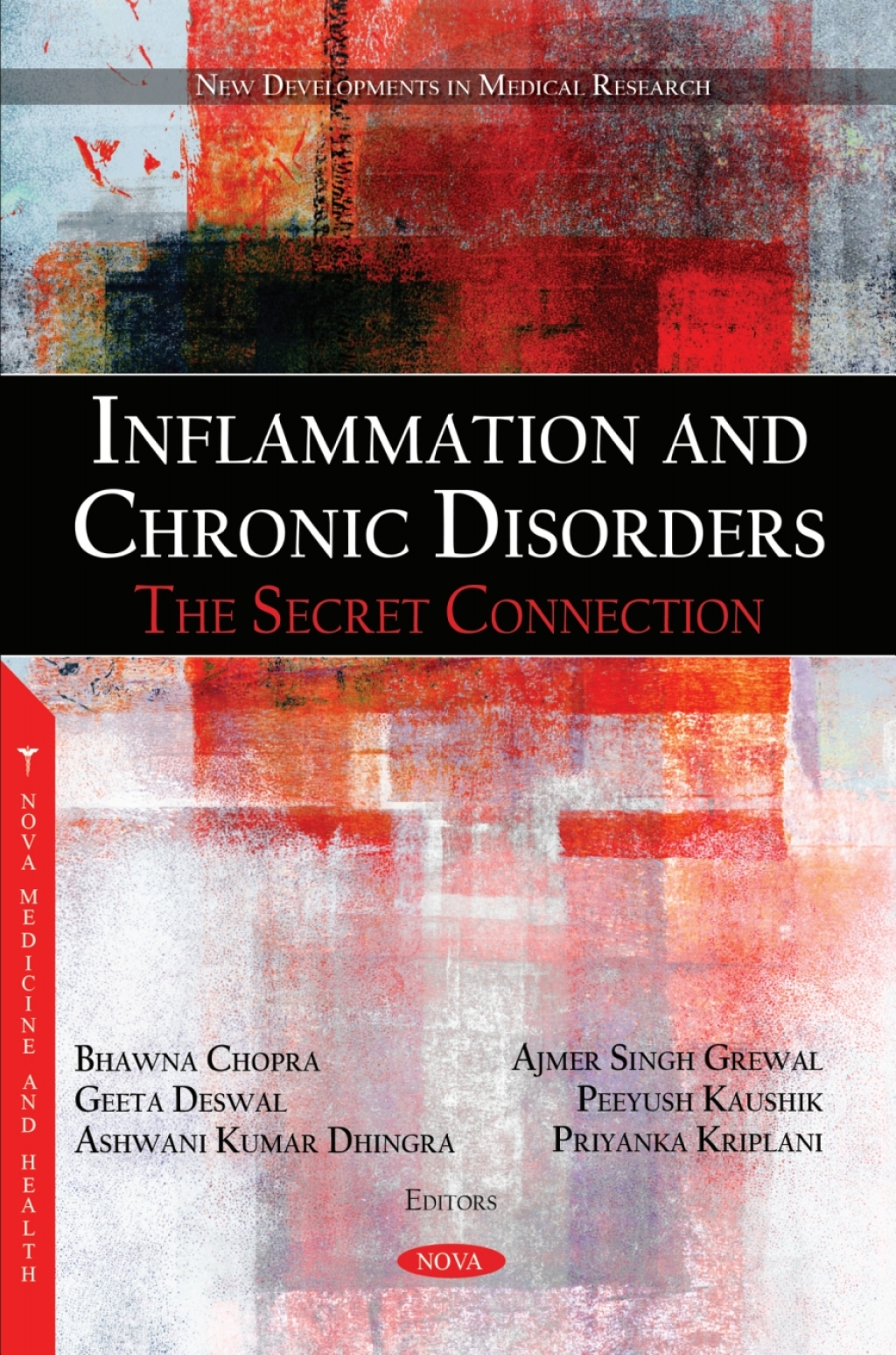
Inflammation And Chronic Disorders: The Secret Connection (PDF)
7 $
Format : Publisher PDF
File Size : 43.8 MB
by Frank Columbus (Author)
Inflammation is a protective mechanism of the body in which the immune system identifies, rejects, and kick-starts the healing process after damage caused by injurious stimuli, such as pathogens, irritants or injured cells. During inflammation diverse pathological changes take place which trigger to generate the active inflammatory mediators by host proteins, like complement proteins or kinins. Inflammatory cells are activated by both infectious and non-infectious stimuli, as well as by cell injury, which also triggers inflammatory signalling pathways, most often the NF-κB, MAPK, and JAK-STAT pathways. However, sometimes the immune system triggers the inflammatory process even in the absence of foreign substances, resulting in the development of harmful conditions, e.g., inappropriate regulation of NF-κB results in the development of serious illnesses like cancer, septic shock, neurodegenerative disorders, etc. However, its origins and consequences are still uncovered to understand its involvement in many human diseases. This book is comprised of 15 chapters written by leading researchers in the field, covering a broad range of topics to highlight the fundamental reasons and the astonishing association of inflammation with the onset of various diseases or illnesses. A prolonged inflammation procedure involving the destruction of tissue and fibrosis at the same interval of time is regarded as chronic inflammation, which can be characterized by the expansion of both humoral and cellular immune responses against pathogens. In addition, numerous mediators contribute inflammation process; few are released without delay (serotonin, histamine etc.), few are secreted within an interval of short time (leukotrienes, prostaglandins, etc.), a few entail the de novo synthesis (interferon, interleukin, growth factors, etc.). Both pro and pre-cytokines that initiate inflammation like tumour necrosis factor, interferon, interleukin 1β, and oxidative stress promote inflammation by stimulation of gene expression which depends on the availability of interacting sites for the nuclear factor kappa activated B cells. The anti-inflammatory strategies showed a significant reduction in the average risk of developing Alzheimer’s disease, arthritis, autoimmune disorders, cancer, etc. The successful exploration of new fundamental causes and their relationship with inflammation enlightens multi-targeting alternatives to treat certain various illnesses; evokes researchers to develop a safe and effective therapeutic regimen; thus, promoting health benefits.
Product Details
Publisher: Nova Medicine and Health;
ISBN: 9798886979800
ISBN: 9798886979800
Copyright: 2023
Be the first to review “Inflammation And Chronic Disorders: The Secret Connection (PDF)”
You must be logged in to post a review.
Related products


Basic Medical Book
Diagnostic Electron Microscopy: A Practical Guide to Interpretation and Technique 1st Edition
10 $
Reviews
There are no reviews yet.