

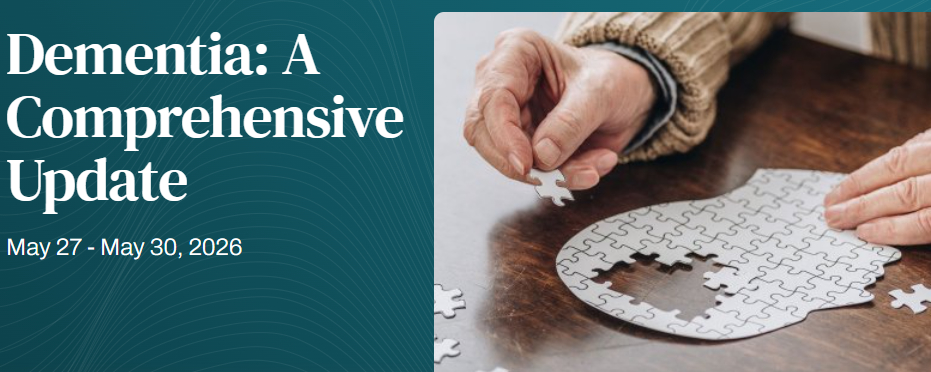
Harvard Dementia A Comprehensive Update 2026
100 $
Format: videos + file sub vtt + pdf, size: GB
Description
+ Include: videos + file sub vtt + pdf, size: GB
+ Target Audience: neurologists, psychiatrists, and primary care physicians
+ Sample video: contact me for sample video
+ Information:
Overview
The spectrum of neurodegenerative diseases spans from asymptomatic preclinical disease to very mild cognitive impairment to frank dementia. Alzheimer’s disease (AD), the most common cause of dementia, is a devastating condition that affects patients and their whole family of caregivers at tremendous emotional and financial cost. Dementia: A Comprehensive Update is a three-and-a-half day, annual, review course designed by clinicians for clinicians. The course is organized by Neurology faculty members of Harvard Medical School who specialize in the care of patients with cognitive and behavioral disorders at Brigham and Women’s Hospital, Massachusetts General Hospital, Beth Israel Deaconess Medical Center, McLean Hospital, and Banner Sun Health Research Institute/Banner Health.
The course takes a practical and multidisciplinary approach to understanding and treating dementia and is designed for health care professionals involved in the diagnosis, management, and investigation of disease states causing dementia. This cutting-edge course is in its 29th year, includes locally, nationally and internationally renowned faculty, and attracts 300-400 participants from throughout the U.S. and the world. The organization of the course takes an integrative approach by interweaving lectures within the main program that establish the neuroanatomical and cognitive framework underlying disorders of cognition, address specific diseases (e.g. AD, vascular cognitive impairment/dementia, Parkinsonian dementias, frontotemporal dementias), and discuss the latest clinical practices and research approaches to the diagnosis and treatment of dementing illnesses (e.g. Alzheimer’s Association Clinical Practice Guidelines, practical office-based assessments, application of biomarkers, spinal fluid and amyloid/tau PET imaging in dementia, clinical treatment, and prevention and experimental trials), with optional, fee-based programs.
New this year will be a discussion of recently approved disease-modifying therapies for AD. Lectures and programs also provide education on special topics in dementia such as managing problem behaviors, disclosure of diagnosis and risk, chronic traumatic encephalopathy, caregiving in dementia, pain, palliation, hospice care, medicolegal issues, capacity and competence, undue influence, driving, long-term/ nursing home care, delirium and dementia, neuroethics, advanced care planning, and neuropsychology of aging.
Course Date: May 27 – May 30, 2026
Learning Objectives
Describe current understanding of epidemiology, risk factors, pathobiology, societal costs, clinical differences, gaps in knowledge, and challenges in distinguishing and managing the spectra of normal cognitive aging, mild cognitive impairment (MCI), Alzheimer’s disease (AD), and other neurodegenerative dementias.
Summarize tiered diagnostic and management approaches, including the new Clinical Practice Guidelines sponsored by the Alzheimer’s Association for the diagnostic evaluation of patients with cognitive impairment. Summarize current and future experimental therapeutics strategies under consideration for risk reduction, prevention, diagnosis and treatment of the AD spectrum.
Differentiate, based on neuropathology, affected neural systems, clinical criteria and biomarkers, AD and its atypical variants from other common dementias including Dementia with Lewy Bodies (DLB), Vascular Cognitive Impairment (VCI)/Vascular-Ischemic Dementia, Frontotemporal Degeneration (FTD), Parkinson’s disease with Dementia (PDD), Parkinson’s-Plus Syndromes and less common dementias.
Identify and explain the importance of evidence-based and coordinated individualized approaches to the evaluation and management of MCI, AD and neurodegenerative dementias that stress combining: (i) early and accurate detection, assessment and monitoring; (ii) psycho-education and non-pharmacological interventions; (iii) pharmacological strategies; and (iv) caregiver, psychosocial/environmental, quality of life, ethical, medico-legal and end-of-life considerations.
Apply data-supported diagnostic, behavioral, pharmacological, and environmental strategies, including appropriate and tiered use of cognitive tests/measures, labs, and imaging studies/biomarkers; and delineation of expectations, roles (i.e., indications and benefits), cautions (i.e., risks, side-effects, warnings) and treatment nuances in the interdisciplinary management of CI, AD and neurodegenerative dementias.
Explain the roles of office-based screening instruments, mental status exam (MSE) and neuropsychological evaluation in the diagnosis and management of dementia; develop efficient approaches to MSE and use of screening instruments (e.g. MOCA); and interpret and compare cognitive testing/neuropsychological performance patterns for different conditions and clinical syndromes (e.g. MCI, AD, FTD, primary progressive aphasias, posterior cortical atrophy, DLB).
Utilize appropriate laboratory tests, imaging studies, and neuropsychological testing for the diagnosis of dementia in clinical practice; incorporate appropriate use of clinical biomarkers (e.g. CSF a-beta/tau, MRI, FDG- and Amyloid-PET) in evaluation of neurodegenerative dementias to differentiate AD and non-AD processes; and explain clinical versus research use, and apply appropriate use criteria/guidelines for the clinical use of biomarkers in the diagnosis of AD-like syndromes.
Apply data-supported pharmacologic management strategies including the roles (i.e., indications and benefits), cautions (i.e., risks, side-effects, warnings) and potential alternatives to using cholinesterase inhibitors, memantine, antipsychotics and antidepressants in dementia and AD.
Integrate a holistic approach to management of problem behaviors and neuropsychiatric symptoms (e.g. aggression, apathy, anxiety, depression, psychosis) in individuals with dementia that stresses education, and behavioral and non-pharmacological interventions as first-line approaches.
Discuss the important role, and the challenges and risks caregivers face; describe strategies to help dementia caregivers cope and better care for themselves and for patients with dementia including psychosocial counseling, community support resources, and respite care.
Develop appropriate practices concerning medico-legal and safety issues surrounding patients with dementia, including capacity with regards to medical care, finances, contracts, independent living, and driving; and integrate medico-legal and safety practices to support and safeguard patients and families, and the public-at-large.
Describe issues related to dementia neuroethics, and implement effective practices in the long-term care/nursing-home environment and in end-stage dementia regarding medical, legal, and ethical issues including recognition and treatment of delirium/encephalopathy and pain, providing palliation and hospice care, and managing end-of-life issues related to dementia.
Demonstrate neural processes and functional networks that support perception and cognitive systems including memory, language, attentional, frontal/executive, visuo-spatial, and motor systems.
Distinguish pre-clinical AD, MCI due to AD/prodromal AD, and AD dementia phases.
Identify delirium/encephalopathy and Chronic Traumatic Encephalopathy(CTE) as a dementia risks or entities.
Target Audience
Best for neurologists, psychiatrists, and primary care physicians who want updates on dementia biomarkers, treatments, and patient care.
Specialty Physicians, Psychologists, Physician Assistants, Nurse Practitioners, Nurses, Primary Care Physicians, Social Workers, and Others.
Topics
Introduction to the Course
Human Cognition An Overview
Memory Systems & Amnesia
Neuropathology of AD ADRD A Guide forPracticing Clinicians
From Proteinopathies to Neuroimaging & Biomarkers in AD ADRD Primer on Practice and Advances
Alzheimer’s Disease & Related Dementias Global Perspectives and Opportunities
Clinical Use of Blood Biomarkers in 2026 and Beyond
Panel Discussion and Q&A Alireza Atri; Brad Dickerson
AD Dementia Practical Evaluation & Managementin Clinical Practice
Mild Cognitive Impairment Prodromal AD and Beyond
Advances in AD Experimental Therapeutics + Panel Discussion and Q&A
Neuropsychology of Aging
Attentional and Executive Systems – Don’t Leave Home without Them
Frontotemporal Dementias Focus on Behaviorall Executive Variants
Language Systems & Aphasia-predominant Dementia Syndromes
Updates on Vascular Cognitive Impairment & Dementia
Panel Discussion and Q&A
Lewy Body Disease, and Parkinsonian & Sensorimotorpredominant Dementias
Assessment of Cognition in Clinical Practice
Practical Compensatory Strategies for Cognitive Decline
Assessment of Daily Function and Neuropsychiatric Symptoms Behavior and Staging of Dementia in Practice
Cased-based Discussion of Lecanemab and Donanemab
Panel Discussion and Q&A
Non-Pharmacological Approaches to Neuropsychiatric Symptoms and Problem Behaviors in Dementia
Pharmacological Management of Behavioral Problems in Dementia
Practical & Ethical Considerations for Disclosure of Demetia-Related Diagnosis and Risk
Caregiving in Dementia Impact, Consequences & Opportunities
Panel Discussion and Q&A
Community Advocacy and Activism For Dementias
Chronic Traumatic Encephalopathy (CTE) & Dementia
Delirium, Encephalopathies and Uncommon Dementias
Panel Discussion, Q&A and Conclusions
Dementia & The Law Clinical Pearls on Testamentary Capacity and Undue Influence
Principles & Practice of Mental Capacity and Competence in Dementia From Finances to Firearms
Driving, Home & Community Safety and Dementia
Advance Care Planning & Management of End-stage Dementia, Pain, Palliation & Hospice in Long-Term Care
Panel Discussion, Q & A, and conclusions
Be the first to review “Harvard Dementia A Comprehensive Update 2026”
You must be logged in to post a review.
Related products





Reviews
There are no reviews yet.