


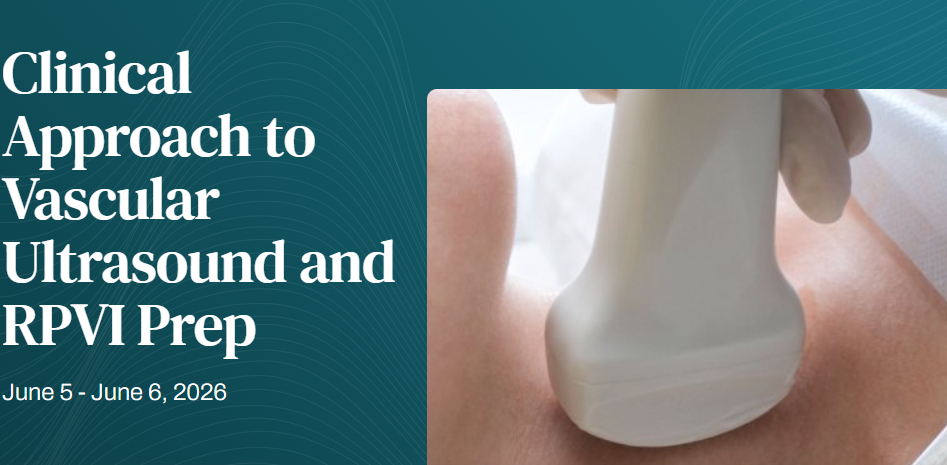
Harvard Clinical Approach to Vascular Ultrasound and RPVI Prep Course 2026
75 $
Format: videos + file sub vtt + pdf, size: GB
Description
+ Include: videos + file sub vtt + pdf, size: GB
+ Target Audience: Primary Care Physicians, Ultrasound Technologists
+ Sample video: contact me for sample video
+ Information:
June 5 – 6, 2026
Develop a strong foundation in vascular ultrasound performance and interpretation through expert-led instruction, practical case-based learning, and comprehensive preparation for clinical practice, RPVI certification, and vascular lab development.
This course is designed to develop a strong foundation in both performance and interpretation of vascular ultrasound. We developed lectures in conjunction with the medical director and technical director of the vascular lab at Massachusetts General Hospital and Brigham and Women’s Hospital as well as esteemed faculty from Stanford University Hospital, University of Colorado, and Johns Hopkins Hospital that thoroughly cover an array of topics focused on the interpretation of vascular ultrasound. We have included multiple practical examples through case presentations that allow for the learner to develop a foundation in vascular lab as well as the ability to apply this knowledge directly to patient situations. At the end of this course, the learner will be able to perform and interpret vascular laboratory studies, be prepared for the Registered Physician in Vascular Interpretation (RPVI) exam, and create a vascular laboratory at their home institution.
Learning Objectives
Demonstrate clinical interpretation of arterial and venous vascular noninvasive studies in the peripheral, cerebrovascular, and abdominal systems.
Discuss the clinical application of velocity criteria for grading of stenosis in the vasculature including dialysis grafts, endovascular interventions in the aorta and peripheral system, and bypass grafts.
Summarize basic ultrasound physics and ultrasound technology as it applies to vascular diagnostics.
Review topics commonly found on the Registered Physician in Vascular Interpretation (RPVI) exam.
Develop and Implement a Vascular Laboratory Program at their home institution.
Who Should Participate
Primary Care Physicians, Specialty Physicians, Allied Specialities, Nurses, Ultrasound Technologists, Physician Assistants, and Nurse Practitioners
+ Topics:
00 Introduction
01 Basics of Physics in Vascular Imaging
02 Understanding the Ultrasound Machine
03 Peripheral Arterial Studies – UPPER
04 Peripheral Arterial Studies – LOWER
05 Abdominal US
06 Panel Discussion
07 The Role of the Vascular Laboratory in the Diagnosis of Renal and Mesenteric Artery Disease
08 Carotid Duplex Ultrasonography
09 Subclavian and Vertebral Ultrasonography
10 Cerebrovascular Intracranial (Transcranial Doppler)
11 High Yield Pathologies Tested on the Registered Physician in Vascular Interpretation (RPVI)
12 Panel Discussion
13 Bypass Graft Surveillance
14 Aortic Endovascular Stent Graft Surveillance
15 Dialysis Access Surveillance and Case Presentations
16 Tibio – Pedal Access
17 Panel Discussion
18 Venous Ultrasound 1 – Venous insufficiency, Ultrasound in Office Based Venous Procedures
19 Venous Ultrasound 2 – Venous ThrombosisObstruction, Pelvic Congestion Syndrome
20 Venous Case Presentation
21 Wound Healing in Vascular Surgery
22 Carotid Arterial Case Presentations
23 Updated Results with the Retrievable System for Drug Delivery – Data from the DEEPER OUS and DEEPER REVEAL Trials
24 Peripheral Artery and Bypass Graft Case Presentations
25 Surveillence of Deep Venous Arterialization Grafts
26 Deep venous arterialization
27 Pedal Acceleration Time (PAT) – Technique, Criteria, Interpretation and Clinical Application
28 Panel Discussion
Be the first to review “Harvard Clinical Approach to Vascular Ultrasound and RPVI Prep Course 2026”
You must be logged in to post a review.
Related products


Reviews
There are no reviews yet.