


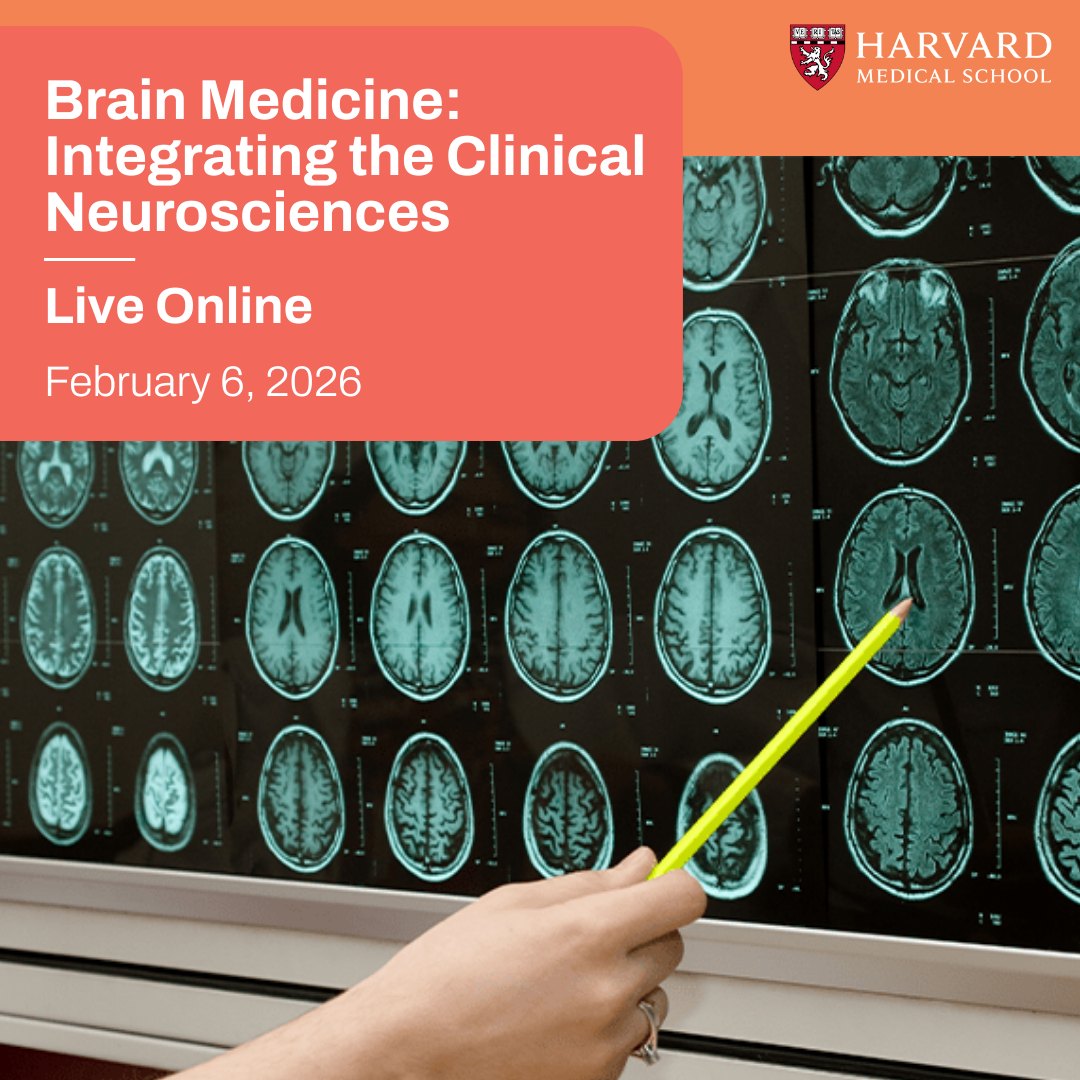
Harvard Brain Medicine Integrating the Clinical Neurosciences 2026
45 $
Format: 16 Videos (.mp4) + 16 Audios (.mp3) + 16 Subtitles (.vtt) + 13 PDFs, size: 4.59 GB
1. Overview
The Harvard Brain Medicine Integrating the Clinical Neurosciences 2026 course explores the intersection of neurology, psychiatry, and psychology to improve patient care. The program covers emerging topics such as digital phenotyping, personalized neurostimulation, and the comprehensive management of complex neuropsychiatric and psychotic spectrum disorders.
The concept of brain medicine aims to integrate clinical and neuroscientific perspectives across the various non-surgical specialties (e.g., neurology, psychiatry, neurorehabilitation, allied medical, and mental health services) that care for and conduct research in people with biopsychosocially-complex brain disorders. This one-day activity accredited by Harvard Medical School will include pre-recorded lectures with a virtual live Q&A format. Speakers will include experts in behavioral neurology & neuropsychiatry, consultation liaison psychiatry, biological psychiatry, cognitive-affective neuroscience, brain medicine, and brain health, speaking on a broad array of assessment and management principles for individuals with brain disorders that negatively impact cognition, behavior, emotion, perception, social cognition, and sensorimotor functions. Content for this 2nd annual course will specifically include topics such as: brain medicine in 2026, social networks, digital phenotyping, neuropsychological testing, personalizing neuromodulation interventions, and primary and secondary psychotic spectrum disorders.
Course Date: February 6, 2026
2. Learning Objectives
Evaluate the historical evolution and future clinical applications of integrated brain medicine.
Implement insights from integrated inpatient medicine-psychiatry services and outpatient brain medicine models.
Analyze the role of social networks and digital phenotyping in advancing the clinical neurosciences.
Apply updated strategies for neuropsychological testing and the psychopharmacological management of neuropsychiatric symptoms.
Assess customized approaches to both noninvasive and deep brain stimulation for treating complex brain disorders.
3. Target Audience
Best for neurologists and psychiatrists who want updates on personalized neurostimulation, digital phenotyping, and psychotic disorders.
Who Should Participate
Specialty Physicians, Primary Care Physicians, Psychologists, Nurse Practitioners, Physician Assistants, Nurses, and Other Allied Health Professionals.
4. Topics
Topics (16 Lectures):
01 Brain Medicine Past, Present & Future
02 Lessons Learned from Integrated Inpatient Medicine-Psychiatry Services
03 Spotlight Outpatient Brain Medicine atthe University of Toronto
04 Q&A David Perez; Amy Newhouse; Sara Mitchell
05 Social Networks in the Clinical Neurosciences
06 Digital Phenotyping in the Clinical Neurosciences
07 Neuropsychological Testing in 2026 Where are We
08 Q&A Dorene Rentz; Caitlin Adams
09 Psychopharmacological Management of Neuropsychiatric Symptoms
10 Towards Personalized Noninvasive NeuroStimulation for Brain Disorders
11 Towards Personalized Deep Brain Stimulation for Brain Disorders
12 Q&A Caitlin Adams; Michael Fox; Joan Camprodon; David Perez
13 The Pathophysiology of Idiopathic Psychotic Spectrum Disorders
14 Case Based Discussion of Autoimmune Encephalitis w Psychosis
15 Psychotherapy forPsychosis in 2026 – Where are We
16 Q&A Matcheri Keshavan; Kim Mueser; Caitlin Adams
Be the first to review “Harvard Brain Medicine Integrating the Clinical Neurosciences 2026”
You must be logged in to post a review.
Related products





Reviews
There are no reviews yet.