

Cleveland Clinic International Epilepsy Summit 2024
30 $
Format : 52 videos + 52 file sub vtt + 52 audios + 1 pdf, size: 36.78 GB
*WARRING: This course is not being released in its entirety as planned; some lessons will be missing compared to the previously scheduled timetable.
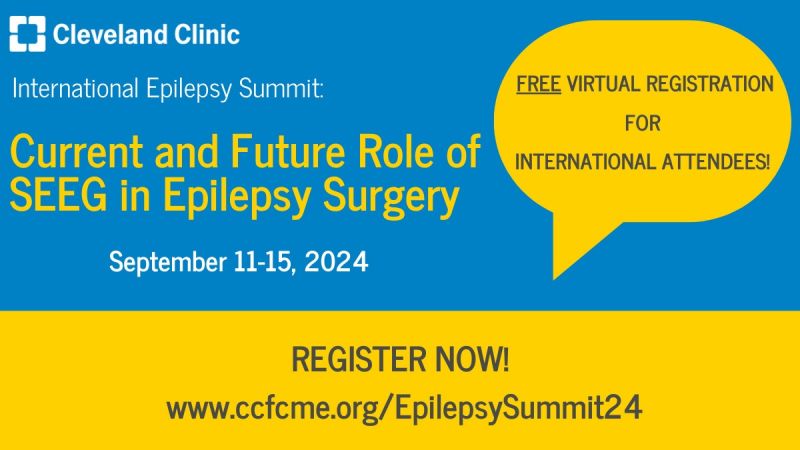
Cleveland Clinic International Epilepsy Summit Current and Future Role of SEEG in Epilepsy Surgery
September 11–15, 2024 Hilton Cleveland Downtown Hotel, Cleveland, Ohio
Epilepsy is a relatively common neurological disorder that predisposes patients to recurrent seizures. Epilepsy affects approximately 1.2% of the United States population, with about 3.4 million people (both adults and children) having active cases and 5.1 million having a history of epilepsy. Of these patients, up to 30% have medically refractory epilepsy.
Research continues to provide insights into epilepsy pathology, focusing on genetic and molecular mechanisms as well as its cellular and anatomical characteristics. Recent therapeutic developments and the development of cutting-edge imaging modalities have improved the outcomes of management strategies for patients with epilepsy, especially in the area of epilepsy surgery and stereoelectroencephalograpy (SEEG).
Further, recent research on patients with medically intractable epilepsy due to focal cortical dysplasia (FCD) has led expert consensus groups to update recommendations for the classification of epilepsies, identifying their type and distinctive histopathologic features, which helps individualize management strategies. The most recent publication is the 2022 international consensus document on FCD classification.
The complexity and clinical implications of these innovations challenge both specialists and generalists to stay abreast of the data and interpret their impact on clinical care, which creates gaps in knowledge, competence, and practice among epilepsy practitioners. This, in turn, creates a pressing need for an educational activity focused on providing updates and critical analyses of the most important research into the assessment and treatment of patients with epilepsy.
This Cleveland Clinic International Epilepsy Summit, the focus will be on presenting a comprehensive overview of the latest advancements in epilepsy surgery and SEEG on a global scale and interpreting their potential use in clinical practice. Discussions of the evidence will provide the clinical knowledge to participants, all health care professionals, to help them assess patients with epilepsy, classify their pathologic type, and identify the most optimal management strategies. The overall goal is to improve outcomes of patients with epilepsy on both a medical and surgical level.
Target Audience
Adult and Pediatric Neurologists, Neurosurgeons, Epilepsy Fellows, Residents in Adult and Pediatric Neurology, Psychologists, Nurse Practitioners, Physician Assistants, Neuroscientists, Molecular Biologists, Pathologists, Pharmacists and Geneticists
Learning Objectives
After completing this educational activity, participants will be able to do the following:
• Discuss the current state of epilepsy surgery for various epileptic pathologies including local cortical dysplasia, congenital tumors, and other epileptic brain lesions.
• Critically examine the current state of stereoelectroencephalography (SEEG) in the evaluation and management of drug-resistant focal epilepsies.
• Discuss the future indications of SEEG in the management of drug-resistant epilepsies.
• Analyze the evidence base and describe the practical implications of the 2022 ILAE classification of focal cortical dysplasia on the presurgical evaluation and surgical management of patients with drug-resistant epilepsies.
• Summarize the current evidence on congenital tumor evaluation and surgical treatment in patients with drug-resistant epilepsies.
• Identify the existing challenges for the surgical management of various uncommon focal epilepsies and those with no FCD pathology.
• Provide an overview of recent trends in gene-based therapies, neuroengineering, and use of artificial intelligence and discuss their potential implications for clinical practice.
• Provide an overview of recent trends in anti-seizure medications and discuss their role in the future management of patients with epilepsy
+ Topics:
SEEG & Presurgical Evaluation
SEEG Fundamentals: History, principles of implantation, and analysis of Stereo-EEG (SEEG).
Global Perspectives: 15 years of SEEG experience at Cleveland Clinic and comparative results from France, Italy, India, Australia, and Mexico.
Invasive Evaluation: Identifying surgical candidates and the role of invasive monitoring.
Advanced Mapping: Non-invasive and 4-Dimensional mapping of epileptic networks using neuroengineering and AI.
Focal Cortical Dysplasia (FCD) & Pathology
ILAE Classification: Detailed breakdown of FCD Types 1, 2, and 3 by leading experts like Dr. Ingmar Blumcke and Dr. Imad Najm.
Histopathology: Understanding “No FCD” findings, mMCD (mild Malformation of Cortical Development), and MOGHE.
Tumor-Related Epilepsy: Management of Long-term Epilepsy Associated Tumors (LEATs) and congenital tumors.
Genetics of FCD: The intersection of neuroimaging and genetic markers in focal dysplasias.
Surgical Techniques & Eloquent Areas
Pediatric Surgery: Strategies for operating in eloquent brain regions and managing epileptic encephalopathies.
Complex Anatomies: Surgical approaches for the Insula, Polymicrogyria (PMG), Periventricular Nodular Heterotopia (PVNH), and Temporal Encephaloceles.
Ablative Technologies: Use of Laser Interstitial Thermal Therapy (LITT) and Radiofrequency Ablation (RFA).
Neuromodulation: Deep Brain Stimulation (DBS), Responsive Neurostimulation (RNS), and Vagus Nerve Stimulation (VNS).
Genetics & Epigenetics in Epilepsy
Epigenetic Mechanisms: DNA methylation and its role in epilepsy pathogenesis.
Precision Medicine: Moving towards personalized anti-seizure medication treatments based on genetic profiles.
Current Research: The state of knowledge in epilepsy genetics and single-gene methylation studies.
Neuroimaging & Brain Dynamics
Advanced Imaging: Current state of MRI, post-processing technologies, and multimodal studies.
Brain Rhythms: Lessons for epilepsy from neuronal oscillations and brain criticality (Dr. Gyorgy Buzsaki).
Semiology: The crucial role of clinical seizure semiology in localizing the epileptogenic zone.
Be the first to review “Cleveland Clinic International Epilepsy Summit 2024”
You must be logged in to post a review.
Related products



Reviews
There are no reviews yet.