


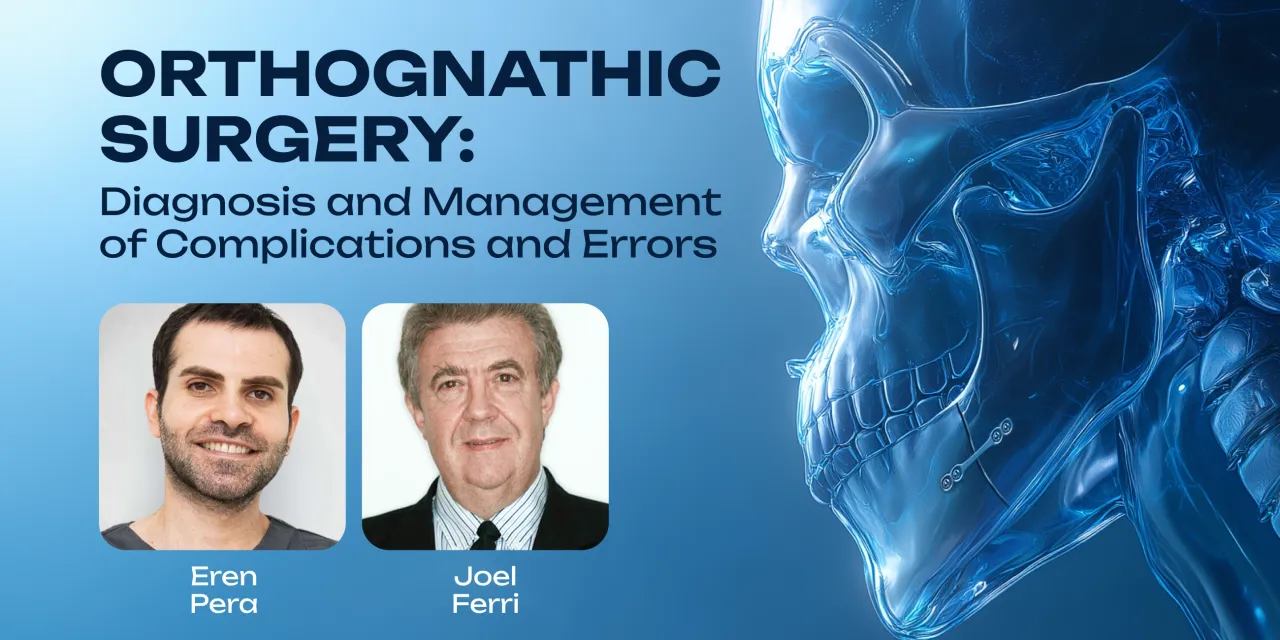
OHI-S Orthognathic Surgery Diagnosis and Management of Complications and Errors 4 lessons 2h 11min
30 $
Format : Videos + PDF
A comprehensive clinical course focused on improving outcomes in orthognathic surgery through better understanding, recognition, and management of complications and errors. This program explores the critical role of accurate diagnosis, structured treatment planning, and interdisciplinary coordination in preventing avoidable failures, integrating clinical reasoning with practical decision-making frameworks to strengthen predictability and enhance long-term stability.
Learning Objectives
Identify diagnostic errors in dentofacial deformities.
Avoid treatment planning pitfalls in maxillary and mandibular surgery.
Apply orthodontic–surgical planning principles effectively.
Recognize and navigate errors in orthodontic compensation and decompensation.
Manage relapse caused by persistent dysfunctions such as swallowing abnormalities, mouth breathing, and TMD.
Target Audience
This program is intended for clinical professionals involved in the surgical and orthodontic phases of treating dentofacial deformities, aiming to enhance patient safety and treatment predictability.
Best for Oral and Maxillofacial Surgeons, and Orthodontists.
Topics
Lesson 1. Avoiding Pitfalls in Orthognathic Surgery: Common Errors in Maxillary and Mandibular Procedures
Diagnostic errors in dentofacial deformities
Treatment planning pitfalls in maxillary and mandibular surgery
Orthodontic–surgical planning principles
Errors in orthodontic compensation and decompensation
Sagittal discrepancies: planning mistakes
Vertical dimension errors in surgical planning
Transverse discrepancies and miscalculations
Surgical and technical pitfalls
Workflow and interdisciplinary coordination issues
Communication gaps between orthodontist and surgeon
Factors affecting functional stability
Factors influencing aesthetic outcomes
Prevention of complications and relapse
Systematic approach to predictable treatment outcomes
Clinical strategies for improving surgical predictability
Lesson 2. New Techniques in Orthognathic Surgery: Advances in Precision and Predictability
Emerging techniques in modern orthognathic surgery
Rationale behind new surgical concepts
Impact on accuracy, stability, and predictability
Indications and limitations of contemporary techniques
Integration into multidisciplinary workflows
Strategies to improve outcomes and minimize complications
Evidence-based decision-making in clinical practice
Lesson 3. Etiology of Relapse in Orthognathic Surgery
Relapse due to persistent dysfunctions: swallowing abnormalities and mouth breathing
Residual maxillary growth and its impact
Unfavorable mandibular condyle reshaping
Constitutional abnormalities: myopathy and muscle typology
Importance of early detection and management to prevent permanent damage
Lesson 4. Mistakes and Complications in Orthognathic Surgery
Functional considerations in orthognathic surgery
Diagnostic errors
Errors in orthodontic treatment
Errors in surgical planning
Errors in aesthetic considerations
Overview of surgical safety and risk factors
Vascular complications
Dental complications
Nerve-related complications
Unfavorable fractures and bad splits
Postoperative infections
Pseudoarthrosis
Dentoalveolar necrosis
Temporomandibular joint (TMJ) disorders
Other potential complications
Importance of prevention, early detection, and proper management
Be the first to review “OHI-S Orthognathic Surgery Diagnosis and Management of Complications and Errors 4 lessons 2h 11min”
You must be logged in to post a review.
Related products



Reviews
There are no reviews yet.