


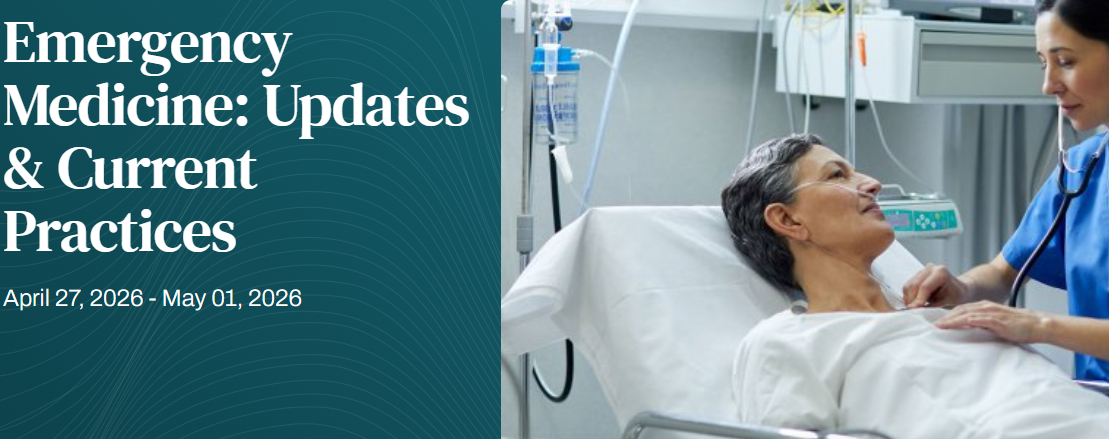
Harvard Emergency Medicine Updates & Current Practices 2026
150 $
Format:10 videos + 43 pdfs, size: 10.52 GB
1. Overview
The Harvard Emergency Medicine Updates & Current Practices 2026 program provides a comprehensive, high-yield review of contemporary emergency medicine. The curriculum covers critical advancements across a wide array of topics, including point-of-care ultrasound (POCUS), advanced airway management, resuscitation guidelines, stroke protocols, and the integration of artificial intelligence and telemedicine to optimize emergency department workflows and patient care.
Course Dates: April 27 – May 01, 2026
Gain practical, immediately applicable strategies across critical care, trauma, pediatrics, geriatrics, health equity, and innovation through interactive lectures, case-based discussions, and recorded sessions for flexible learning.
Join us for a dynamic one-week live-stream virtual postgraduate course hosted by the Massachusetts General Hospital (MGH) Department of Emergency Medicine. Designed for emergency physicians, specialty physicians, primary care doctors, physician assistants, nurse practitioners, nurses, and EMTs, this live-streaming course offers a unique opportunity to learn from leading experts in the field. This five-day course will cover a vast array of topics that may include:
Acute Compartment Syndrome
Acute Ischemic Stroke Updates
Airway Advances
ARDS
Approach to the Critically Ill Trauma Patient
Atypical Presentations of Disease in Older Adults
Burns
Cardiac Arrest
Clinical Informatics in Emergency Medicine
Current Practice in Newborn Fever
Critical Care Double Feature: Push-Dose Pressors and Phenobarbital for Severe Alcohol Withdrawal
ED Care of the Psychiatric Patient
EMTALA, Medical Screening Exams, and Challenging Patients: Considerations for Your Next Shift
Environmental Impacts of Healthcare and What Emergency Physicians Can Do
EKG’s
Frailty
Geriatric Falls
Improving ED Patient Experience
Innovating in Emergency Medicine: Challenges and Opportunities
Medical Jargon
Mild Head Trauma
Operationalizing Health Equity in the ED
Pediatrics – Bronchiolitis: What’s Known and What’s New
Personalized Management in Septic Shock
POCUS – (Cardiac, Lung, eFAST, Pediatrics, and Procedures)
Postpartum Hemorrhage
Predictive Model Evaluation
Pulmonary Embolism
Scrotal Pain
Sepsis Updates
Social Determinants of Health: Why Health Equity is the Business of Emergency Medicine
STI’s
Supporting Humanitarian Disasters with Digital Health
Update on Ventricular Fibrillation Cardiac Arrest
Vasopressors and Shock Pearls
What’s New in PEM Literature
Wilderness Medicine / High Altitude Illness
This interactive course will include didactic presentations followed by Q&A, review of cases, problem solving and other engaging formats via remote learning. Learners will have many opportunities to develop new strategies they can incorporate into their practice setting. All lectures will be recorded and available for asynchronous viewing in case of time-zone/schedule conflicts.
2. Learning Objectives
Identify underlying tachydysrhythmias.
Identify most up-to-date therapeutics for cardiac arrest.
Integrate the latest evidence-based practice strategies in treating patients with acute hemorrhagic stroke.
Utilize latest evidence based algorithms and strategies in management of PE and DVT.
3. Target Audience
Best for emergency medicine physicians, nurse practitioners, and physician assistants who want updates on critical care, POCUS, and ED innovations.
Who Should Participate
Emergency Medicine Physicians, Specialty Physicians, Physician Assistants, Nurse Practitioners, Nurses, EMT/Paramedics, and Others.
4. Topics
00 Academic Emergency Medicine – 2026 – Southerland – Multi-Factorial and Multi-Component Fall Prevention Interventions
01 Echo in Pulmonary Embolism
02 Emergency Management of Burns
03 AI in the ED
04 Clinical Informatics in the ED
05 Geriatric Falls
06 Impact of Boarding on Geriatric Patients
07 Scrotal Pain in the ED
08 ARDS
09 Professionalism what does it really mean… and why do we care
10 Mild Head Trauma
11 Cardiac Arrest
12 Improving Emergency Department Patient Experience Principles and Practice
13 Innovation in Emergency Medicine Challenges and Opportunities
14 Tele-Disaster Medicine – From COVID to Ukraine
15 Current Practice in Newborn Fever
16 Airway Advances
17 POCUS Cardiac and Lung
18 POCUS E-FAST
19 POCUS – Procedures (IV, LP)
20 POCUS – Pediatric Cases
21 How to read ischemia on ECGs
22 Practice Updates in Acute PE
23 Critical Care Double Feature Push Dose Pressors in the ED and Severe Alcohol Withdrawal 1
23 Critical Care Double Feature Push Dose Pressors in the ED and Severe Alcohol Withdrawal 2
24 10 Things You Never Imagined About Monitoring Blood Pressure
25 Beyond “Medical Clearance” ED Evaluation of the Patient Presenting with Acute Psychiatric Complaints
26 Update on the treatment of ventricular fibrillation cardiac arrest
27 The 2026 Acute Ischemic Stroke Guidelines – Top 10 Take-homes for the Emergency Medicine Clinician
28 Cranial Nerve Deficits
29 Top Updates in PEM Literature AY 2025-2026
30 Recent Cardiologic Advances in EM
31 Vasopressors and Shock Pearls
32 On-field management of medical emergencies in the elite athlete take home lessons for your next shift
33 Hand Injuries How would You treat them; Case-Based Updates
34 STI
35 Wilderness Medicine High Altitude Equity is the Business of Emergency Medicine
36 Frostbite Management in the ED
37 Practical Sustainability Reducing Harm from Environmental Impacts of Healthcare
38 Management of Postpartum Hemorrhage
39 Current concepts in the management of septic shock
40 Ocular Emergencies
April 27 Afternoon Session
April 27 Morning Session
April 28 Afternoon Session
April 28 Morning Session
April 29 Afternoon Session
April 29 Morning Session
April 30 Afternoon Session
April 30 Morning Session
May 01 Afternoon Session
May 01 Morning Session
Be the first to review “Harvard Emergency Medicine Updates & Current Practices 2026”
You must be logged in to post a review.
Related products




Reviews
There are no reviews yet.