



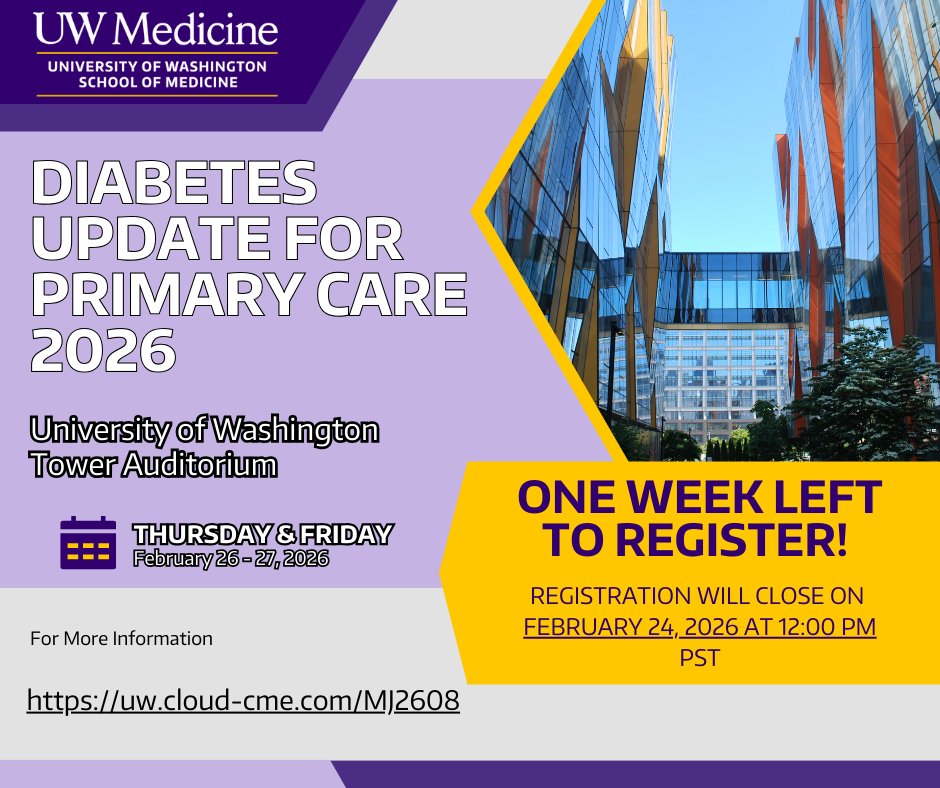
UW Medicine Diabetes Update for Primary Care 2026
50 $
Format :15 Videos (.mp4) + 15 Subtitles (.vtt) + 17 PDFs, size: 7.55 GB
1. Overview
The UW Medicine Diabetes Update for Primary Care 2026 provides a comprehensive, evidence-based review of modern diabetes management. The course covers pharmacological advancements, lifestyle interventions, continuous glucose monitoring integration, and strategies for managing diabetes-related complications and atypical presentations in primary care settings.
Course Date: Thursday, February 26, 2026, 7:00 AM – Friday, February 27, 2026, 5:00 PM, University of Washington | Tower, Seattle, WA
Specialties – Endocrinology
Professions – Naturopathic Physician, Nurse, Nurse Practitioner, Pharmacist, Physician, Physician Associate, Student
This is a comprehensive two-day course on diabetes geared towards primary care providers. There is an immense need for education with increased incidence of diabetes in the general population. Didactic lectures offered in this program will provide the latest information on current classification of diabetes, and guideline updates. Important offerings of this course include an update on the newer pharmacologic agents for diabetes, insulin therapy, cardiovascular risk mitigation and management of type 1 diabetes in primary care.
2. Learning Objectives
These learning objectives are designed to address identified practice gaps by improving interprofessional competence and performance, clarifying professional roles, and fostering collaborative practice to enhance patient outcomes in diabetes care.
At the conclusion of this activity, physicians, nurses, and other healthcare professionals will be able to:
Accurately identify and differentiate types of diabetes using patient history, physical assessment, laboratory findings, and social determinants of health.
Develop, implement, and reinforce individualized nutrition and physical activity plans for patients with diabetes, incorporating nursing and physician-led patient education, motivational interviewing, and interprofessional follow-up to support sustained behavior change.
Evaluate newer and established pharmacologic therapies for diabetes and apply profession-specific responsibilities—including prescribing, administration, patient education, monitoring for adverse effects, and adherence support—to optimize safe, team-based medication management.
Apply evidence-based strategies for managing type 1 diabetes in the primary care setting, including team coordination of glucose monitoring, insulin administration education, sick-day management, and prevention of acute complications.
Utilize case-based approaches to initiate and titrate insulin in patients with type 1 and type 2 diabetes, integrating nursing assessment, protocol-driven dose adjustments, patient education, and timely communication among members of the healthcare team.
Identify, monitor, and manage cardiometabolic comorbidities and complications associated with diabetes, including hypertension, dyslipidemia, and metabolic liver disease to determine appropriate referral, escalation of care, and follow-up.
Apply interprofessional documentation, communication, and care coordination strategies to improve continuity of care, reduce diabetes-related complications, and enhance patient-centered outcomes.
3. Target Audience
Best for primary care physicians and family practitioners who want updates on diabetes pharmacology, CGM, and complication management.
4. Topics
Continuous Glucose Monitors Workshop
Diagnosing Typical and Atypical Forms of Diabetes- What the Primary Care Physician Needs to Know
Exercise Prescriptions for People with Diabetes
How and When to Use Insulin in Management of Patients with Type 2 Diabetes (Pharmacology)
Lifestyle Management for People with Diabetes
Lipid Management in Diabetes (Pharmacology)
Management of Type 1 Diabetes in Primary Care (Pharmacology)
Metabolic Dysfunction-Associated Steatotic Liver Disease- Update for Primary Care in 2026
Older Therapies – When to Use- (Pharmacology)
Pearls in Hypertension Management in People with Diabetes (Pharmacology)
Practical Use of Insulin Therapy- A Case-Based Approach (Pharmacology)
Screening and Treatment of Diabetes Complications (and When to Refer)
SGLT2 Inhibitors in 2026- Glucose Lowering and Beyond (Pharmacology)
Update on Incretin Based Therapies in Type 2 Diabetes- What’s New in 2026 (Pharmacology)
Using Continuous Glucose Monitoring in People with Diabetes
Be the first to review “UW Medicine Diabetes Update for Primary Care 2026”
You must be logged in to post a review.
Related products



Reviews
There are no reviews yet.