
-
×
 Spencer's Pathology of the Lung 6th, 2 Part Set
1 × 4 $
Spencer's Pathology of the Lung 6th, 2 Part Set
1 × 4 $ -
×
 Renal Physiology: A Clinical Approach (Integrated Physiology Series)
1 × 4 $
Renal Physiology: A Clinical Approach (Integrated Physiology Series)
1 × 4 $ -
×
 Essentials of Nuclear Medicine Imaging 6th
1 × 4 $
Essentials of Nuclear Medicine Imaging 6th
1 × 4 $ -
×
 The Licensing Exam Review Guide in Nursing Home Administration, Seventh Edition
1 × 4 $
The Licensing Exam Review Guide in Nursing Home Administration, Seventh Edition
1 × 4 $ -
×
 Epidemiology of Thyroid Disorders (EPUB)
1 × 4 $
Epidemiology of Thyroid Disorders (EPUB)
1 × 4 $ -
×
ALARA – CT (As Low As Reasonably Achievable) 2014 (CME Videos)
1 × 10 $ -
×
 Practical Manual of Histology (PDF)
1 × 4 $
Practical Manual of Histology (PDF)
1 × 4 $ -
×
 Pocket Guide Schmerztherapie: Soforthilfe bei den häufigsten Schmerzzuständen
1 × 10 $
Pocket Guide Schmerztherapie: Soforthilfe bei den häufigsten Schmerzzuständen
1 × 10 $ -
×
 Lippincott's Concise Illustrated Anatomy: Volume 3: Head & Neck
1 × 4 $
Lippincott's Concise Illustrated Anatomy: Volume 3: Head & Neck
1 × 4 $ -
×
 Paediatric Dentistry: Principles and Practice, 2nd Edition (PDF)
1 × 4 $
Paediatric Dentistry: Principles and Practice, 2nd Edition (PDF)
1 × 4 $ -
×
 Ocular Surface Disease: Cornea, Conjunctiva and Tear Film
1 × 4 $
Ocular Surface Disease: Cornea, Conjunctiva and Tear Film
1 × 4 $
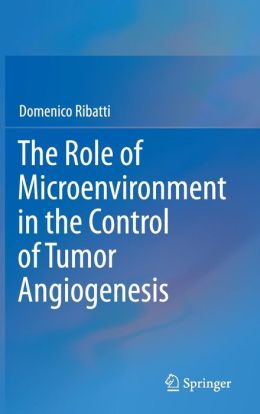
The Role of Microenvironment in the Control of Tumor Angiogenesis (PDF)
7 $
The Role of Microenvironment in the Control of Tumor Angiogenesis (PDF)
by
Domenico RibattiDomenico Ribatti
This work describes the importance of tumor microenvironment in favouring tumor progression and angiogenesis.
Under physiological conditions, angiogenesis is dependent on the balance of positive and negative angiogenic modulators within the vascular microenvironment and requires the functional activities of a number of molecules, including angiogenic factors, extracellular matrix proteins, adhesion molecules and proteolytic enzymes.
In normal tissues, vascular quiescence is maintained by the dominant influence of endogenous angiogenesis inhibitors over angiogenic stimuli.
Tumor angiogenesis is linked to a switch in the balance between positive and negative regulators, and mainly depends on the release by inflammatory or neoplastic cells of specific growth factors for endothelial cells, that stimulate the growth of the blood vessels of the host or the down-regulation of natural angiogenesis inhibitors.
In particular, the inflammatory infiltrate may contribute to tumor angiogenesis, and there are many reports of associations between tumor inflammatory infiltrate, vascularity and prognosis.
New therapeutic approaches have been developed with the aim to control tumor angiogenesis through targeting of different components of tumor microenvironment.
Product Details
| ISBN-13: | 9783319278186 |
Related products