

-
×
 Essentials of Nuclear Medicine Imaging 6th
1 × 4 $
Essentials of Nuclear Medicine Imaging 6th
1 × 4 $ -
×
 The Licensing Exam Review Guide in Nursing Home Administration, Seventh Edition
1 × 4 $
The Licensing Exam Review Guide in Nursing Home Administration, Seventh Edition
1 × 4 $ -
×
 Field Guide to Wilderness Medicine 4th
1 × 4 $
Field Guide to Wilderness Medicine 4th
1 × 4 $ -
×
 Goodman and Gilman's The Pharmacological Basis of Therapeutics, 12th Edition
1 × 4 $
Goodman and Gilman's The Pharmacological Basis of Therapeutics, 12th Edition
1 × 4 $ -
×
 Medicines, Ethics and Practice: The Professional Guide for Pharmacists
1 × 4 $
Medicines, Ethics and Practice: The Professional Guide for Pharmacists
1 × 4 $ -
×
 The Ileoanal Pouch: A Practical Guide for Surgery, Management and Troubleshooting 1st ed. 2019 Edition
1 × 10 $
The Ileoanal Pouch: A Practical Guide for Surgery, Management and Troubleshooting 1st ed. 2019 Edition
1 × 10 $ -
×
 Bildgebung des Thorax bei Neugeborenen und Kleinkindern
1 × 10 $
Bildgebung des Thorax bei Neugeborenen und Kleinkindern
1 × 10 $ -
×
 Sexually Transmitted Infections: Diagnosis, Management, and Treatment
1 × 4 $
Sexually Transmitted Infections: Diagnosis, Management, and Treatment
1 × 4 $ -
×
 Safety Concerns for Herbal Drugs
1 × 4 $
Safety Concerns for Herbal Drugs
1 × 4 $ -
×
 Pharmacology of Ocular Therapeutics (PDF)
1 × 4 $
Pharmacology of Ocular Therapeutics (PDF)
1 × 4 $ -
×
 Teaching Cultural Competence in Nursing and Health Care, Third Edition: Inquiry, Action, and Innovation
1 × 4 $
Teaching Cultural Competence in Nursing and Health Care, Third Edition: Inquiry, Action, and Innovation
1 × 4 $ -
×
 Ocular Surface Disease: Cornea, Conjunctiva and Tear Film
1 × 4 $
Ocular Surface Disease: Cornea, Conjunctiva and Tear Film
1 × 4 $ -
×
 Renal Physiology: A Clinical Approach (Integrated Physiology Series)
1 × 4 $
Renal Physiology: A Clinical Approach (Integrated Physiology Series)
1 × 4 $ -
×
 Lippincott's Concise Illustrated Anatomy: Volume 1: Back, Upper Limb and Lower Limb
1 × 4 $
Lippincott's Concise Illustrated Anatomy: Volume 1: Back, Upper Limb and Lower Limb
1 × 4 $ -
×
 Atlas de Técnicas Avançadas em Cirurgia
1 × 5 $
Atlas de Técnicas Avançadas em Cirurgia
1 × 5 $ -
×
ALARA – CT (As Low As Reasonably Achievable) 2014 (CME Videos)
1 × 10 $ -
×
Hematology and Medical Oncology Best Practices 2014 (CME Videos)
1 × 10 $ -
×
 Management and Administration of Laboratories 2015 (CME Videos)
1 × 5 $
Management and Administration of Laboratories 2015 (CME Videos)
1 × 5 $

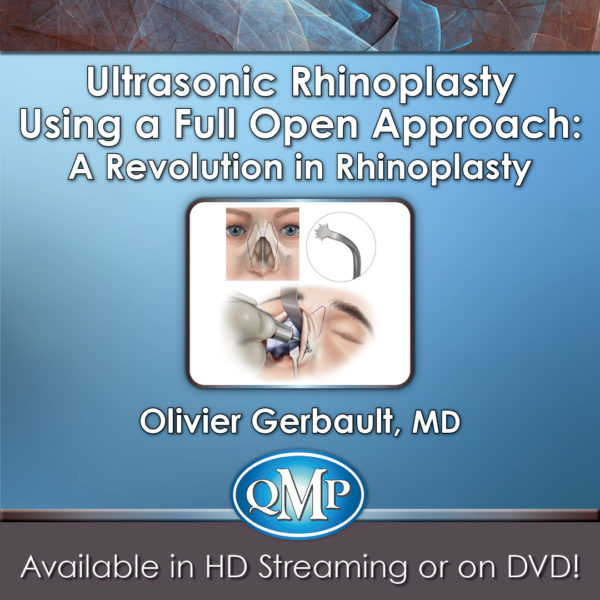
QMP Ultrasonic Rhinoplasty Using a Full Open Approach: A Revolution in Rhinoplasty 2018 (Course)
45 $
Format : 19 MP4 files
File Size : 10.29 GB
This video showcases the use of piezoelectric instruments in rhinoplasty, which allow for precise bone sculpting and mobilization without damaging soft tissues. Surgeons can perform osteotomies, sculpt bones with special rasps or scrapers, and perform bone stabilization with sutures. The surgeries featured include primary and secondary rhinoplasties, ultrasonic septoplasties, and piezo rib graft harvests for reconstruction. The video is approximately 9 hours long and is available in HD Streaming or on 4 DVDs.
QMP Ultrasonic Rhinoplasty Using a Full Open Approach: A Revolution in Rhinoplasty 2018 (Course)
by Dr. Olivier Gerbault
The use of piezoelectric instruments (PEI) in rhinoplasty has dramatically changed the procedure in the last few years. These instruments affect only bones and stiff cartilages, and do not harm the soft tissues: skin, mucosa, soft cartilages, vessels, and nerves. PEI never create radiated fractures on bones, a phenomenon that is quite frequent with mechanical osteotomes. Surgeons can safely extend the bony vault dissection through an extended subperiosteal bony vault undermining, allowing visualization of the whole bony vault to assess the anatomic variations and to mobilize and orient each bone precisely (with piezo saws). Surgeons can also sculpt the bones precisely (rhinosculpture) with special rasps or with a scraper. With this approach, bone osteosynthesis with sutures can be easily performed to stabilize bones in primary or secondary rhinoplasty.
PEI can also incrementally remove the bones without damaging the underlying soft tissues, preserving the osseocartilaginous attachments at the keystone area and avoiding step deformities at the junction between bones and cartilages. PEI also never damage the ULC, allowing an anatomic reconstruction of the dorsum after nonconservative hump removal. The piezo rasps smooth all the bony irregularities after osteotomy, leaving an unoperated feel to the new dorsum.
Piezosurgery in rhinoplasty is a disruptive technology that makes a paradigm shift in managing the bones, from a blind treatment where bones are broken to an open approach in which bones are reshaped and mobilized with perfect control. PEI dramatically simplify hump removal and osteotomies, but also achieve a perfectly smooth dorsum and keystone area.
Olivier Gerbault has been developing techniques and piezo instruments for ultrasonic rhinoplasty since 2013. He demonstrates in this video all of the rhinoplasty techniques achieved by piezosurgery: precise osteotomies and positioning of the bones, bone sculpting (rhinosculpture), bony vault and keystone area smoothing, bone stabilization, conservative septoplasty with long intact pieces of bony septum harvesting, and finally, easy and safe rib graft harvesting.
Surgeries include:
- Primary male patient: overprojected nose (tension nose), wide bony vault and wide asymmetric tip, septal deviation. Ultrasonic rhinoplasty with complete osteotomies and ultrasonic septoplasty.
- Primary male patient; wide, asymmetric nose on an asymmetric face; severe septal deviation; bony hump. Ultrasonic rhinoplasty with asymmetric osteotomies and bone reshaping, and ultrasonic septoplasty.
- Primary female patient: Nasal hump, overprojected drooping nasal tip. Ultrasonic rhinoplasty with piezo hump reduction, partial osteotomies, and tip reshaping.
- Primary female patient: hump reduction on a slightly too wide bony vault; overprojected tip. Ultrasonic rhinosculpture with tip plasty.
- Secondary female patient: asymmetric nose with no tip support, valve dysfunction. Piezo rib graft harvest for septal reconstruction, tip reconstruction, and valve reconstruction.
- Primary male patient: twisted nose with dorsal hump, septal deviation. Ultrasonic rhinoplasty with complete osteotomies and ultrasonic septoplasty.
Available in HD Streaming or on 4 DVDs. Approximately 9 hours. 2018
Related products