

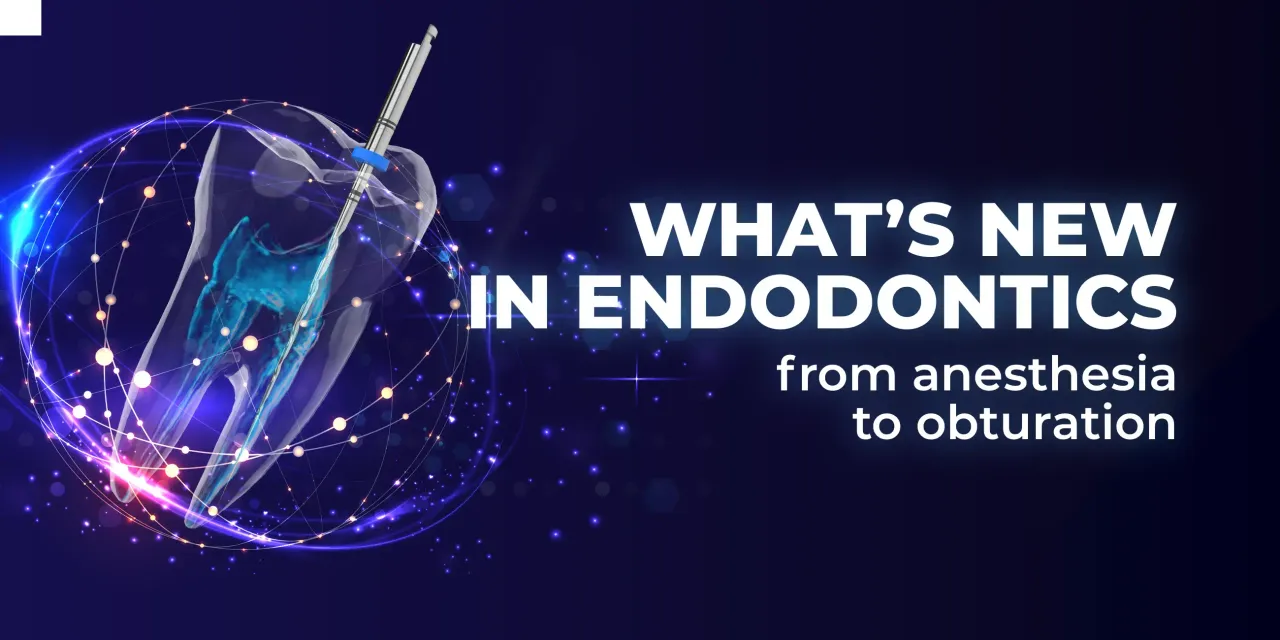
OHI-S What’s NEW in endodontics from anesthesia to obturation
75 $
Format :9 videos + 9 audios + 9 file sub vtt, size: 7.1 GB
8 lessons + 1 free (11h 52min)
Online project in which famous endodontists will share with you new practice-oriented information on endodontic treatment.
– Only new ideas and concepts
– Up-to-date and evidence-based data
– Updated and simplified techniques.
During the course you will learn:
– new protocols for local anesthesia, instrumentation, irrigation and obturation
– updates of single file instrumentation technique
– application of guided endodontics.
The OHI‑S What’s NEW in Endodontics: From Anesthesia to Obturation program is best for endodontists, general dentists performing root canal therapy, prosthodontists, and residents who want structured, training in the latest evidence‑based advances across the full spectrum of endodontic care—from anesthesia protocols to obturation techniques. It emphasizes modern materials, technologies, and clinical workflows for predictable outcomes.
Who Should Enroll
Endodontists seeking updates on cutting‑edge anesthesia, instrumentation, irrigation, and obturation methods.
General dentists performing routine root canal therapy who want to improve efficiency and success rates.
Prosthodontists & restorative dentists integrating endodontic advances into restorative workflows.
Residents & fellows in endodontics or restorative dentistry looking for comprehensive updates.
Dental hygienists & assistants supporting endodontic procedures and patient management.
What You’ll Learn
Anesthesia innovations: new local anesthetic techniques and adjuncts for predictable pain control.
Instrumentation updates: modern rotary and reciprocating systems, file metallurgy, and shaping protocols.
Irrigation advances: activation systems, irrigant solutions, and disinfection strategies.
Obturation techniques: bioceramic sealers, warm vertical compaction, and single‑cone methods.
Digital integration: CBCT, guided endodontics, and workflow optimization.
Case‑based lessons: real examples of applying new protocols in everyday practice.
+ Topics:
Lesson 1.Single file instrumentation technique in endodontics
– Criteria for the NiTi instruments selection
– Clinical approaches of instrumental root canal treatment:
– Traditional
– Minimally invasive
– Simplicity.
– Evolution of single file instrumentation techniques
– Austenitic vs martensitic instruments: pros and cons
– Single file technique: advantages and disadvantages of reciprocal movements
– Simplified single file technique
– Recommendations for safe operation with NiTi instruments
– Root canal irrigation protocol
– Traditional obturation methods vs bioceramic obturation
– Important properties of bioceramic materials
– Single cone technique (hydraulic technique).
Recommended for: Endodontists, General dentists.
Lesson 2.Endodontics with NITI instruments. Introductory lesson
– Creating an access cavity: requirements
– Preparation of the tooth for endodontic treatment
– Interpreting the CBCT scan images
– Mechanical scouting of the canal with new NiTi alloy instrument
– Cleaning and shaping canals with a new generation of instruments
– Treatment of teeth with curved canals
– Filling the endodontic space in 3D with an easy technique with bioceramic cement.
Recommended for: Endodontists, General dentists.
Lesson 3.Endodontics with NITI instruments
– Creating an access cavity: requirements
– Preparation of the tooth for endodontic treatment
– Interpreting the CBCT scan images
– Mechanical scouting of the canal with new NiTi alloy instrument
– Cleaning and shaping canals with a new generation of instruments
– Treatment of teeth with curved canals
– Filling the endodontic space in 3D with an easy technique with bioceramic cement
– Canal retreatment:
– planning principles
– indications
– anatomical and iatrogenic difficulties
– tools.
– Extraction of broken tools: protocol.
Recommended for: Endodontists, General dentists.
Lesson 4.Predictable Treatment of External Root Resorption Through An Internal Nonsurgical Approach
– Theories of the origin and development of root resorption
– Types of root resorption
– Choice of resorption treatment tactics and assessment types of resorption defects
– CBCT scan analysis and map resorption defects in the planning of treatment
– Protocol of extracanal resorption treatment
– MTA: material properties and indications for use in the root resorption treatment
– Advantages of using biodentin in resorption treatment
– Hemostasis and biologic environment management
– Periodontal stability after treatment of resorbed roots
– Post-treatment restorations on severely resorbed teeth.
Recommended for: Endodontists, General dentists.
Lesson 5.Modern Principles and Techniques for Clinical Endodontics
– Comprehensive approach to the examination and selection of a treatment plan
– 4 factors of treatment success: biomechanics, aesthetics, periodontal function
– Choosing priorities when forming a treatment plan
– Diagnostic and therapeutic tools for high-quality root canal treatment
– The root canal treatment objectives
– The formation of endodontic access: protocol and tools
– Instrumental treatment of root canals: Schilder technique
– Irrigation solutions: properties and application protocols
– Irrigation systems: advantages and disadvantages
– Criteria for the selection of filling material
– Root canal obturation:technique-downpack
– Indications for core installation
– “Сavit Pistion” technique of monoblock bioceramic obturation
– The core build up materials after root canal treatment.
Recommended for: Endodontists, General dentists.
Lesson 6.Guided Endodontics
– Indications of guided endodontics
– Data capture in order to create the virtual patient
– Intraoral scanning: clinical recommendations
– The value of verification windows in the template
– Templates planning for guided endodontics
– The right drill choosing
– Prevent failures during guided access procedures
– Limitations of guided endodontics
– Static navigation: advantages and disadvantages
– Dynamic navigation: indications and protocol
– Pulp canal obliteration treatment
– Dynamic navigation during treatment through orthopedic restoration
– Removal of posts using a static navigation.
Recommended for: Endodontists, General dentists.
Lesson 7.Non-surgical endodontic retreatment updates: from filling material removal to regaining apical patency
– Endodontic failures and indications for root canal retreatment
– Prognosis of endodontic retreatment
– Indications for tooth extraction after endodontic treatment
– Spot X-ray vs CBCT: choosing the optimal diagnostic method
– Predictable mechanized method without any solvent for the retrieval of the material
– Various sequences of heat-treated NiTi instruments to remove the filling material
– Method of gaining apical patency exclusively with glide path instruments
– Techniques of three-dimensional root canal cleaning
– 2 methods of ultrasonic irrigation for high-quality removal of filling material from root canals
– Difficult areas for root canal cleaning: tactics
– Ways to remove pins from root canals.
Recommended for: Endodontists, General dentists.
Lesson 8.New techniques for effective local anesthesia in endodontics
– Why do local anesthetics not always work?
– New strategies for local anesthesia in dentistry
– Acute irreversible pulpitis: techniques of effective anesthesia
– The effect of premedication of ibuprofen and indomethacin: studies
– Decision-making strategy for local anesthesia: the choice of anesthesia depending on the tooth
– Solutions for local anesthesia: selection of concentration and volume
– The Go-Gates mandibular block: technique, advantages and disadvantages
– Features of intraligmental anesthesia
– Advantages and techniques of intraosseous injections
– Retromolar canal infiltration technique
– Techniques of lower molars anesthesia: clinical tips
– The dental dam cuff technique
– Strategies for relieving postoperative pain.
Recommended for: Endodontists, General dentists.
Lesson 9.Update in Endodontic irrigant disinfection
– Difficulties in the irrigants application
– The irrigants used protocols
– Mode of action of different irrigation solutions
– Factors of the effectiveness of irrigants: exposure time, concentration
– Hypochlorite accident: causes and tactics
– Interaction of different solutions
– Devices for activation of endodontic irrigants
– GentleWave application
– Advanced irrigation techniques.
Recommended for: Endodontists, General dentists.
Be the first to review “OHI-S What’s NEW in endodontics from anesthesia to obturation”
You must be logged in to post a review.
Related products

Dental Ebook And Video
ITI International Team for Implantology Webinar & Video Lectures Package Part-1 (99 Videos)
60 $
Dental Ebook And Video
ITI International Team for Implantology Webinar & Video Lectures Package Part-3
50 $

Reviews
There are no reviews yet.