
-
×
 Medicines, Ethics and Practice: The Professional Guide for Pharmacists
1 × 4 $
Medicines, Ethics and Practice: The Professional Guide for Pharmacists
1 × 4 $ -
×
 Psychological Insights for Understanding COVID-19 and Media and Technology (PDF)
1 × 4 $
Psychological Insights for Understanding COVID-19 and Media and Technology (PDF)
1 × 4 $ -
×
 The Licensing Exam Review Guide in Nursing Home Administration, Seventh Edition
1 × 4 $
The Licensing Exam Review Guide in Nursing Home Administration, Seventh Edition
1 × 4 $ -
×
 Practical Manual of Histology (PDF)
1 × 4 $
Practical Manual of Histology (PDF)
1 × 4 $ -
×
 Epidemiology of Thyroid Disorders (EPUB)
1 × 4 $
Epidemiology of Thyroid Disorders (EPUB)
1 × 4 $ -
×
 Lippincott's Concise Illustrated Anatomy: Volume 1: Back, Upper Limb and Lower Limb
1 × 4 $
Lippincott's Concise Illustrated Anatomy: Volume 1: Back, Upper Limb and Lower Limb
1 × 4 $ -
×
 Stem Cells: New Frontiers in Science & Ethics
1 × 4 $
Stem Cells: New Frontiers in Science & Ethics
1 × 4 $ -
×
 Pharmacology of Ocular Therapeutics (PDF)
1 × 4 $
Pharmacology of Ocular Therapeutics (PDF)
1 × 4 $ -
×
 Paediatric Dentistry: Principles and Practice, 2nd Edition (PDF)
1 × 4 $
Paediatric Dentistry: Principles and Practice, 2nd Edition (PDF)
1 × 4 $ -
×
 Spencer's Pathology of the Lung 6th, 2 Part Set
1 × 4 $
Spencer's Pathology of the Lung 6th, 2 Part Set
1 × 4 $ -
×
 Essentials of Nuclear Medicine Imaging 6th
1 × 4 $
Essentials of Nuclear Medicine Imaging 6th
1 × 4 $ -
×
 Teaching Cultural Competence in Nursing and Health Care, Third Edition: Inquiry, Action, and Innovation
1 × 4 $
Teaching Cultural Competence in Nursing and Health Care, Third Edition: Inquiry, Action, and Innovation
1 × 4 $ -
×
 Ocular Surface Disease: Cornea, Conjunctiva and Tear Film
1 × 4 $
Ocular Surface Disease: Cornea, Conjunctiva and Tear Film
1 × 4 $ -
×
 Dynamic Ophthalmic Ultrasonography: A Video Atlas for Ophthalmologists and Imaging Technicians (PDF)
1 × 4 $
Dynamic Ophthalmic Ultrasonography: A Video Atlas for Ophthalmologists and Imaging Technicians (PDF)
1 × 4 $ -
×
Pediatric Radiology (The Society for Pediatric Radiology) 2014 (CME Videos)
1 × 10 $ -
×
 Antibiotic Basics for Clinicians: The ABCs of Choosing the Right Antibacterial Agent 2nd
1 × 4 $
Antibiotic Basics for Clinicians: The ABCs of Choosing the Right Antibacterial Agent 2nd
1 × 4 $ -
×
 History of Infectious Disease Pandemics in Urban Societies
1 × 4 $
History of Infectious Disease Pandemics in Urban Societies
1 × 4 $ -
×
 Head and Neck Cancer: An Evidence-Based Team Approach
1 × 4 $
Head and Neck Cancer: An Evidence-Based Team Approach
1 × 4 $ -
×
 Small Animal Soft Tissue Surgery
1 × 4 $
Small Animal Soft Tissue Surgery
1 × 4 $ -
×
 West's Pulmonary Pathophysiology 9th
1 × 10 $
West's Pulmonary Pathophysiology 9th
1 × 10 $ -
×
 Supporting Sucking Skills In Breastfeeding Infants 2nd
1 × 4 $
Supporting Sucking Skills In Breastfeeding Infants 2nd
1 × 4 $ -
×
 Surgical Anatomy of the Ocular Adnexa: A Clinical Approach (Ophthalmology Monographs)
1 × 6 $
Surgical Anatomy of the Ocular Adnexa: A Clinical Approach (Ophthalmology Monographs)
1 × 6 $ -
×
 Atlas of Urinary Cytopathology: With Histopathologic Correlations 1st Edition
1 × 10 $
Atlas of Urinary Cytopathology: With Histopathologic Correlations 1st Edition
1 × 10 $


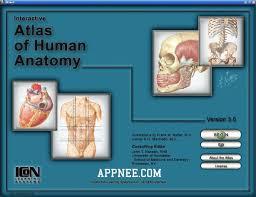
Netter Interactive Atlas Of Human Anatomy
10 $
Atlas Overview The Interactive Atlas of Human Anatomy Version 3.0 provides users with versatile tools for studying, teaching, and learning about anatomical structures. The Atlas tool set includes the following features: – The artwork of Frank H. Netter, MD and Carlos A. G. Machado, MD allows instructors, students, and practitioners to see in great detail the intricacies of anatomical structures. Plates can be displayed with or without identifying labels and leader lines. You can page through the plates individually or search for a plate by its region, system(s), or associated terms. Plates can also be printed with or without labels. – Use the Spoken Labels feature to hear the correct pronunciation of any anatomical label in the Atlas. – The Study Guide feature allows instructors to direct student learning toward certain subject matter. An instructor can select plates and the specific anatomical labels upon which the student should focus, or students can create their own study guides. The instructor or student can save the study guide for later retrieval or editing. – The Test feature allows students and instructors various options for creating practice tests or custom exams. – Practice Tests allow students to quickly test their knowledge of a region, a system, a sub-region, or a particular plate by selecting the anatomical structure named in the “question.” The user can designate the number of items to be included in the practice test and then use the Random Selection feature to direct the program to choose the items for that test. – For those preparing for a test over certain material, the Pretest feature allows users to drill themselves by navigating to plates that include the test items, and then rolling over the test items to see the correct answer labels displayed. – The Test feature allows the student or instructor to select the preferred test mode: Locate Structures, in which the student is given the name of an anatomical feature and then identifies it, or Name Structures, in which the student is asked to name specified features. As you work through the Interactive Atlas of Human Anatomy, click the Help button if you want more information on any of these or other features. You need a monitor capable of supporting thousands of colors (16-bit color depth) at a resolution of 1024×768 to run the Interactive Atlas of Human Anatomy.
Netter Interactive Atlas Of Human Anatomy
Atlas Overview
The Interactive Atlas of Human Anatomy Version 3.0 provides users with versatile
tools for studying, teaching, and learning about anatomical structures. The Atlas tool set
includes the following features:
– The artwork of Frank H. Netter, MD and Carlos A. G. Machado, MD allows
instructors, students, and practitioners to see in great detail the intricacies of
anatomical structures. Plates can be displayed with or without identifying labels
and leader lines. You can page through the plates individually or search for a
plate by its region, system(s), or associated terms. Plates can also be printed
with or without labels.
– Use the Spoken Labels feature to hear the correct pronunciation of any
anatomical label in the Atlas.
– The Study Guide feature allows instructors to direct student learning toward
certain subject matter. An instructor can select plates and the specific anatomical
labels upon which the student should focus, or students can create their own
study guides. The instructor or student can save the study guide for later
retrieval or editing.
– The Test feature allows students and instructors various options for creating
practice tests or custom exams.
– Practice Tests allow students to quickly test their knowledge of a region, a
system, a sub-region, or a particular plate by selecting the anatomical structure
named in the “question.” The user can designate the number of items to be
included in the practice test and then use the Random Selection feature to direct
the program to choose the items for that test.
– For those preparing for a test over certain material, the Pretest feature allows
users to drill themselves by navigating to plates that include the test items, and
then rolling over the test items to see the correct answer labels displayed.
– The Test feature allows the student or instructor to select the preferred test
mode: Locate Structures, in which the student is given the name of an
anatomical feature and then identifies it, or Name Structures, in which the
student is asked to name specified features.
As you work through the Interactive Atlas of Human Anatomy, click the Help button if
you want more information on any of these or other features. You need a monitor
capable of supporting thousands of colors (16-bit color depth) at a resolution of
1024×768 to run the Interactive Atlas of Human Anatomy.
Related products