
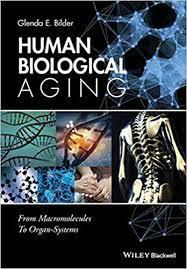
Human Biological Aging: From Macromolecules To Organ Systems 1st Edition
10 $
by Glenda E. Bilder (Author)
Human Biological Aging: From Macromolecules To Organ Systems 1st Edition
by Glenda E. Bilder (Author)
Comprehension of the theories of aging requires rudimentary knowledge of oxidation and reduction reactions, protein function, cell organelles, mitosis, acquired immunity, and evolution, among other basic biological concepts. Without these fundamentals, students of biological aging struggle to learn the essentials of biological aging and how to appreciate the research advances in the field.
Human Biological Aging: From Macromolecules To Organ-Systems is an introduction to human aging from the level of macromolecules to organ systems. Age changes in proteins, DNA, polysaccharides and lipids are discussed relative to known age-related alterations in structure and function produced by free radicals and oxidants. At the cellular level, age-dependent mechanisms that diminish organelle function are described. Cellular phenomena of replicative senescence apoptosis, autophagy and neuroplasticity are detailed as to their contribution to compromised cellular functions. Authored by a leader in the field, Human Biological Aging: From Macromolecules To Organ-Systems is an invaluable introduction for those studying human aging.
|
Related products


10 $