

-
×
 The Johns Hopkins Internal Medicine Board Review: Certification and Recertification, 5th Edition (PDF)
1 × 18 $
The Johns Hopkins Internal Medicine Board Review: Certification and Recertification, 5th Edition (PDF)
1 × 18 $ -
×
 The Licensing Exam Review Guide in Nursing Home Administration, Seventh Edition
1 × 4 $
The Licensing Exam Review Guide in Nursing Home Administration, Seventh Edition
1 × 4 $ -
×
 The Chemistry of Contrast Agents in Medical Magnetic Resonance Imaging 2nd
1 × 5 $
The Chemistry of Contrast Agents in Medical Magnetic Resonance Imaging 2nd
1 × 5 $ -
×
 History of Infectious Disease Pandemics in Urban Societies
1 × 4 $
History of Infectious Disease Pandemics in Urban Societies
1 × 4 $ -
×
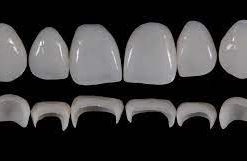 Prosthetic Rehabilitation on Natural Teeth: Predictable, Esthetic and Systematic Steps
1 × 38 $
Prosthetic Rehabilitation on Natural Teeth: Predictable, Esthetic and Systematic Steps
1 × 38 $ -
×
 Atlas of Urinary Cytopathology: With Histopathologic Correlations 1st Edition
1 × 10 $
Atlas of Urinary Cytopathology: With Histopathologic Correlations 1st Edition
1 × 10 $ -
×
Surgical Anatomy of the Ocular Adnexa: A Clinical Approach (Ophthalmology Monographs)
1 × 6 $
-
×
 Developability of Biotherapeutics: Computational Approaches
1 × 5 $
Developability of Biotherapeutics: Computational Approaches
1 × 5 $ -
×
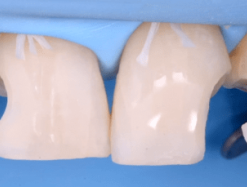 Direct and Indirect Adhesive Restorations
1 × 36 $
Direct and Indirect Adhesive Restorations
1 × 36 $

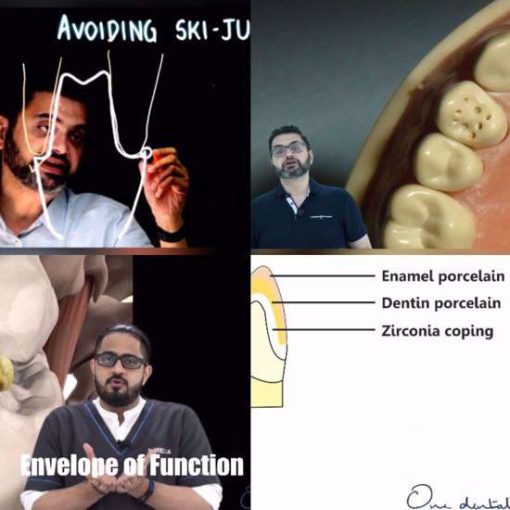
Everyday Fixed Prosthodontics: Certificate Course
55 $
Everyday Fixed Prosthodontics: Certificate Course
Everyday Fixed Prosthodontics:
Certificate Course
By: Moez Khakiani and Renowned International Speakers
14 Parts (116 Videos) (5.35 GB) (15/5 Hours)
Course validity: 90 days
In this course you will learn:
Part 1: Material options
– Material options for indirect fixed prosthodontics
– All about PFM
– A complete guide to PFZ
– Everything you need to know about monolithic zirconia
– Can zirconia fracture
– Everything you need to know about E-max
– How are E-max restorations made
– PFM vs PFZ vs E-max for single unit posterior restorations
Part 2: Material selection
– Material selection 1: Position
– Material selection 2: Length of edentulous space
– Material selection 3: Interocclusal space
– Material selection 4: Need for bonding
– Material selection 5: Parafunctional habits
– Material selection 6: Age, allergy and laboratory competence
Part 3: Biologic width
– Rest In Peace biologic width!
– Understanding biologic width
– Where should I place my margins
– How to place finish lines subgingivally in a shallow sulcus
– How to place subgingival margins in a deep sulcus part 1
– How to place subgingival margins in a deep sulcus part 2
– Why is there recession or inflammation around my crown
– Diagnosing a biologic width violation
Part 4: Tooth preparation
– Principles of tooth preparation
– Detailed demonstration of tooth preparation of a molar
– Detailed demonstration of tooth preparation of a premolar
– Detailed demonstration of tooth preparation of an incisor for full ceramic crown
– Detailed demonstration of tooth preparation of an incisor for PFM crown
– Average reduction for PFM prosthesis for posterior teeth
– Average reduction for monolithic restoration for posterior teeth
– Average reduction for PFM prosthesis for anterior teeth
– Average reduction for metal free prosthesis for anterior and posterior teeth
– Tooth preparation for bridges
– Wing preparation
– Preparation of tilted, rotated and supra-erupted teeth
– Ferrule and ferrule effects
– Preaparation of intracoronal restoration
Part 5: Clearance and finish lines
– Clearance: The goal of reduction
– How can interproximal clearance be correctly achieved
– Making sense of finish lines in prosthodontics
– The importance of finish lines
– Finish line refinement
– Margin placement with respect to gingival crest
– Avoiding ski-jump ramps in finish line
Part 6: Tips and tricks in preparation
– Implications of under reduction
– Preparing the distal margin of a maxillary second molar
– The secrets to ensuring longevity of prosthesis part 1
– The secrets to ensuring longevity of prosthesis part 2
– Logic behind secondary retention and resistance features
Part 7: Tissue retraction
– Is tissue retraction really important
– Different techniques for tissue retraction
– Choosing the correct retraction cord
– What size retraction cord should I use
– Demonstration of cord packing technique
– Single cord technique
– Double cord technique
– The correct way to retrieve a cord from the sulcus
– Are there any drawbacks of retraction cords
– Cordless techniques for retraction
– Chemical haemostasis: Bleeding gums before impression making
– Techniques to achieve haemostasis prior to impression
Part 8: Impression making
– Perforated trays: A universal choice
– Metal or plastic tray for my next impression
– Triple trays for impressions
– Is buying a tray adhesive a waste of money
– Understanding impression materials and their techniques
– All about polyether
– Do automixing systems waste material
– Preparing a cartridge for light body impressions
– Bleeding a cartridge
– How to prepare putty for an impression
– Making the perfect C-Silicone impressions
– Making perfect triple tray Addition Silicone impressions
– Making one step polyether impressions
– Perfect polyether impressions using triple tray
– Disinfecting an impression
Part 9: Troubleshooting in impressions
– Troubleshooting in impressions
– Suppose my impression isn’t accurate
– Voids at the margin of my impression
– My impression tray keeps contacting teeth
– My impression separated from the tray
– My impression margins are lacking detail
– My impression keeps tearing
– Drag marks at the margin of my impression
Part 10: Pontic design
– Ideal requirements of pontics
– Natural tooth pontic
– What pontic design should I choose
– Saddle or ridge lap pontic
– Modified ridge lap pontic
– Ovate pontic
– Sanitary pontic
Part 11: Occlusion
– The basics of occlusion
– The ONE video everybody needs to watch about occlusion
– Importance of ideal occlusion
– Mutually protected occlusion
– Dynamic Occlusal Relationships
– Static occlusion for anterior teeth
– Static occlusion for posterior teeth
– Restoration of anterior guidance in anterior aesthetic case
– Canine guidance vs group function
– Types of interferences in occlusion
Part 12: Pre-cementation
– Coping trial for prosthesis
– A guide to shade selection
Part 13: Cementation
– Consequences of leaving an occlusal interference
– Cementation or bonding: A better choice
– An important tip post bonding of indirect restorations
– Sensitivity even after a root canal
– Bonding mechanism for indirect restorations
– Cementation of PFM prosthesis
– Cementaion of Emax prosthesis
– Cementation of Zirconia prosthesis
Part 14: Long lectures
– Simplified techniques of tooth preparation
– Occlusal considerations in dentistry
– The game of crowns
– Restoring endodontically treated teeth
– Articulating papers in dentistry
– Dental Ceramics
Related products

Dental Ebook And Video
Plastic-Esthetic Periodontal and Implant Surgery: The Special DVD Compendium
39 $
Dental Ebook And Video
ITI International Team for Implantology Webinar & Video Lectures Package Part-2
50 $

Dental Ebook And Video
Prosthetic Rehabilitation on Natural Teeth: Predictable, Esthetic and Systematic Steps
38 $