

-
×
 Orthopaedic Surgery Board Review 2015 (CME Videos)
1 × 10 $
Orthopaedic Surgery Board Review 2015 (CME Videos)
1 × 10 $ -
×
 Diagnostic Pathology Update 2019 (USCAP Video Courses) (CME VIDEOS)
1 × 30 $
Diagnostic Pathology Update 2019 (USCAP Video Courses) (CME VIDEOS)
1 × 30 $ -
×
 Atlas de Técnicas Avançadas em Cirurgia
1 × 5 $
Atlas de Técnicas Avançadas em Cirurgia
1 × 5 $ -
×
 Self-Directed Critical Care Review: Adult 2018 (CME Videos)
1 × 25 $
Self-Directed Critical Care Review: Adult 2018 (CME Videos)
1 × 25 $ -
×
UCSF Musculoskeletal MR Imaging 2014 (CME Videos)
1 × 10 $ -
×
 The American Nephrology Nurses Association (ANNA) 50th National Symposium 2019 (CME VIDEOS)
1 × 30 $
The American Nephrology Nurses Association (ANNA) 50th National Symposium 2019 (CME VIDEOS)
1 × 30 $ -
×
Dermatology Board Review Course 2014 (CME Videos)
1 × 10 $ -
×
 Translational Medicine: Tools And Techniques
1 × 5 $
Translational Medicine: Tools And Techniques
1 × 5 $ -
×
 Genetic Association Studies: Background, Conduct, Analysis, Interpretation
1 × 10 $
Genetic Association Studies: Background, Conduct, Analysis, Interpretation
1 × 10 $ -
×
 Black's Medical Dictionary, 43rd Edition (PDF)
1 × 6 $
Black's Medical Dictionary, 43rd Edition (PDF)
1 × 6 $


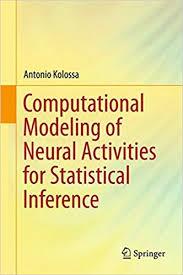
Computational Modeling of Neural Activities for Statistical Inference
18 $
by Antonio Kolossa (Author)
Computational Modeling of Neural Activities for Statistical Inference
by Antonio Kolossa (Author)
This authored monograph supplies empirical evidence for the Bayesian brain hypothesis by modeling event-related potentials (ERP) of the human electroencephalogram (EEG) during successive trials in cognitive tasks. The employed observer models are useful to compute probability distributions over observable events and hidden states, depending on which are present in the respective tasks. Bayesian model selection is then used to choose the model which best explains the ERP amplitude fluctuations. Thus, this book constitutes a decisive step towards a better understanding of the neural coding and computing of probabilities following Bayesian rules. The target audience primarily comprises research experts in the field of computational neurosciences, but the book may also be beneficial for graduate students who want to specialize in this field.
|
Related products





Basic Medical Book
Surgical Anatomy of the Ocular Adnexa: A Clinical Approach (Ophthalmology Monographs)
6 $

Basic Medical Book
Diagnostic Electron Microscopy: A Practical Guide to Interpretation and Technique 1st Edition
10 $