
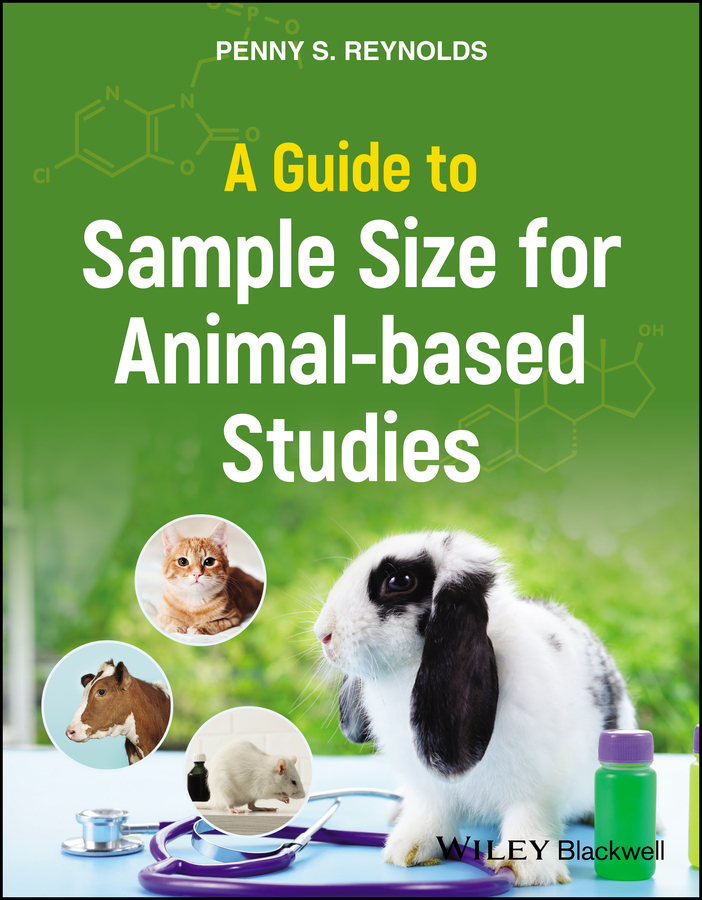
A Guide to Sample Size for Animal-based Studies (ePub Book)
6 $
Format : EPUB
File Size : 4.8 MB
This book is a reference guide for preclinical and veterinary researchers, ethical oversight committees, and policymakers on how to plan animal-based experiments to ensure scientifically valid and reliable results while minimizing animal use according to the 3Rs ethical framework. It provides step-by-step guidance on diverse methods for approximating and refining sample size, sample size approximation methods for different types of data and study types, and numerous worked examples. It will be published by Wiley on August 29, 2023.
A Guide to Sample Size for Animal-based Studies (ePub Book)
by
A Guide to Sample Size for Animal-based Studies is an innovative reference work written by Penny S. Reynolds. This book provides a thorough, accessible guide to designing humane animal-based studies, a foundational area of experimental design.
Animal-based research is an essential part of basic and preclinical research, but it poses unique challenges due to the ethical framework for humane animal-based studies. The 3Rs − Replacement, Reduction, and Refinement − are essential principles that researchers must consider when planning animal-based experiments. However, many researchers have difficulty navigating the design trade-offs necessary to minimize animal use while producing reliable scientific information.
A Guide to Sample Size for Animal-based Studies meets this need with its step-by-step guidance in diverse methods for approximating and refining sample size. The book offers detailed treatment of research topics specific to animal-based research, including pilot, feasibility, and proof-of-concept studies, and provides sample size approximation methods for different types of data and different study types.
One of the outstanding features of this book is the numerous worked examples using real data from published papers, together with SAS and R code. This provides readers with a practical understanding of the concepts presented in the book.
Whether you are a preclinical or veterinary researcher, ethical oversight committee member, or policymaker, A Guide to Sample Size for Animal-based Studies is a must-have reference. The book promotes scientifically valid and reliable results by guiding readers in planning animal-based experiments.
Reynolds’s writing style is engaging and ideal for readers who want a comprehensive guide to designing humane animal-based studies. The book is well-organized, making it easy to find information, and the diverse methods presented allow readers to choose the best approach for their specific needs.
As a researcher in preclinical & clinical studies, I found the book very informative, covering a broad range of topics, and providing a much-needed guide for sample size estimation in animal-based research. The inclusion of worked examples, together with SAS and R code, takes the guesswork out of the sample size estimation process.
Having read A Guide to Sample Size for Animal-based Studies, I highly recommend it to anyone involved in animal-based research. Whether you work in academia, biotech, or the pharmaceutical industry, this book is an essential reference work that will help ensure the ethical conduct and proper execution of animal-based studies.
In conclusion, A Guide to Sample Size for Animal-based Studies is an outstanding reference work that provides a systematic approach to designing humane animal-based studies. Reynolds’s writing style is engaging, and the book is well-organized, making it easy to find information. The worked examples and code included in the book make it practical and useful. I would encourage anyone involved in animal-based research to order a copy of this book today and have it on their bookshelf as a vital resource.
Product Details
- Publisher: Wiley; August 29, 2023
- Language: English
- ISBN: 9781119799979
- ISBN: 9781119799993
Related products