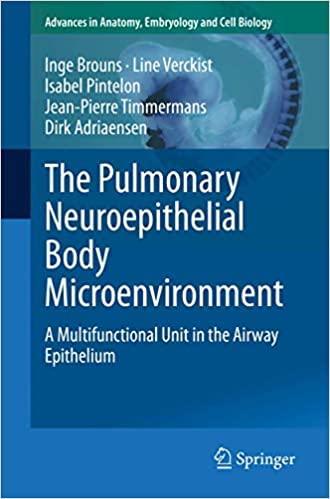
The Pulmonary Neuroepithelial Body Microenvironment: A Multifunctional Unit in the Airway Epithelium (Advances in Anatomy, Embryology and Cell Biology, 233) 1st ed. 2021 Edition
This monograph sheds new light on pulmonary sensory receptors. Diving into the pulmonary microenvironment, the book focuses on the role of pulmonary neuroepithelial bodies (NEBs) as potential receptors and effectors, able to store and release neurotransmitters. It explores NEBs as potential stem cell niche and highlights the multidisciplinary approach taken to identify and study NEBs, including functional morphological investigation, live cell imaging, genetic models, and laser microdissection combined with gene expression analysis.
Complexly organized NEBs are an integral part of the intrapulmonary airway epithelium of all air-breathing vertebrates. For decades a quest has been going on to unravel the functional significance of these intriguing structures that appear to be modified in the course of many pulmonary diseases. The NEB microenvironment (ME) is composed of organoid clusters of pulmonary neuroendocrine cells (PNECs) that are able to store and release neurotransmitters and are closely contacted by extensive nerve terminals, emphasizing a potential receptor/effector role and probable signalling to the central nervous system. PNECs are largely shielded from the airway lumen by a special type of Clara cells, the Clara-like cells, with potential stem cell characteristics. So far, functional studies of the pulmonary NEB ME revealed that PNECs can be activated by various mechanical and chemical stimuli, resulting in a calcium-mediated release of neurotransmitters. In the past decades, a number of publications have exposed NEBs as potential hypoxia sensors. Recent experimental evidence unveiled that the NEB ME is a quiescent stem cell niche in healthy postnatal lungs, and silencing may involve bone morphogenetic protein signalling mediated by vagal afferents. Only an integrated approach that takes all current information into account will be able to explain the full role of the pulmonary NEB ME in health and disease.
This highly informative and carefully presented book, provides insights for researchers, PhD students with an interest in (bio)medical and veterinary science, especially in the field of the autonomic innervation of the lung, chemo-and mechanoreceptors
Product Details
Product Details
- Publisher : Springer; 1st ed. 2021 edition (May 6, 2021)
- Language : English
- Digital eBook : 117 pages


Medicines, Ethics and Practice: The Professional Guide for Pharmacists
Telemedicine and Electronic Medicine
Antibiotic Basics for Clinicians: The ABCs of Choosing the Right Antibacterial Agent 2nd
Paediatric Dentistry: Principles and Practice, 2nd Edition (PDF)
Safety Concerns for Herbal Drugs
Field Guide to Wilderness Medicine 4th
The Licensing Exam Review Guide in Nursing Home Administration, Seventh Edition
Dynamic Ophthalmic Ultrasonography: A Video Atlas for Ophthalmologists and Imaging Technicians (PDF)
West's Pulmonary Pathophysiology 9th
Anatomy of Neuropsychiatry: The New Anatomy of the Basal Forebrain and Its Implications for Neuropsychiatric Illness 1st Edition
Goodman and Gilman's The Pharmacological Basis of Therapeutics, 12th Edition
Black's Medical Dictionary, 43rd Edition (PDF)
Seldin and Giebisch's The Kidney, Fifth Edition: Physiology & Pathophysiology
Lippincott's Concise Illustrated Anatomy: Volume 2: Thorax, Abdomen & Pelvis
Pharmacology of Ocular Therapeutics (PDF)
Teaching Cultural Competence in Nursing and Health Care, Third Edition: Inquiry, Action, and Innovation
Head and Neck Cancer: An Evidence-Based Team Approach
Sexually Transmitted Infections: Diagnosis, Management, and Treatment