



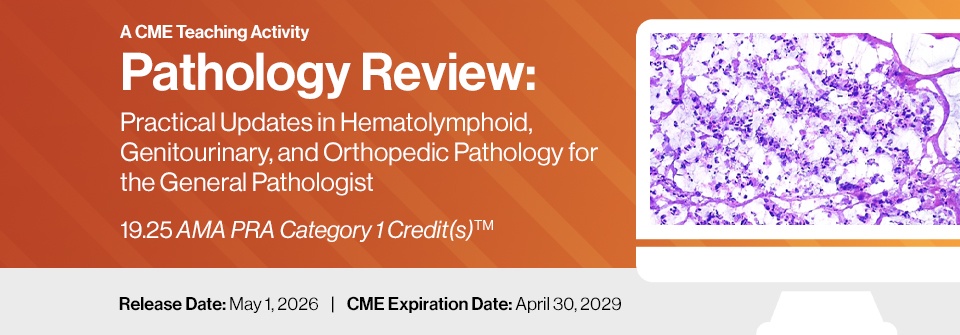
DocmedED 2026 Pathology Review Practical Updates in Hematolymphoid, Genitourinary, and Orthopedic Pathology for the General Pathologist
65 $
Format: videos + file sub vtt + pdf, size: GB
Description
+ Include: videos + file sub vtt + pdf, size: GB
+ Target Audience: pathologists
+ Sample video: contact me for sample video
+ Information:
Released: 05/01/26
This teaching activity has been designed to provide an overview of some of the most common areas of diagnostic difficulty encountered by practicing pathologists in the areas of hematolymphoid, genitourinary, and orthopedic pathology. The course will provide extensive details of some of the most important diagnostic features which allow pathologists to make accurate diagnoses in each of these subspecialized areas, as well as how to assess essential diagnostic clues and avoid the most common diagnostic pitfalls. In each lecture, there is also a discussion on the use of ancillary diagnostic techniques, including immunohistochemistry and molecular pathology. Some of the lectures include case-based discussions.
Target Audience ▼
This activity is primarily intended and designed to educate practicing pathologists.
Practicing Pathologists
Surgical Pathologists
Hematopathologists
Genitourinary Pathologists
Residents and Fellows in Pathology
Academic and Community-Based Pathologists
Scientific Sponsor ▼
Educational Symposia
Educational Objectives ▼
At the completion of this teaching activity, you should be able to:
Recognize the most common issues related to pathology or arthroplasty specimens
Define non-neoplastic and neoplastic diseases of the synovium
Become more comfortable with how to handle frozen sections in the diagnosis of periprostatic joint infection
Review the most common non-neoplastic musculoskeletal lesions encountered by general surgical pathologists
Identify the diagnostic features of benign and malignant hyaline cartilage neoplasms
List the most common giant cell-rich bone neoplasms and how to approach them
Recognize the most common benign mimickers of prostate cancer
Identify prostatic lesions with cribriform architecture, both benign and malignant
Recognize flat and deceptively bland urothelial lesions, as well as papillary urothelial lesions
List the most common renal neoplasms with clear cytoplasm, as well as those with pink cytoplasm
Discuss an approach to CBC abnormalities in both adults and children
Recognize the most common forms of myelodysplasia and other myeloid neoplasms
Review the essential features of acute myeloid leukemia
Discuss an approach to diagnosing lymphoid disorders both in bone marrow and in blood
Recognize the most common entities of B-lymphoid and T/NK neoplasms in blood and bone marrow
Why This Course?
Diagnostic pathology continues to evolve rapidly with advances in molecular testing, immunohistochemistry, and disease classification systems. This course provides practical, case-focused updates from leading experts to help pathologists navigate difficult diagnoses, avoid common pitfalls, and improve diagnostic accuracy across multiple pathology subspecialties.
+ Topics:
Bening Mimickers of Prostate Cancer
Approach to CBC Abnormalities in Children and Adults
Common and Uncommon Prostatic Lesions with Cribriform Architecture
Does My Patient Have Myelodysplasia or Some Other Myeloid Neoplasm?
Acute Myeloid Leukemia: Journey from Blast Percentages to Next Generation Sequencing
Flat and Deceptively Bland Urothelial Lesions: Nothing to Be Trifled With!
Exemplary Myeloid Disorder Cases
Papillary Urothelial Lesions
The Pathologist’s Role in the Diagnosis of Periprosthetic Joint Infection
Approach to Lymphoid Disorders in Blood and Bone Marrow
Non-Neoplastic Musculoskeletal Lesions Every General Surgical Pathologist Should Recognize
B-Lymphoid Neoplasms in Blood and Bone Marrow
Renal Tumors with Clear Cytoplasm
Practical Arthroplasty Pathology
Hyaline Cartilage Neoplasms – Radiology to the Rescue!
Pink Renal Tumors: How Far Can You Go with Morphology?
Synovial Pathology
What Matters Is Not Easy: Pitfalls & Challenges in GU Pathology
T/NK-Neoplasms in Blood and Bone Marrow
Giant Cell-Rich Bone Neoplasms – How to Solve the Mystery
Be the first to review “DocmedED 2026 Pathology Review Practical Updates in Hematolymphoid, Genitourinary, and Orthopedic Pathology for the General Pathologist”
You must be logged in to post a review.
Related products




Reviews
There are no reviews yet.