


Harvard Clinical Endocrinology 2026
135 $
Format: 73 Videos (.mp4) + 73 Subtitles (.vtt) + 83 PDFs, size: 16.89 GB
1. Overview
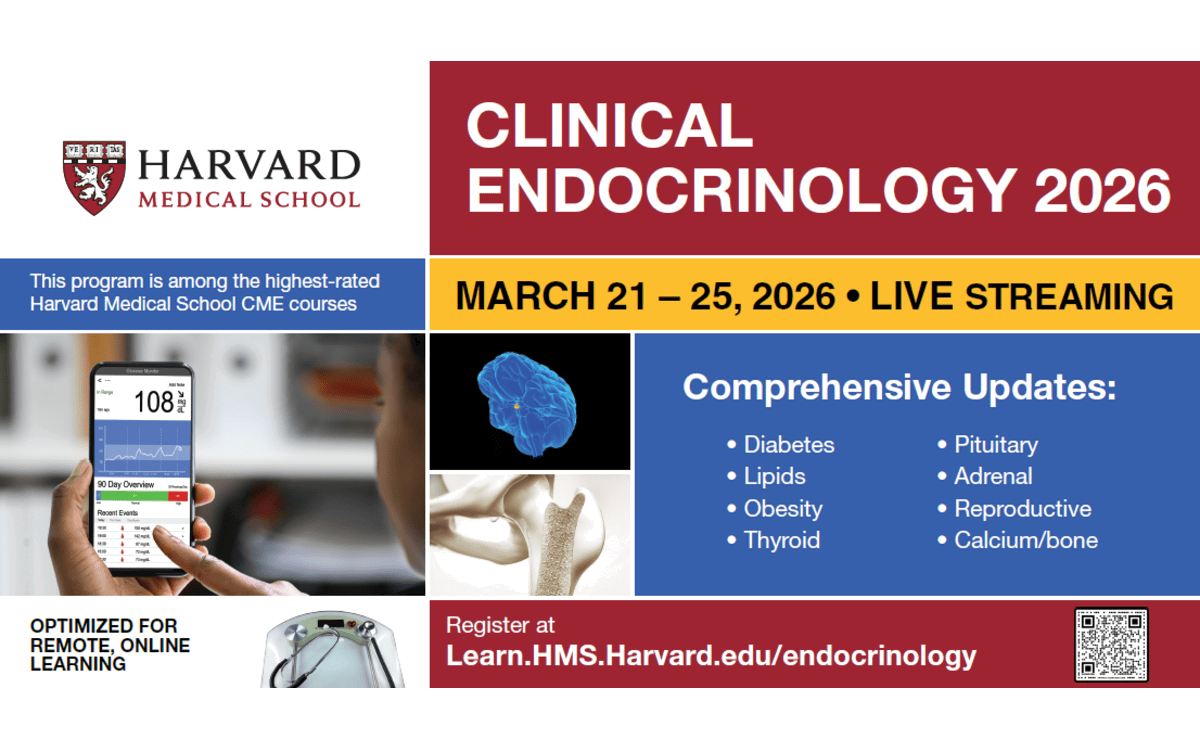
The Harvard Clinical Endocrinology 2026 course provides a comprehensive and evidence-based update on the diagnosis, evaluation, and management of complex endocrine disorders. The program features expert-led sessions and case-based discussions spanning multiple subspecialties, including pituitary conditions, calcium and bone disorders, diabetes and metabolism, reproductive endocrinology, and thyroid diseases.
Optimize care of patients with endocrine disorders through this practical, comprehensive update on the state of the art in endocrinology. Discover the latest evidence-based strategies to drive improvements in screening, evaluation, diagnosis, and treatment for better patient outcomes.
Course Date: March 21-25, 2026
Clinical Strategies and Comprehensive Updates for State-of-the-Art Endocrine Care
Clinical Endocrinology 2026 is a live online course, using live streaming, electronic Q&A, and other remote learning technologies.
For more than 50 years, the endocrinology faculty from Harvard Medical School and Massachusetts General Hospital have offered the course Clinical Endocrinology—the acclaimed annual update of current endocrine diagnostic and management strategies. If you provide care to patients with endocrine disorders, this course will be invaluable to your medical decision-making and patient care.
Education to Optimize Care of Patients with Endocrine Disorders
You can rely on this program to enhance your endocrine knowledge and optimize your care of endocrine disorders with evidence-based strategies. This course provides:
Improved screening for common conditions
The newest clinical guidelines, including the new guidelines for primary hyperparathyroidism and hypoparathyroidism
Expanded options for diagnosis
State-of-the-art treatment strategies
Guidance for challenging cases
Updates for management of common and rare endocrine disorders
New concepts in endocrinology and diabetes
Pediatric endocrinology updates
Skills advancement workshops, including thyroid ultrasound, insulin pump management, and continuous glucose monitoring (CGM)
Dedicated time to pose your specific questions to experts
A Practical, Comprehensive Update for Busy Clinicians
This program delivers comprehensive updates to improve screening, evaluation, diagnosis, and treatment of:
Pituitary lesions
Pituitary hormone excess and hypopituitarism
Diabetes: type 1, type 2, and in pregnancy
Obesity and metabolic disorders
Lipid disorders
Calcium/bone disorders, including osteoporosis
Thyroid nodules, cancer, hyper- and hypothyroidism
Adrenal conditions and incidentalomas
Male and female reproductive conditions
Our faculty, world renowned for their clinical, research, and teaching achievements, cover important updates and recent advances for a broad array of endocrine conditions:
Acromegaly
Adrenal incidentaloma
Adult growth hormone deficiency
Cushing’s disease
Diabetes in pregnancy
Diabetes type 1
Diabetes type 2
Erectile dysfunction
Gestational diabetes
Glucocorticoid-induced osteoporosis
Graves’ eye disease
Hyper- and hypoparathyroidism
Hyper- and hypothyroidism
Hyperprolactinemia
Hypo- and hypercalcemia
Hypoglycemia
Hypopituitarism
Insulin pumps, continuous glucose monitoring (CGM), and technology management in type 1 DM
Lipid disorders
Male and female hypogonadism
Menopause
Obesity and metabolic disorders
Osteoporosis
Pheochromocytoma
Pituitary surgery and radiation
Polycystic ovarian syndrome / hyperandrogenism
Primary aldosteronism
Sellar region abnormalities
Thyroid cancer
Thyroid disease and pregnancy
Thyroid nodules
Thyroid ultrasound
Transgender care
Answers to Frequently Asked Clinical Questions
This course provides answers to frequently encountered questions across the spectrum of endocrinology, including:
How do I decipher diabetes devices?
How should I choose between the new medications for acromegaly and Cushing’s?
When a pituitary lesion is found incidentally, what could the diagnosis be, and what diagnostic tests should I order?
Do I need to treat a low TSH if the free T4 and T3 is normal and the patient feels fine?
Is there a new goal for TSH during pregnancy?
When should I repeat a screening bone density test?
When should I start and end an osteoporosis drug “holiday”?What is your approach to obesity-related / functional hypogonadism?
Is there a role for using SERMs (e.g., clomiphene) instead of Testosterone Replacement Therapy (TRT) in hypogonadal men?
How do you monitor hematocrit and manage polycythemia on TRT?
What comorbidities should I screen for with PCOS?
How can I distinguish PCOS from hypothalamic amenorrhea in an athlete?
What is the difference between hormone replacement therapy and menopausal hormone therapy?
How can I tell if a patient with “spells” has a pheochromocytoma?
In a patient with an adrenal incidentaloma, what are the right tests to screen for hormone excess and when should I worry about adrenal cancer?
2. Learning Objectives
Evaluate and manage complex pituitary and adrenal disorders, including hypopituitarism, Cushing’s syndrome, acromegaly, and adrenal incidentalomas.
Implement modern diagnostic and therapeutic strategies for diabetes, utilizing newer medications, advanced diabetes technology, and specialized inpatient management protocols.
Assess and treat calcium and bone disorders, focusing on hyperparathyroidism, hypercalcemia, and targeted therapies for osteoporosis.
Formulate evidence-based management plans for thyroid conditions, including practical updates on thyroid ultrasound, nodules, hyperthyroidism, and thyroid cancer.
Apply current paradigms in reproductive endocrinology, addressing male hypogonadism, amenorrhea, and gender-affirming hormonal treatments.
3. Target Audience
Best for endocrinologists and internists who want updates on pituitary, thyroid, diabetes, and reproductive disorders.
Who Should Participate
Endocrinologists
Internists
Family Physicians
Pediatricians
Geriatricians
Nurse Practitioners
Physician Assistants
… and other medical professionals interested in comprehensive updates for state-of-the-art endocrine care
4. Topics
01 Hypopituitarism A Comprehensive Update
02 Cushing’s Diagnosis and Treatment in 2026
03 Hyperprolactinemia and Prolactinomas
04 What Is the Sellar Lesion Illustrative Pituitary Cases
05 Expert Faculty Panel for Q & A
06 Current Diagnosis and Management of Adult Growth Hormone Deficiency
07 Clinical Management of Acromegaly
08 Pituitary Case Discussion
09 Expert Faculty Panel for Q & A
10 Primary Hyperparathyroidism 2026 A Comprehensive Update
11 Hypo- and Hypercalcemia Case-Based Diagnosis and Mechanisms
12 Expert Panel Q & A
13 Therapeutic Advances in Rare Bone Diseases
14 Phosphate in Practice Clinical Insights for Endocrinologists
15 Bones, Groans, and Stones Mineral Metabolism Clinical Cases
16 Osteoporosis Current Diagnostic Approaches
17 Osteoporosis Treatment Strategies in 2026
18 Optimal Long-term Management of Established OP Sequential and Alternate
19 State-of-the-Art Management of Glucocorticoid-Induced Osteoporosis
20 Osteoporosis Panel Ask the Experts
21 Calcium & Bone Disorders Mineral MetabolismCalcium Cases
22 Diabetes & Metabolic Disorders Challenging Diabetes Cases
23 Pituitary Pediatric endocrinology for adult endocrinologists
24 Reproductive Topics in male reproduction A case-based approach
25 Thyroid Lessons learned from challenging thyroid cases
26 Modern-Day Therapy and Results of Treatment of Type 1 Diabetes
27 Update in Diabetes Technology
28 Diabetes Subtypes and Diabetes Clinical Genetics
29 What’s New with Old Diabetes Medications
30 Newer Diabetes Medications, New Indications
31 Overcoming Barriers in Type 2 Diabetes Management
32 Pulling It All Together Ask the Diabetes Experts
33 Obesity Medicine
34 State-of-the-Art Lipid Management
35 Inpatient Diabetes Management Evidence and Strategies
36 Diabetes in Pregnancy
37 Gestational Diabetes Melitus
38 Pulling It All Together Ask the Diabetes Experts
39 Calcium & Bone Disorders Cases Topics on osteoporotic fracture secondary prevention
40 Diabetes & Metabolic Disorders Challenges in Cystic Fibrosis-Related Diabetes The Emerging Role of Diabetes Technology beyond Type 1 Diabetes
41 Pituitary Updates in Diagnosis & Treatments of Adrenal Insufficiency
42 Reproductive Endocrinology Rapid Fire Review
43 Thyroid Illustrative cases of thyroid dysfunction
44 Endocrine Hypertension Case-Based Update on Pheochromocytoma and Primary Aldosteronism
45 Adrenal Incidentaloma Illustrative Cases of Current Diagnostic Strategies
46 Approach to the Menopausal Patient in 2026
47 Current Diagnosis and Management of Amenorrhea and Hyperandrogenism
48 Reproductive Faculty Panel for Audience Q & A
49 Male Hypogonadism Insights into Pathophysiology and Evaluation
50 Optimizing Treatment Strategies and Patient Outcomes for Male Hypogonadism
51 Gender-Affirming Hormonal Treatment of Transgender Individuals Changing Paradigms in a Changing Society
52 Erectile Dysfunction A Urologist’s Perspective
53 Expert Reproductive Faculty Answer Your Questions
54 Calcium & Bone Disorders Calcium and bone disorder cases in children and young adults
55 Diabetes & Metabolic Disorders Hypoglycemia
56 Pituitary Integrated Surgical and Endocrine DecisionMaking in Pituitary Tumors
57 Reproductive Topics in Reproduction and Congenital Adrenal Hyperplasia A Case-Based Approach
58 Thyroid Practical update on thyroid ultrasound
59 Subclinical Thyroid Disease Do Endocrinologists Pay Attention to the Evidence
60 The 2026 Approach to Hyperthyroidism
61 Graves’ Eye Disease
62 Thyroid Nodules A Costly Problem
63 Expert Thyroid Panel Answers Your Questions
64 Hypothyroidism A Case-Based Review
65 Thyroid Cancer State of the Art in 2026
66 Thyroid Disease in Pregnancy A Comprehensive Update
67 Panel of Thyroid Specialists for Q & A
Day 1 Pituitary FULL DAY
Day 2 Calcium and Bone Disorders FULL DAY
Day 3 Diabetes and Metabolic Disorders FULL DAY
Day 4 Reproductive and Adrenal FULL DAY RECORDING
Day 5 Thyroid FULL DAY RECORDING
Be the first to review “Harvard Clinical Endocrinology 2026”
You must be logged in to post a review.
Related products





Reviews
There are no reviews yet.