



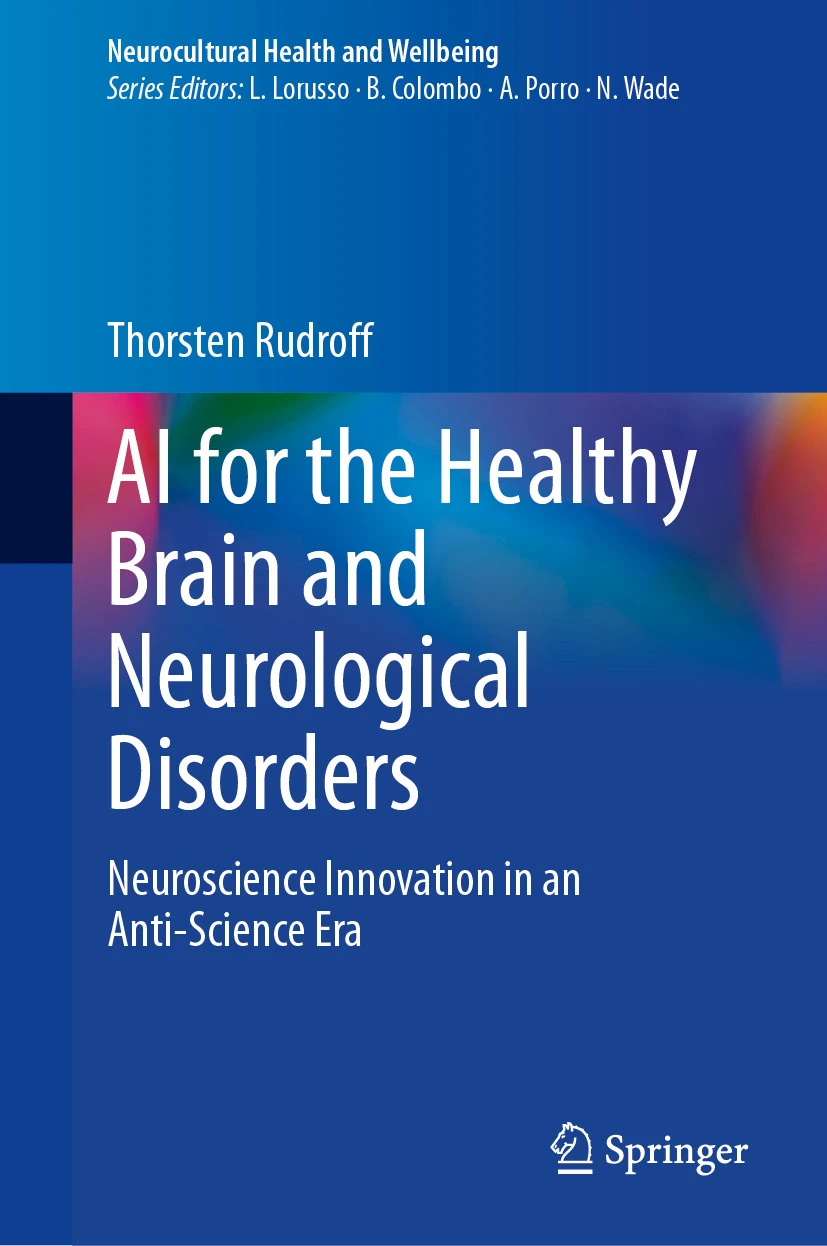
AI for the Healthy Brain and Neurological Disorders : Neuroscience Innovation in an Anti-Science Era
6 $
Format : Original PDF + Epub
This book addresses a critical gap at the intersection of artificial intelligence, neuroscience, and the global crisis of anti-science sentiment. Unlike existing texts that focus solely on technical applications or ethical considerations, this work provides a comprehensive framework that integrates cutting-edge AI methodologies with practical strategies for navigating political and social resistance to scientific progress.
The book’s unique structure bridges three essential domains: technical innovation in neuroimaging and AI applications, ethical frameworks for responsible development, and actionable solutions for combating anti-science movements. Drawing from the international research experience of the Author across Germany, USA, and Finland, it offers rare cross-cultural insights into how different political systems impact neuroscience research and innovation. The primary objectives include:
1) demonstrating how AI transforms neurological disorder detection and treatment, particularly for conditions like Alzheimer’s, Multiple Sclerosis, and Long COVID
2) establishing ethical guidelines for brain-computer interfaces and predictive neuroscience
3) providing evidence-based strategies for scientists to maintain research integrity while engaging effectively with public skepticism, and
4) creating institutional models that protect academic freedom in an era of increasing political polarization.
This work is intended for multiple audiences: healthcare professionals implementing AI solutions, ethicists and policy makers developing governance frameworks, researchers seeking technical advancement, hand science advocates combating misinformation. It fills a crucial gap by being the first comprehensive text to address both the promise of AI in neuroscience and the societal challenges threatening its progress.
The book’s highly structured approach—progressing from technical foundations through ethical considerations to practical solutions—ensures readers gain both theoretical understanding and actionable strategies. By combining rigorous scientific content with accessible explanations and real-world case studies, it serves as both an academic reference and a practical guide for navigating the complex landscape of modern neuroscience.
Hardcover ISBN
978-3-032-11595-9
Published: 16 November 2025
Be the first to review “AI for the Healthy Brain and Neurological Disorders : Neuroscience Innovation in an Anti-Science Era”
You must be logged in to post a review.
Related products







Reviews
There are no reviews yet.