


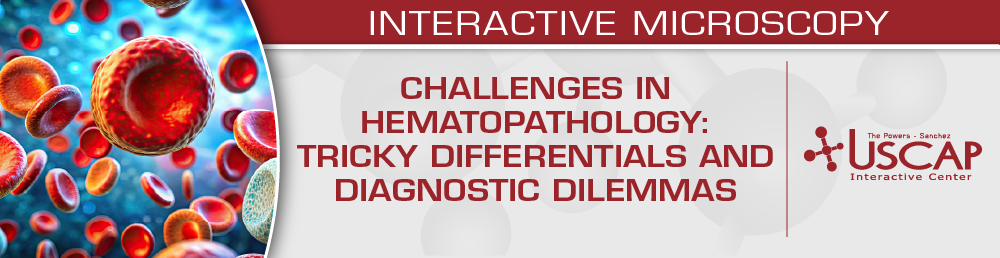
USCAP Challenges in Hematopathology Tricky Differentials and Diagnostic Dilemmas 2025
125 $
Format : 8 videos + 14 pdfs, size: 18.53 GB
Original release date: November 13, 2025
Modern hematopathology is a rapidly evolving field that requires integration of morphologic findings with flow cytometry, immunohistochemistry, and detailed molecular analyses to diagnose and properly classify different entities.
This course will highlight common diagnostic scenarios through an interactive case-based format. This course will provide actionable information on use of ancillary studies in workup of lymphoid and myeloid neoplasm (with special emphasis on integration of cytogenetic and molecular findings), as well as non-neoplastic entities. Integration of clinical, radiologic and laboratory findings is critically important in the diagnostic decision making in hematopathology, particularly in areas such as bone marrow pathology and challenging lymphoid neoplasms.
Target Audience
The target audience is pathologists who diagnose lymphoid lesions and bone marrow biopsies, practicing hematopathologists, and hematopathology trainees.
Learning Objectives
Upon completion of this educational activity, learners will be able to:
Recognize pitfalls and challenges of common and rare hematologic disorders
Apply targeted and judicious use of ancillary studies in bone marrow and tissue specimens
Recognize reactive proliferations that can mimic lymphoid or myeloid neoplasms
+ Topics:
Non-Neoplastic Lymph Node Disorders (and Beyond) – Anamarija Perry, MD
Myelodysplastic Syndrome (MDS) and Its Many Mimickers – Philipp W. Raess, MD, PhD
Myeloid and Lymphoid Confounders and Mimics – Lori Soma, MD
Dealing with Epidermotropism – Problems, Pitfalls, and Practical Solutions – John R. Goodlad, MD, MBChB, FRCPath
Epstein-Barr Virus (EBV) Driven Proliferations – Anamarija Perry, MD
Almost Acute Myeloid Leukemia (AML)…or Is It? – Philipp W. Raess, MD, PhD
Plasmacytic/Plasmacytoid/Plasma Cell Processes – What to Think About Beyond Myeloma – Lori Soma, MD
B-Cell Proliferations in the Skin – John R. Goodlad, MD, MBChB, FRCPath
Be the first to review “USCAP Challenges in Hematopathology Tricky Differentials and Diagnostic Dilemmas 2025”
You must be logged in to post a review.
Related products





Reviews
There are no reviews yet.