


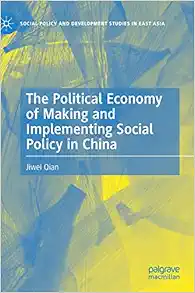
The Political Economy of Making and Implementing Social Policy in China (Social Policy and Development Studies in East Asia) (EPUB)
5 $
Format: EPUB
File Size : 11.8 MB
By Jiwei Qian
This book explores the institutional factors in social policymaking and implementation in China. From the performance evaluation system for local cadres to the intergovernmental fiscal system, local policy experimentation, logrolling among government departments, and the “top-level” design, there are a number of factors that make policy in China less than straightforward. The book argues that it is bureaucratic incentive structure lead to a fragmented and stratified welfare system in China. Using a variety of Chinese- and English-language sources, including central and local government documents, budgetary data, household surveys, media databases, etc., this book covers the development of China’s pensions, health insurance, unemployment insurance, and social assistance programs since the 1990s, with a focus on initiatives since the outbreak of the COVID-19 pandemic. Providing a deeper understanding of policymaking and implementation in China, this book interests scholars of public administration, political economy, Asian politics, and social development.
Product Details
Publisher : Palgrave Macmillan
Publication date : September 29, 2021
Edition : 1st ed. 2021
Language : English
ISBN-10 : 9811650241
ISBN-13 : 978-9811650246
Part of series : Social Policy and Development Studies in East Asia
Be the first to review “The Political Economy of Making and Implementing Social Policy in China (Social Policy and Development Studies in East Asia) (EPUB)”
You must be logged in to post a review.








Reviews
There are no reviews yet.