



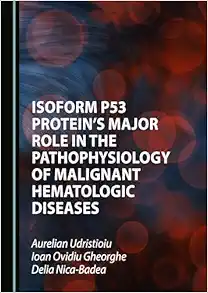
Isoform p53 Protein’s Major Role in the Pathophysiology of Malignant Hematologic Diseases (PDF)
7 $
Format: Publisher PDF
File Size : 5.6 MB
By Aurelian Udristiou, Ioan-Ovidiu Gheorghe, Delia Nica-Badea The new Book appearance, Isoform p53 Protein’s Major Role in the Pathophysiology of Malignant Hematologic Diseases The book “Isoform p53 Protein’s Major Role in the Pathophysiology of Malignant Hematologic Diseases”, By Aurelian Udristioiu, Ioan Ovidiu Gheorghe and Delia Nica-Badea” was recently published in English. This book published in 2024 in Cambridge Scholars Publishing Lady Stephenson Library, Newcastle upon Tyne, NE6 2PA, UK British Library. A catalogue record for this book is available from the British Library. Copyright © 2024 by Aurelian Udristioiu, Ioan Ovidiu Gheorghe and Delia Nica-Badea. ISBN (10): 1-5275-7243-9; ISBN (13): 978-1-5275-7243-0.The book includes ten chapters in which the authors present news from the medical world regarding the results of research activities in molecular biology field and on-hematology. In the study of the expression of the P53 gene, located in the human genome on chromosome 17 in the short arm 17p, the protein isoform p53, corresponding to the mutated P53 gene, is presented as a cellular metabolite that can become oncogenic by modifying the signals of cellular receptors and blocking pathways of cellular differentiation normal, losing the tumor suppressor protein function.The chapters of the book present a new approach to cell apoptosis involved in malignancy and autoimmunity, along with new targeted therapies in patients with malignant diseases, including in chronic lymphoproliferative syndromes such as chronic lymphocytic leukemia B, (CLL-B) and non-malignant lymphoma Hodgkin.It predicted that the diagnosis of CLL can be established initially by the morphological examination of the blood smear, combined with immunophenotyping for monoclonal antibodies in the panel receptors, CD5 +, CD 19 +, CD20 +, CD23 + and CD28, of B lymphocytes expressing IgM or IgD with kappa or lambda light chains. Intense fluorescence is positive for CD20, FMC7 and/or CD79b, and negative for CD23 immune-phenotype is seen in atypical cases of CLL.In one of the chapters of the book, “The Significance of p53 Isoform Proteins and Immune Therapeutic Success in CLL”, the inhibitors autophagy and therapeutic implications in the treatment of malignant hematological diseases can be studied. In this context, is emphasized that the bioenergetic state inside the malignant cell modulates apoptosis, which is an energy-related process with ATP consumption, in contrast to the necrosis process that occurs in the absence of adenosine triphosphate (ATP).Also, in the following chapters of the book, the importance of determining the protein isoform p53 by the Elisa method, a simple and cheap laboratory method, is presented and authors prove the validity of this chosen method through a practical study, specifying the sensitivity, specificity of the method and the positive predictive value, at the same time comparing the results obtained with the results of international studies from other methods, immunocytochemical and immunohistochemical, used in the diagnosis of chronic lymphoproliferative syndromes.Considering the high scientific level, the quality of the original solutions, and the overall value of the entire volume, developed in the field of molecular biology, is considered that the new editorial appearance is welcome, presenting elements of scientific novelty, pertinently argued both through a rich theoretical support as well as by exemplifying research in the field of onco-hematology.If you would like to order a copy, please visit www.cambridgescholars.comAurelian Udristioiu, MD, Fellow PhD, Titu Maiorescu University of Bucharest,Primary Physician of Laboratory Medicine at ELSE Clinic Eva Medical, Bucharest, Romania,
Product Details
Publisher : Cambridge Scholars Publishing, UK. (August 24, 2024)
Language : English
Paperback : 166 pages
ISBN-10 : 1527572439
ISBN-13 : 978-1527572430
Be the first to review “Isoform p53 Protein’s Major Role in the Pathophysiology of Malignant Hematologic Diseases (PDF)”
You must be logged in to post a review.
Related products


Reviews
There are no reviews yet.