

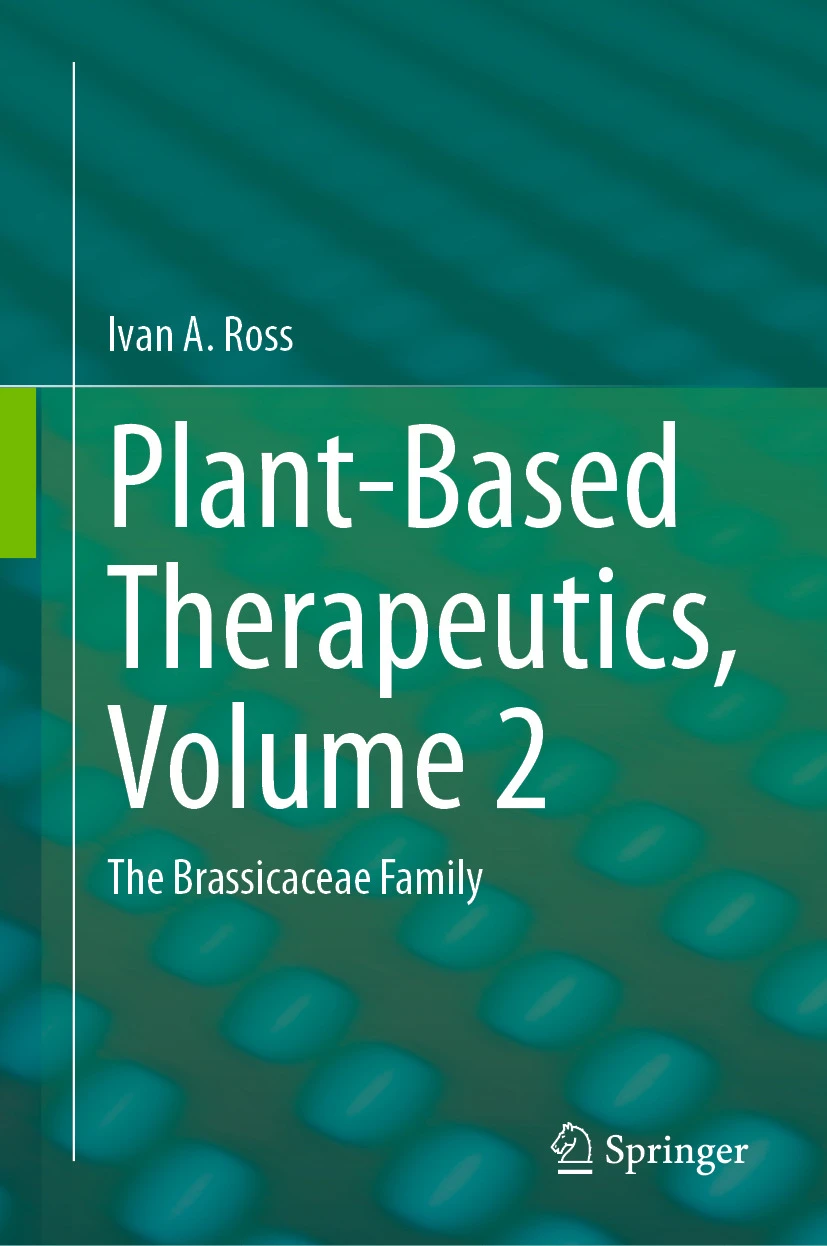
Plant-Based Therapeutics, Volume 2 The Brassicaceae Family
6 $
Format : Publisher PDF
For centuries, research has been conducted on the therapeutics of Brassicaceae plants and their health-promoting effects. Cato the Elder (234-149 BCE) documented their properties in his work De agri cultura and recommended using cabbage to compress wounds, swelling, burns, and bone dislocations. For arthritis, he recommended chopped raw cabbage mixed with coriander and cured cabbage mixed with vinegar and honey.
In a groundbreaking discovery in the 1990s, scientists at Johns Hopkins University isolated sulforaphane from broccoli, revealing its potent anticancer properties. This naturally occurring compound has proven highly effective, safe, and tolerable and holds immense promise as a chemoprevention agent. It has the potential to combat various cancers, including breast, prostate, gastrointestinal, melanoma, lung, brain, and bladder. But its potential does not stop there. It also shows promise in treating cardiovascular and neurodegenerative diseases and diabetes, offering hope for those affected.
The cancer-protecting properties of Brassica plants are mediated through compounds that induce a variety of physiological processes, including antioxidant action, detoxifying enzymes, inducing apoptosis, and cell cycle regulation. Glucosinolate breakdown products can affect several stages of cancer development, including the inhibition of activation enzymes (phase I) and the induction of detoxification enzymes (phase II). Isothiocyanates and indole products formed from glucosinolates regulate cancer cell development by regulating target enzymes, controlling apoptosis, inhibiting angiogenesis, metastasis, and the migration of cancer cells, and blocking the cell cycle.
Sulforaphane, found in abundance in broccoli sprouts, plays a crucial role in upregulating the transcriptional activity of specific genes and restoring epigenetic alterations. This is particularly significant as it modifies epigenetic pathways by targeting histone deacetylases and DNA methyltransferases. These modifications, in turn, alter gene transcription and expression, particularly in the case of cancers. This intricate process of gene regulation is a fascinating study area, making broccoli sprouts a compelling component of the ‘epigenetic diet.’
Sulforaphane induces the cytoprotective enzyme NQO1. The inducible expression of NQO1 is regulated principally through the Keap1-Nrf2-ARE signaling pathway. The activation of the Nrf2-Keap1 signaling pathway heralds the beneficial actions of drugs known to affect Nrf2 signaling, such as dimethyl fumarate, an FDA-approved treatment for multiple sclerosis, and bardoxolone methyl for chronic kidney disease. There is optimism that the overall strategies are moving forward. Sulforaphane-rich broccoli sprout extracts provide one avenue toward this end.
Product Details:
Edition Number: 1
Be the first to review “Plant-Based Therapeutics, Volume 2 The Brassicaceae Family”
You must be logged in to post a review.
Related products


10 $
Reviews
There are no reviews yet.